Question text and figures as in the official paper, with the answer from the official key. Worked solutions for every question are in your report after you take the paper as a 3-hour test.
Worked solution: in your report after you take this paper.
Q2 · General Aptitude · MCQ · 1 mark
Had I learnt acting as a child, I ________ a famous film star.
Select the most appropriate option to complete the above sentence.
(A)
will be
(B)
can be
(C)
am going to be
(D)
could have been
Answer (official key): D
Worked solution: in your report after you take this paper.
Q3 · General Aptitude · MCQ · 1 mark
The 12 musical notes are given as C,C#,D,D#,E,F,F#,G,G#,A,A#, and B. Frequency of each note is 122 times the frequency of the previous note. If the frequency of the note C is 130.8 Hz, then the ratio of frequencies of notes F# and C is:
(A)
62
(B)
2
(C)
42
(D)
2
Answer (official key): B
Worked solution: in your report after you take this paper.
Q4 · General Aptitude · MCQ · 1 mark
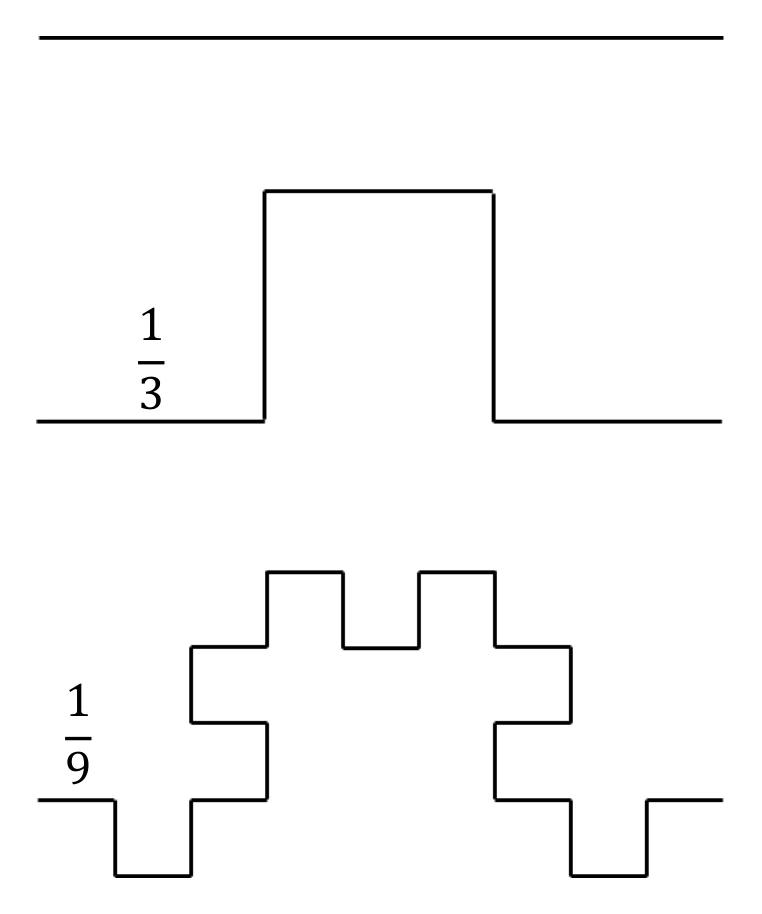
The following figures show three curves generated using an iterative algorithm. The total length of the curve generated after ‘Iteration n’ is:
Note: The figures shown are representative.
(Iteration 0: a segment of length 1. Iteration 1: length of each segment 31. Iteration 2: length of each segment 91.)
(A)
(35)2n
(B)
(35)n
(C)
(35)2n
(D)
(35)n(2n−1)
Answer (official key): B
Worked solution: in your report after you take this paper.
Q5 · General Aptitude · MCQ · 1 mark
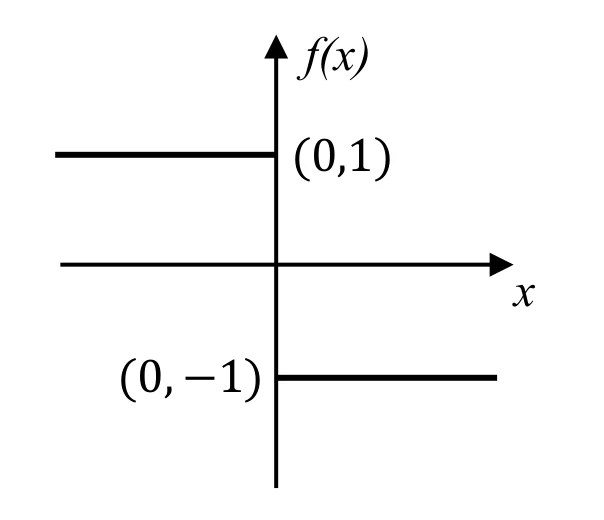
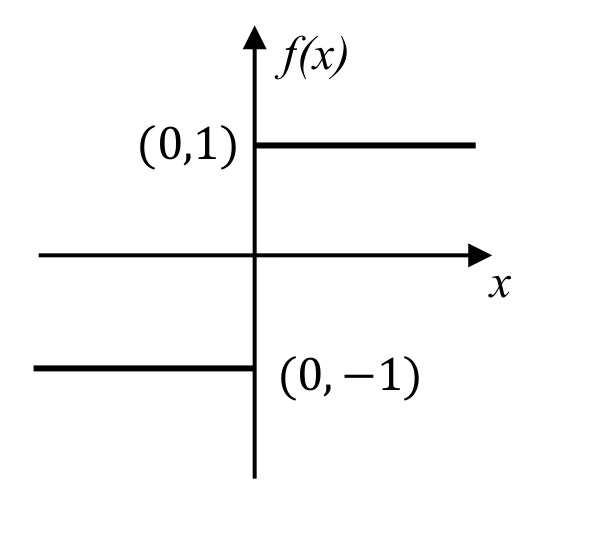
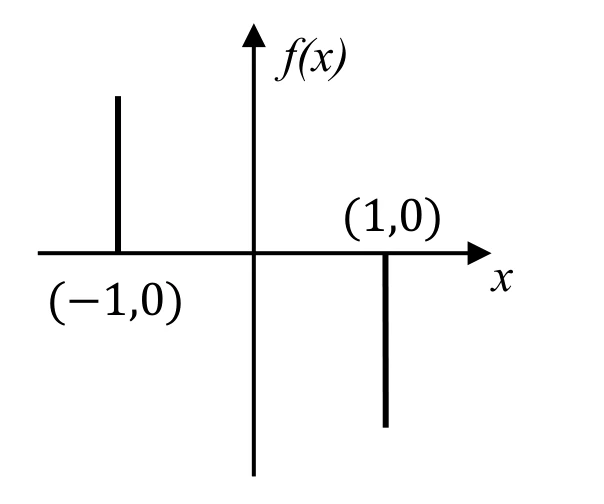
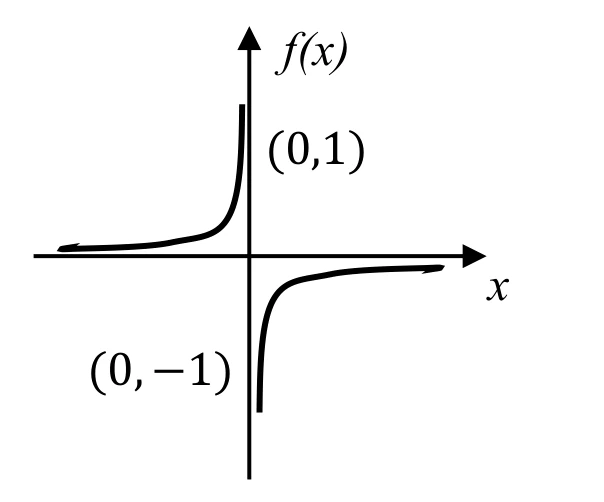
Which one of the following plots represents f(x)=−x∣x∣, where x is a non-zero real number?
Note: The figures shown are representative.
(A)
(B)
(C)
(D)
Answer (official key): A
Worked solution: in your report after you take this paper.
Q6 · General Aptitude · MCQ · 2 marks
Identify the option that has the most appropriate sequence such that a coherent paragraph is formed:
P. Over time, such adaptations lead to significant evolutionary changes with the potential to shape the development of new species.
Q. In natural world, organisms constantly adapt to their environments in response to challenges and opportunities.
R. This process of adaptation is driven by the principle of natural selection, where favorable traits increase an organism’s chances of survival and reproduction.
S. As environments change, organisms that can adapt their behavior, structure and physiology to such changes are more likely to survive.
(A)
P → Q → R → S
(B)
Q → S → R → P
(C)
R → S → Q → P
(D)
S → P → R → Q
Answer (official key): B
Worked solution: in your report after you take this paper.
Q7 · General Aptitude · MCQ · 2 marks
A stick of length one meter is broken at two locations at distances of b1 and b2 from the origin (0), as shown in the figure. Note that 0<b1<b2<1. Which one of the following is NOT a necessary condition for forming a triangle using the three pieces?
Note: All lengths are in meter. The figure shown is representative.
(A)
b1<0.5
(B)
b2>0.5
(C)
b2<b1+0.5
(D)
b1+b2<1
Answer (official key): D
Worked solution: in your report after you take this paper.
Q8 · General Aptitude · MCQ · 2 marks
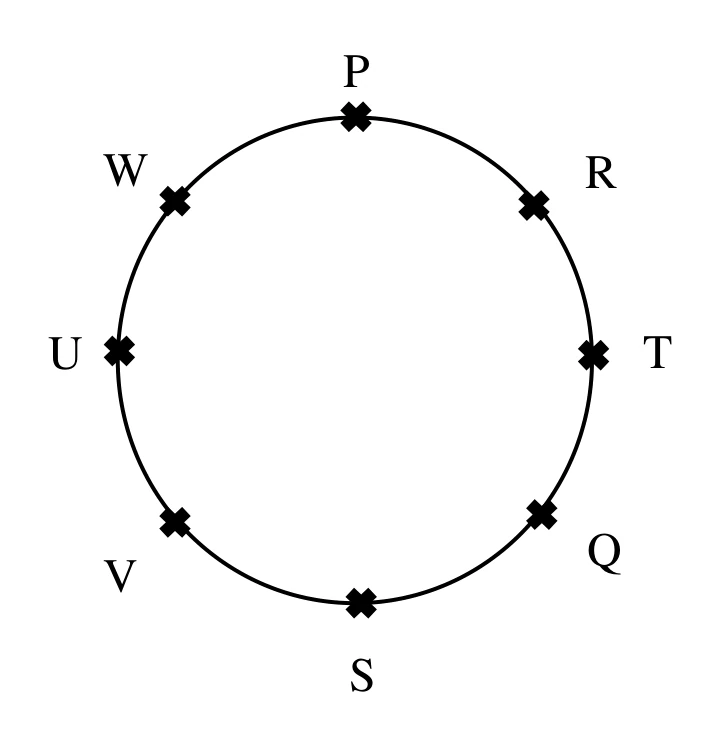
Eight students (P, Q, R, S, T, U, V, and W) are playing musical chairs. The figure indicates their order of position at the start of the game. They play the game by moving forward in a circle in the clockwise direction.
After the 1st round, 4th student behind P leaves the game. After 2nd round, 5th student behind Q leaves the game. After 3rd round, 3rd student behind V leaves the game. After 4th round, 4th student behind U leaves the game. Who all are left in the game after the 4th round?
Note: The figure shown is representative.
(A)
P; T; Q; S
(B)
V; P; T; Q
(C)
W; R; Q; V
(D)
Q; T; V; W
Answer (official key): Marks to all
Everyone who took this paper got the marks for this question. Marks to all in GATE
Worked solution: in your report after you take this paper.
Q9 · General Aptitude · MCQ · 2 marks
The table lists the top 5 nations according to the number of gold medals won in a tournament; also included are the number of silver and the bronze medals won by them. Based only on the data provided in the table, which one of the following statements is INCORRECT?
Nation
Gold
Silver
Bronze
USA
40
44
41
Canada
39
27
24
Japan
20
12
13
Australia
17
19
16
France
16
26
22
(A)
France will occupy the third place if the list were made on the basis of the total number of medals won.
(B)
The order of the top two nations will not change even if the list is made on the basis of the total number of medals won.
(C)
USA and Canada together have less than 50% of the medals awarded to the nations in the above table.
(D)
Canada has won twice as many total medals as Japan.
An organization allows its employees to work independently on consultancy projects but charges an overhead on the consulting fee. The overhead is 20% of the consulting fee, if the fee is up to ₹ 5,00,000. For higher fees, the overhead is ₹ 1,00,000 plus 10% of the amount by which the fee exceeds ₹ 5,00,000. The government charges a Goods and Services Tax of 18% on the total amount (the consulting fee plus the overhead). An employee of the organization charges this entire amount, i.e., the consulting fee, overhead, and tax, to the client. If the client cannot pay more than ₹ 10,00,000, what is the maximum consulting fee that the employee can charge?
For which of the following combinations of α,β, and γ, is the rank of A at least three?
(i) α=0 and β=γ=0.
(ii) α=β=γ=0.
(iii) β=γ=0 and α=0.
(iv) α=β=γ=0.
(A)
Only (i), (iii), and (iv)
(B)
Only (iv)
(C)
Only (ii)
(D)
Only (i) and (iii)
Answer (official key): A
Worked solution: in your report after you take this paper.
Q12 · Calculus · MCQ · 1 mark
Consider the following series:
(i) ∑n=1∞n1
(ii) ∑n=1∞n(n+1)1
(iii) ∑n=1∞n!1
Choose the correct option.
(A)
Only (ii) converges
(B)
Only (ii) and (iii) converge
(C)
Only (iii) converges
(D)
All three converge
Answer (official key): B
Worked solution: in your report after you take this paper.
Q13 · Probability and Statistics · MCQ · 1 mark
A pot contains two red balls and two blue balls. Two balls are drawn from this pot randomly without replacement.
What is the probability that the two balls drawn have different colours?
(A)
2/3
(B)
1/3
(C)
1/2
(D)
1
Answer (official key): A
Worked solution: in your report after you take this paper.
Q14 · Communications · MCQ · 1 mark
Consider a frequency-modulated (FM) signal
f(t)=Accos(2πfct+3sin(2πf1t)+4sin(6πf1t)),
where Ac and fc are, respectively, the amplitude and frequency (in Hz) of the carrier waveform. The frequency f1 is in Hz, and assume that fc>100f1.
The peak frequency deviation of the FM signal in Hz is _______.
(A)
15f1
(B)
12f1
(C)
4f1
(D)
2f1
Answer (official key): A
Worked solution: in your report after you take this paper.
Q15 · Communications · MCQ · 1 mark
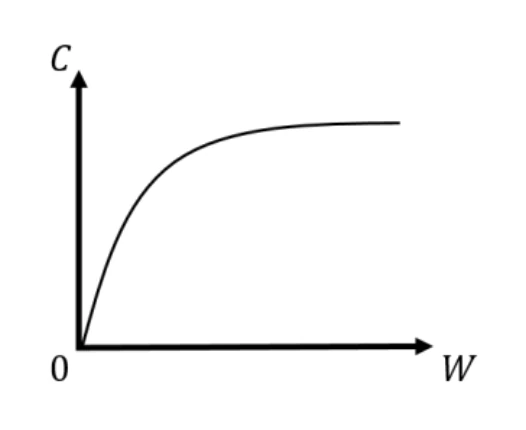
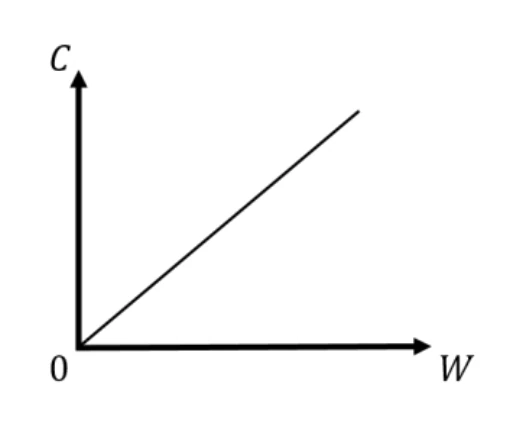
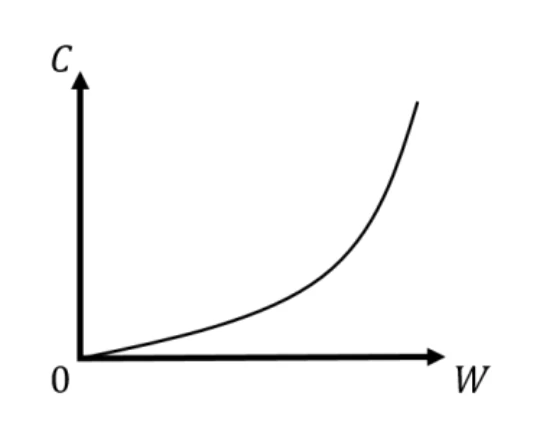
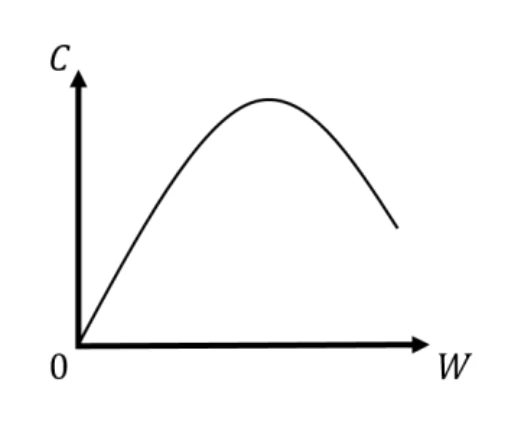
Consider an additive white Gaussian noise (AWGN) channel with bandwidth W and noise power spectral density 2N0. Let Pav denote the average transmit power constraint.
Which one of the following plots illustrates the dependence of the channel capacity C on the bandwidth W (keeping Pav and N0 fixed)?
(A)
(B)
(C)
(D)
Answer (official key): A
Worked solution: in your report after you take this paper.
Q16 · Control Systems · MCQ · 1 mark
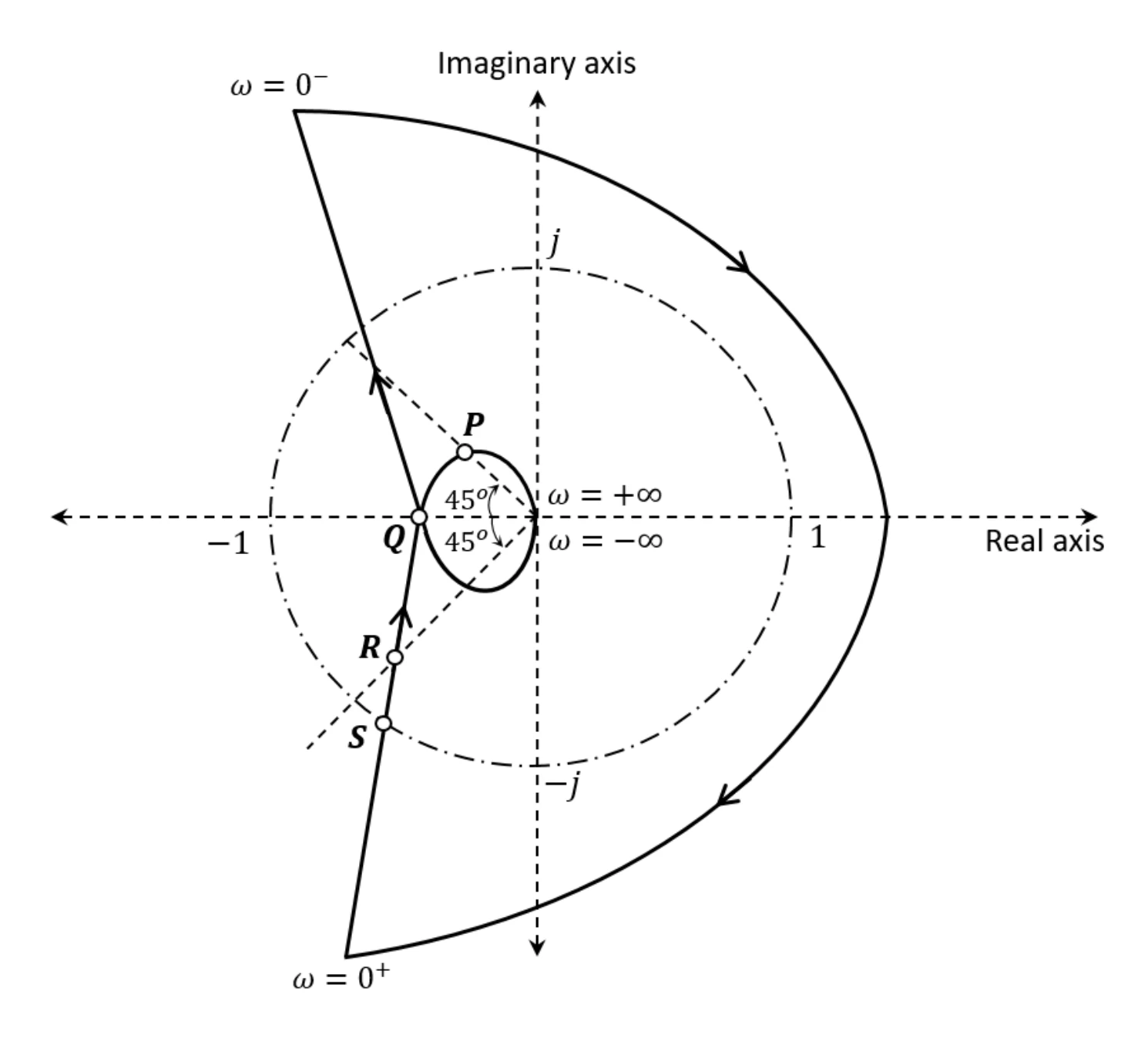
The Nyquist plot of a system is given in the figure below. Let ωP,ωQ,ωR, and ωS be the positive frequencies at the points P,Q,R, and S, respectively.
Which one of the following statements is TRUE?
(A)
ωS is the gain crossover frequency and ωP is the phase crossover frequency
(B)
ωQ is the gain crossover frequency and ωR is the phase crossover frequency
(C)
ωQ is the gain crossover frequency and ωS is the phase crossover frequency
(D)
ωS is the gain crossover frequency and ωQ is the phase crossover frequency
Answer (official key): D
Worked solution: in your report after you take this paper.
Q17 · Networks, Signals and Systems · MCQ · 1 mark
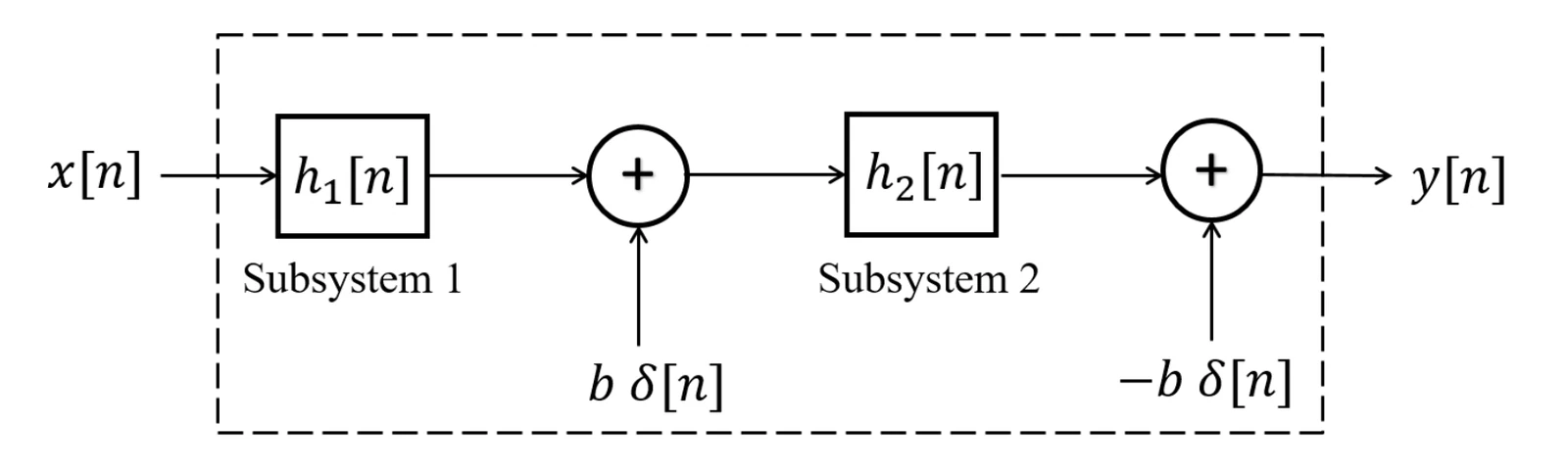
Consider the discrete-time system below with input x[n] and output y[n]. In the figure, h1[n] and h2[n] denote the impulse responses of LTI Subsystems 1 and 2, respectively. Also, δ[n] is the unit impulse, and b>0.
Assuming h2[n]=δ[n], the overall system (denoted by the dashed box) is ________.
(A)
linear and time invariant
(B)
linear and time variant
(C)
nonlinear and time invariant
(D)
nonlinear and time variant
Answer (official key): D
Worked solution: in your report after you take this paper.
Q18 · Networks, Signals and Systems · MCQ · 1 mark
Consider a continuous-time, real-valued signal f(t) whose Fourier transform F(ω)=∫−∞∞f(t)exp(−jωt)dt exists.
Which one of the following statements is always TRUE?
(A)
∣F(ω)∣≤∫−∞∞∣f(t)∣dt
(B)
∣F(ω)∣>∫−∞∞∣f(t)∣dt
(C)
∣F(ω)∣≤∫−∞∞f(t)dt
(D)
∣F(ω)∣≥∫−∞∞f(t)dt
Answer (official key): A
Worked solution: in your report after you take this paper.
Q19 · Networks, Signals and Systems · MCQ · 1 mark
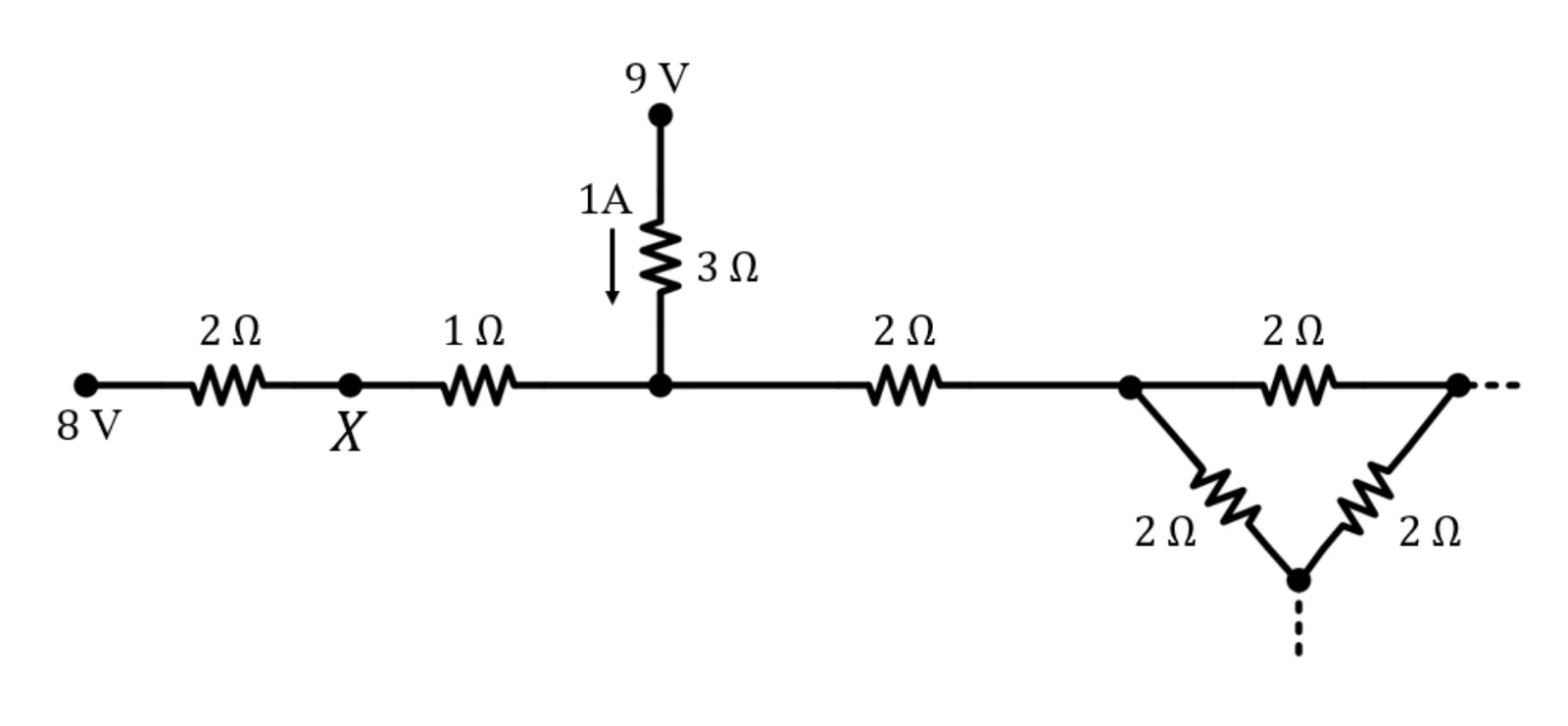
Consider a part of an electrical network as shown below. Some node voltages, and the current flowing through the 3Ω resistor are as indicated.
The voltage (in Volts) at node X is _______.
(A)
20/3
(B)
32/3
(C)
22/3
(D)
2/3
Answer (official key): A
Worked solution: in your report after you take this paper.
Q20 · Networks, Signals and Systems · MCQ · 1 mark
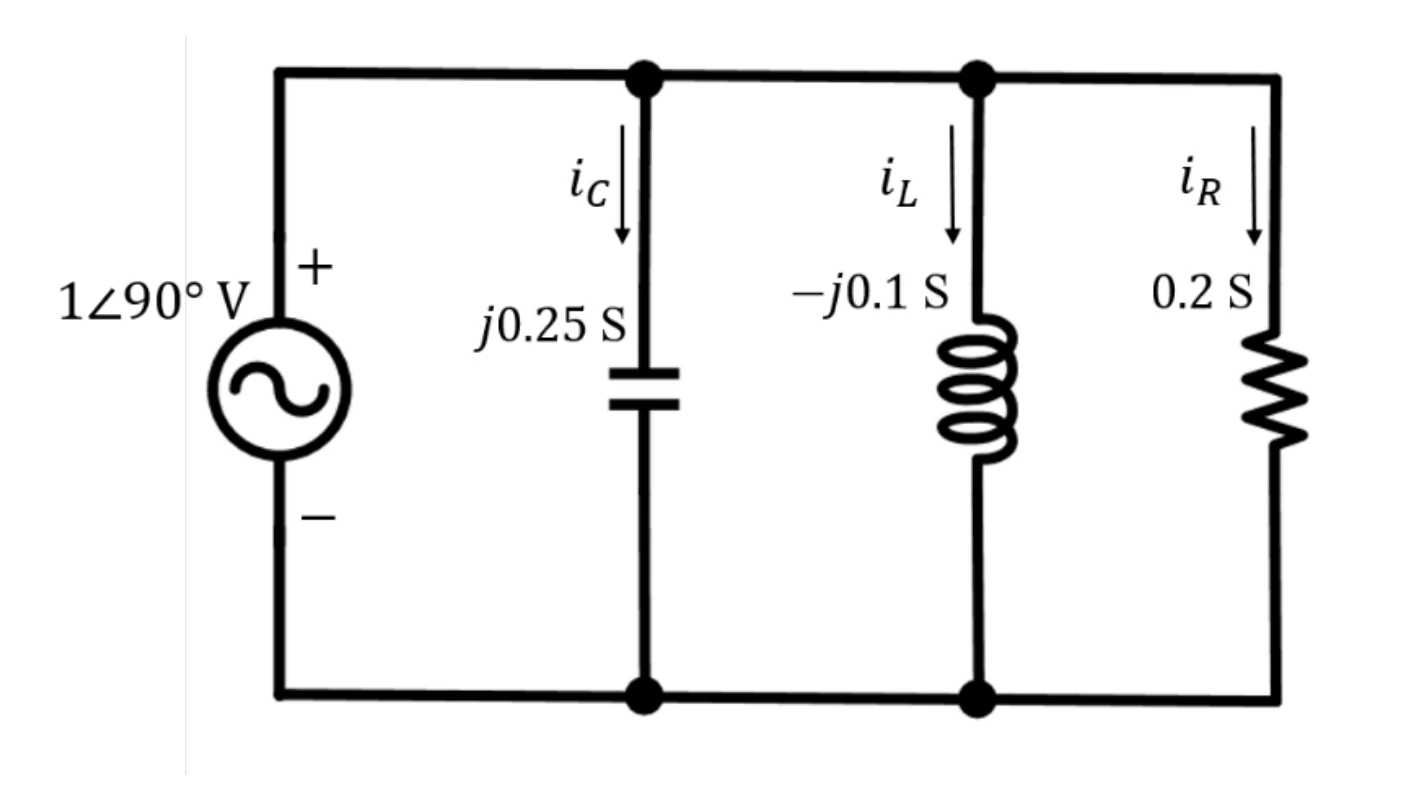
Let iC, iL, and iR be the currents flowing through the capacitor, inductor, and resistor, respectively, in the circuit given below. The AC admittances are given in Siemens (S).
Which one of the following is TRUE?
(A)
iC=0.25∠180∘ A, iL=0.1∠0∘ A, iR=0.2∠90∘ A
(B)
iC=4∠180∘ A, iL=10∠0∘ A, iR=5∠90∘ A
(C)
iC=0.25∠270∘ A, iL=0.1∠90∘ A, iR=0.2∠90∘ A
(D)
iC=4∠90∘ A, iL=10∠270∘ A, iR=5∠0∘ A
Answer (official key): A
Worked solution: in your report after you take this paper.
Q21 · Analog Circuits · MCQ · 1 mark
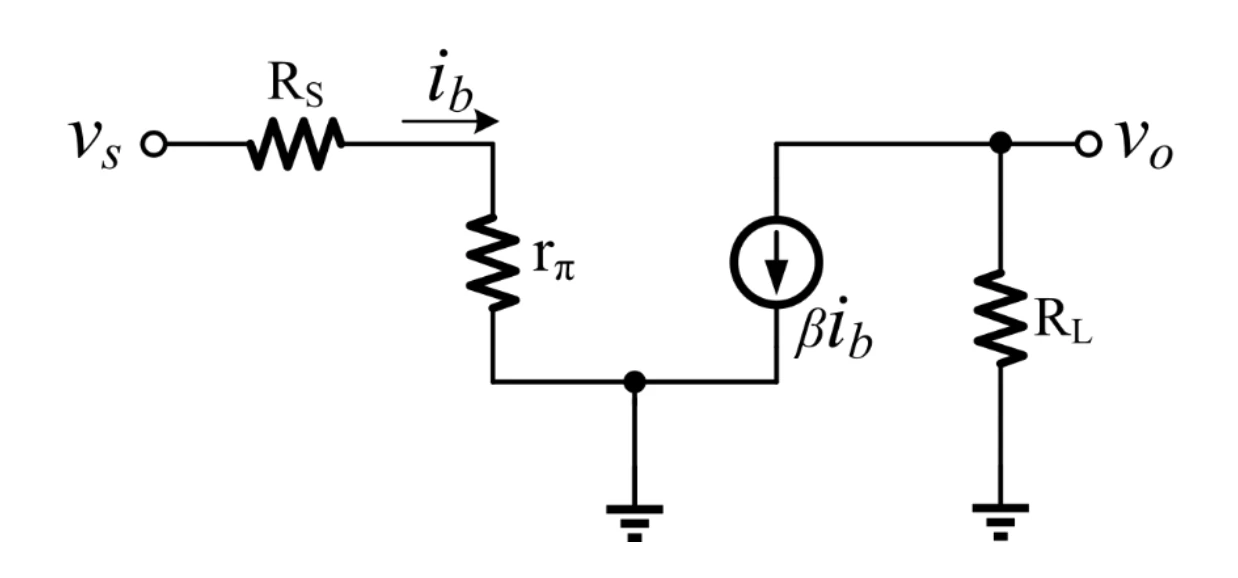
A simplified small-signal equivalent circuit of a BJT-based amplifier is given below.
The small-signal voltage gain vo/vs (in V/V) is ___________.
(A)
RS+rπ−βRL
(B)
RS+βRL
(C)
RS−βRL
(D)
RS+rπ+βRL
Answer (official key): A
Worked solution: in your report after you take this paper.
Q22 · Analog Circuits · MCQ · 1 mark
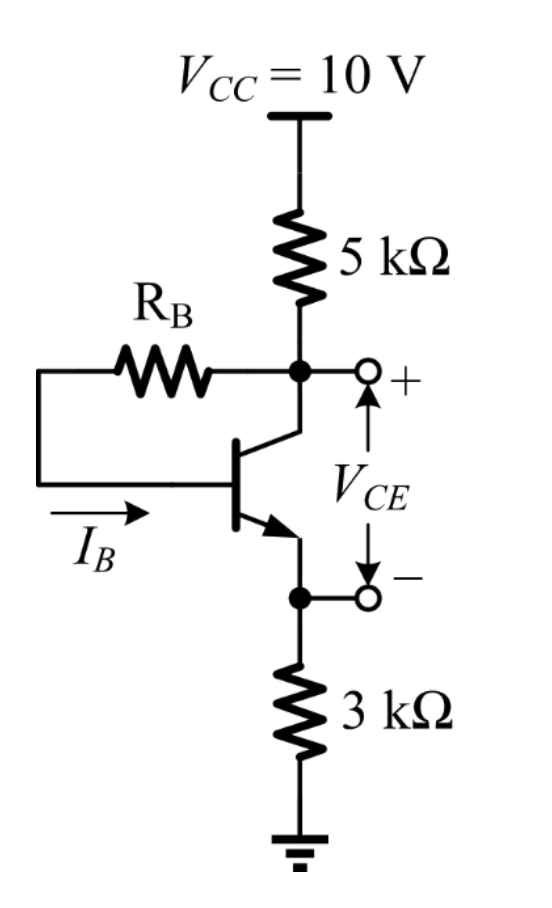
The ideal BJT in the circuit given below is biased in the active region with a β of 100.
If IB is 10 µA, then VCE (in Volts, rounded off to two decimal places) is _______ .
(A)
4.95
(B)
3.03
(C)
1.92
(D)
3.73
Answer (official key): C
Worked solution: in your report after you take this paper.
Q23 · Digital Circuits · MCQ · 1 mark
A 3-input majority logic gate has inputs X,Y, and Z. The output F of the gate is logic ‘1’ if two or more of the inputs are logic ‘1’. The output F is logic ‘0’ if two or more of the inputs are logic ‘0’.
Which one of the following options is a Boolean expression of the output F?
(A)
XY+YZ+ZX
(B)
X⊕Y⊕Z
(C)
X+Y+Z
(D)
XYZ
Answer (official key): A
Worked solution: in your report after you take this paper.
Q24 · Digital Circuits · MCQ · 1 mark
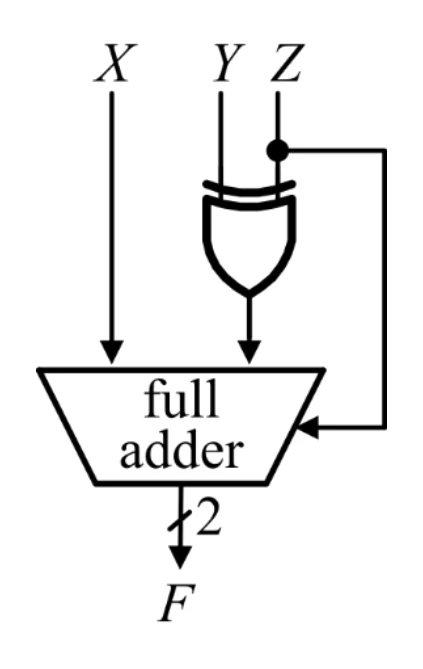
A full adder and an XOR gate are used to design a digital circuit with inputs X, Y, and Z, and output F, as shown below. The input Z is connected to the carry-in input of the full adder.
If the input Z is set to logic ‘1’, then the circuit functions as ________ with X and Y as inputs.
(A)
an adder
(B)
a subtractor
(C)
a multiplier
(D)
a binary to Gray code converter
Answer (official key): B
Worked solution: in your report after you take this paper.
Q25 · Calculus · MSQ · 1 mark
Consider the function f:R→R, defined as
f(x)=2x3−3x2−12x+1.
Which of the following statements is/are correct?
(Here, R is the set of real numbers.)
(A)
f has no global maximizer
(B)
f has no global minimizer
(C)
x=−1 is a local minimizer of f
(D)
x=2 is a local maximizer of f
Answer (official key): A, B
Worked solution: in your report after you take this paper.
Q26 · Control Systems · MSQ · 1 mark
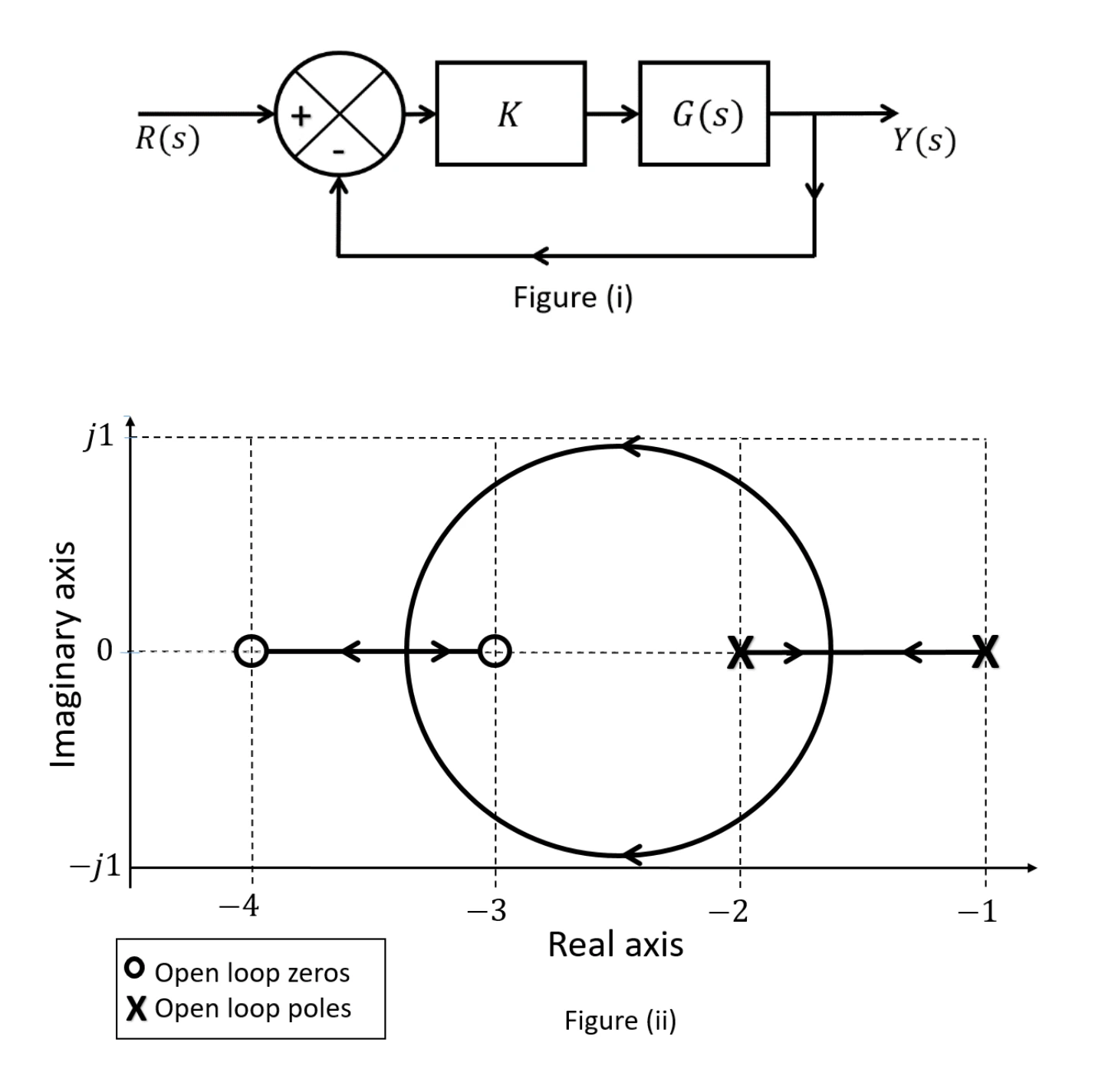
Consider the unity-negative-feedback system shown in Figure (i) below, where gain K≥0. The root locus of this system is shown in Figure (ii) below.
For what value(s) of K will the system in Figure (i) have a pole at −1+j1?
(A)
K=5
(B)
K=1/5
(C)
For no positive value of K
(D)
For all positive values of K
Answer (official key): C
Worked solution: in your report after you take this paper.
Q27 · Networks, Signals and Systems · MSQ · 1 mark
Let x[n] be a discrete-time signal whose z-transform is X(z).
Which of the following statements is/are TRUE?
(A)
The discrete-time Fourier transform (DTFT) of x[n] always exists
(B)
The region of convergence (RoC) of X(z) contains neither poles nor zeros
(C)
The discrete-time Fourier transform (DTFT) exists if the region of convergence (RoC) contains the unit circle
(D)
If x[n]=αδ[n], where δ[n] is the unit impulse and α is a scalar, then the region of convergence (RoC) is the entire z-plane
Answer (official key): C, D
Worked solution: in your report after you take this paper.
Q28 · Communications · MSQ · 1 mark
Consider a message signal m(t) which is bandlimited to [−W,W], where W is in Hz. Consider the following two modulation schemes for the message signal:
Here, Ac and fc are the amplitude and frequency (in Hz) of the carrier, respectively. In the case of AM, μ denotes the modulation index.
Consider the following statements:
(i) An envelope detector can be used for demodulation in the DSB-SC scheme if m(t)>0 for all t.
(ii) An envelope detector can be used for demodulation in the AM scheme only if m(t)>0 for all t.
Which of the following options is/are correct?
(A)
(i) is TRUE
(B)
(i) is FALSE
(C)
(ii) is TRUE
(D)
(ii) is FALSE
Answer (official key): A, D
Worked solution: in your report after you take this paper.
Q29 · Analog Circuits · MSQ · 1 mark
Which of the following statements is/are TRUE with respect to an ideal opamp?
(A)
It has an infinite input resistance
(B)
It has an infinite output resistance
(C)
It has an infinite open-loop differential gain
(D)
It has an infinite open-loop common-mode gain
Answer (official key): A, C
Worked solution: in your report after you take this paper.
Q30 · Analog Circuits · MSQ · 1 mark
Which of the following statements is/are TRUE with respect to ideal MOSFET-based DC-coupled single-stage amplifiers having finite load resistors?
(A)
The common-gate amplifier has an infinite input resistance
(B)
The common-source amplifier has an infinite input resistance
(C)
The input and output voltages of the common-source amplifier are in phase
(D)
The input and output voltages of the common-drain amplifier are in phase
Answer (official key): B, D
Worked solution: in your report after you take this paper.
Q31 · Electronic Devices · MSQ · 1 mark
Which of the following can be used as an n-type dopant for silicon?
Select the correct option(s).
(A)
Arsenic
(B)
Boron
(C)
Gallium
(D)
Phosphorous
Answer (official key): A, D
Worked solution: in your report after you take this paper.
Q32 · Differential Equations · Numerical · 1 mark
The function y(t) satisfies
t2y′′(t)−2ty′(t)+2y(t)=0,
where y′(t) and y′′(t) denote the first and second derivatives of y(t), respectively.
Given y′(0)=1 and y′(1)=−1, the maximum value of y(t) over [0,1] is _____ (rounded off to two decimal places).
Answer (official key): 0.25
Worked solution: in your report after you take this paper.
Q33 · Communications · Numerical · 1 mark
The generator matrix of a (6,3) binary linear block code is given by
G=100010001101011110.
The minimum Hamming distance dmin between codewords equals _____ (answer in integer).
Answer (official key): 3
Worked solution: in your report after you take this paper.
Q34 · Analog Circuits · Numerical · 1 mark
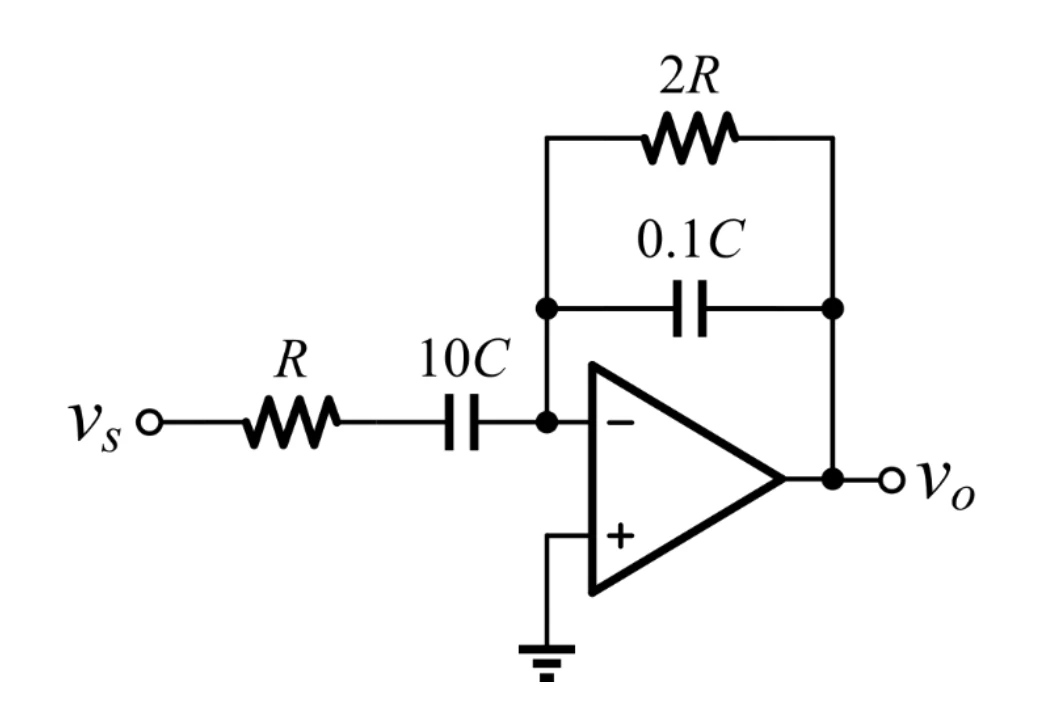
All the components in the bandpass filter given below are ideal. The lower −3 dB frequency of the filter is 1 MHz.
The upper −3 dB frequency (in MHz, rounded off to the nearest integer) is __________.
Answer (official key): 50
Worked solution: in your report after you take this paper.
Q35 · Digital Circuits · Numerical · 1 mark
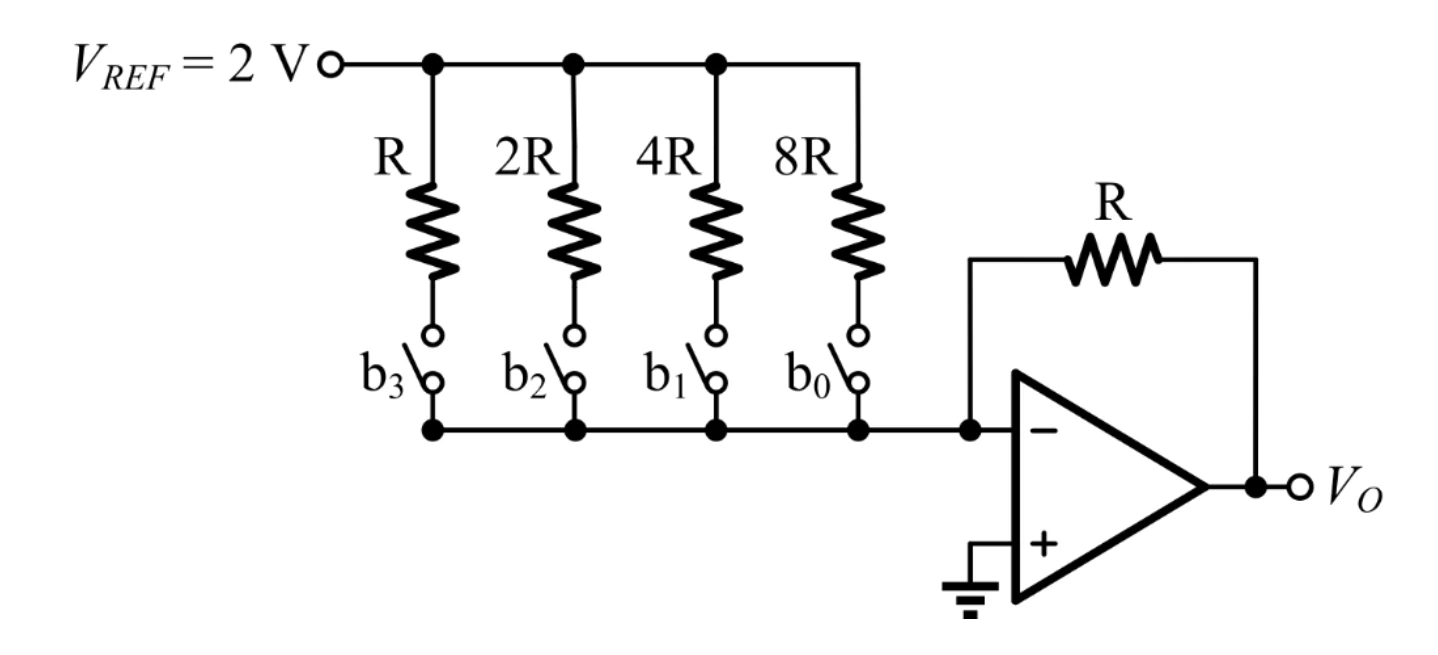
A 4-bit weighted-resistor DAC with inputs b3, b2, b1, and b0 (MSB to LSB) is designed using an ideal opamp, as shown below. The switches are closed when the corresponding input bits are logic ‘1’ and open otherwise.
When the input b3b2b1b0 changes from 1110 to 1101, the magnitude of the change in the output voltage VO (in mV, rounded off to the nearest integer) is ________.
Answer (official key): 250
Worked solution: in your report after you take this paper.
Q36 · Control Systems · MCQ · 2 marks
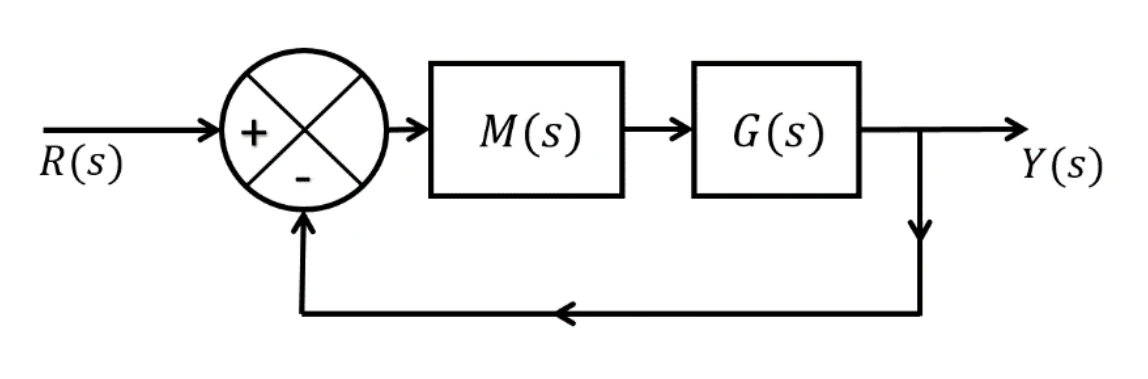
Let G(s)=10s21 be the transfer function of a second-order system. A controller M(s) is connected to the system G(s) in the configuration shown below.
Consider the following statements.
(i) There exists no controller of the form M(s)=sKI, where KI is a positive real number, such that the closed loop system is stable.
(ii) There exists at least one controller of the form M(s)=KP+sKD, where KP and KD are positive real numbers, such that the closed loop system is stable.
Which one of the following options is correct?
(A)
(i) is TRUE and (ii) is FALSE
(B)
(i) is FALSE and (ii) is TRUE
(C)
Both (i) and (ii) are FALSE
(D)
Both (i) and (ii) are TRUE
Answer (official key): D
Worked solution: in your report after you take this paper.
Q37 · Control Systems · MCQ · 2 marks
Consider the polynomial p(s)=s5+7s4+3s3−33s2+2s−40. Let (L,I,R) be defined as follows.
L is the number of roots of p(s) with negative real parts.
I is the number of roots of p(s) that are purely imaginary.
R is the number of roots of p(s) with positive real parts.
Which one of the following options is correct?
(A)
L=2,I=2, and R=1
(B)
L=3,I=2, and R=0
(C)
L=1,I=2, and R=2
(D)
L=0,I=4, and R=1
Answer (official key): A
Worked solution: in your report after you take this paper.
Q38 · Networks, Signals and Systems · MCQ · 2 marks
Consider a continuous-time finite-energy signal f(t) whose Fourier transform vanishes outside the frequency interval [−ωc,ωc], where ωc is in rad/sec.
The signal f(t) is uniformly sampled to obtain y(t)=f(t)p(t). Here,
p(t)=∑n=−∞∞δ(t−τ−nTs),
with δ(t) being the Dirac impulse, Ts>0, and τ>0. The sampled signal y(t) is passed through an ideal lowpass filter h(t)=ωcTsπωctsin(ωct) with cutoff frequency ωc and passband gain Ts.
The output of the filter is given by ________________.
(A)
f(t) if Ts<π/ωc
(B)
f(t−τ) if Ts<π/ωc
(C)
f(t−τ) if Ts<2π/ωc
(D)
Tsf(t) if Ts<2π/ωc
Answer (official key): A
Worked solution: in your report after you take this paper.
Q39 · Networks, Signals and Systems · MCQ · 2 marks
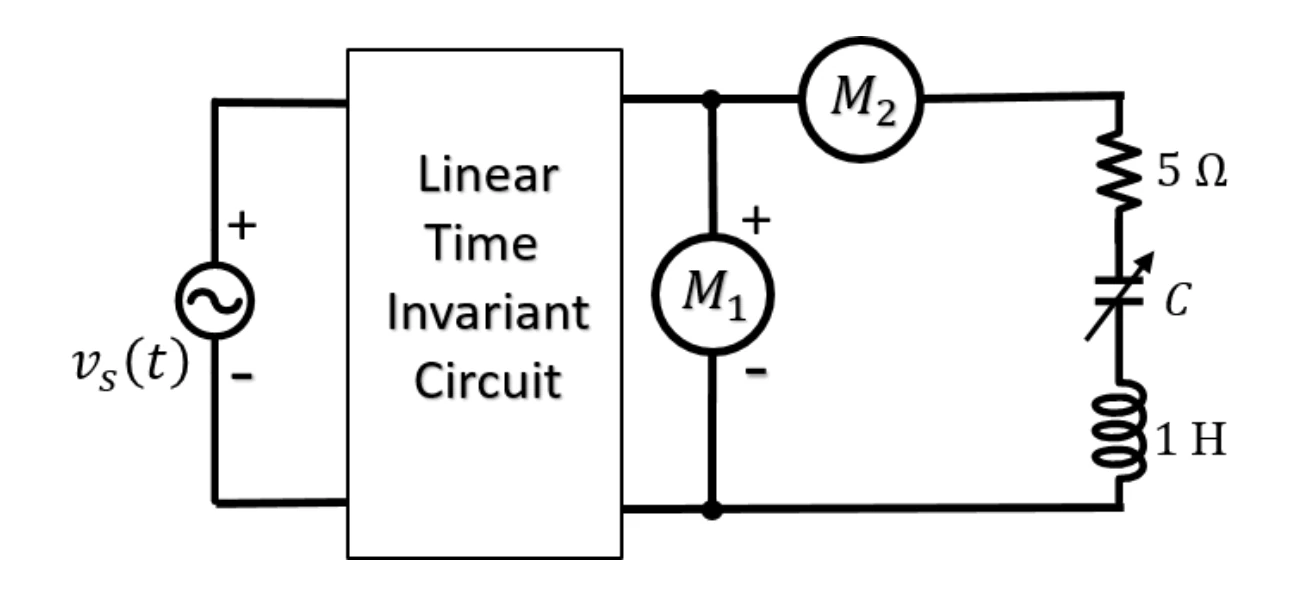
In the circuit below, M1 is an ideal AC voltmeter and M2 is an ideal AC ammeter. The source voltage (in Volts) is vs(t)=100cos(200t).
What should be the value of the variable capacitor C such that the RMS readings on M1 and M2 are 25 V and 5 A, respectively?
Q40 · Networks, Signals and Systems · MCQ · 2 marks
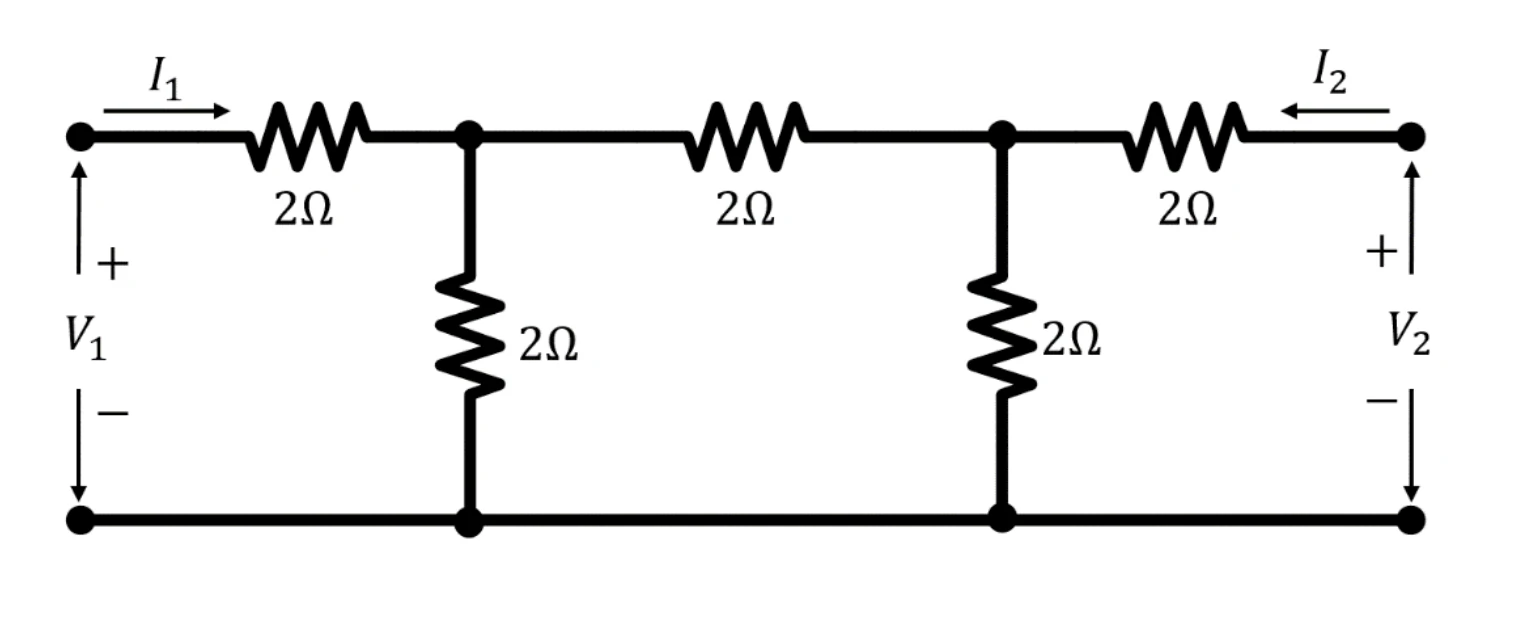
The Z-parameter matrix of a two port network relates the port voltages and port currents as follows:
[V1V2]=Z[I1I2]
The Z-parameter matrix (with each entry in Ohms) of the network shown below is __________.
(A)
[10/32/32/310/3]
(B)
[2/310/310/32/3]
(C)
[102210]
(D)
[10/31/31/310/3]
Answer (official key): A
Worked solution: in your report after you take this paper.
Q41 · Communications · MCQ · 2 marks
A source transmits symbol S that takes values uniformly at random from the set {−2,0,2}. The receiver obtains Y=S+N, where N is a zero-mean Gaussian random variable independent of S. The receiver uses the maximum likelihood decoder to estimate the transmitted symbol S.
Suppose the probability of symbol estimation error Pe is expressed as follows:
Pe=αP(N>1),
where P(N>1) denotes the probability that N exceeds 1.
What is the value of α ?
(A)
1/3
(B)
1
(C)
2/3
(D)
4/3
Answer (official key): D
Worked solution: in your report after you take this paper.
Q42 · Probability and Statistics · MCQ · 2 marks
Consider a real-valued random process
f(t)=∑n=1Nanp(t−nT),
where T>0 and N is a positive integer. Here, p(t)=1 for t∈[0,0.5T] and 0 otherwise. The coefficients an are pairwise independent, zero-mean unit-variance random variables.
Read the following statements about the random process and choose the correct option.
(i) The mean of the process f(t) is independent of time t.
(ii) The autocorrelation function E[f(t)f(t+τ)] is independent of time t for all τ.
(Here, E[⋅] is the expectation operation.)
(A)
(i) is TRUE and (ii) is FALSE
(B)
Both (i) and (ii) are TRUE
(C)
Both (i) and (ii) are FALSE
(D)
(i) is FALSE and (ii) is TRUE
Answer (official key): A
Worked solution: in your report after you take this paper.
Q43 · Analog Circuits · MCQ · 2 marks
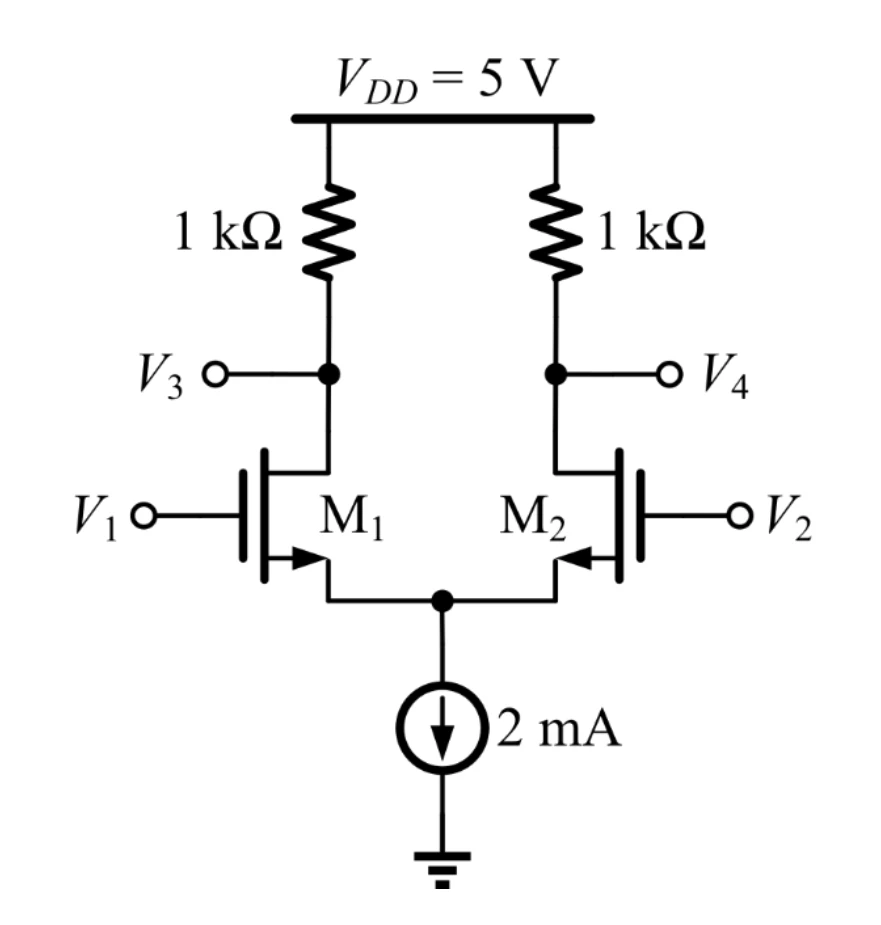
The identical MOSFETs M1 and M2 in the circuit given below are ideal and biased in the saturation region. M1 and M2 have a transconductance gm of 5 mS.
The input signals (in Volts) are:
V1=2.5+0.01sinωtV2=2.5−0.01sinωt
The output signal V3 (in Volts) is __________.
(A)
3+0.05sinωt
(B)
3−0.1sinωt
(C)
4+0.1sinωt
(D)
4−0.05sinωt
Answer (official key): D
Worked solution: in your report after you take this paper.
Q44 · Digital Circuits · MCQ · 2 marks
A 10-bit analog-to-digital converter (ADC) has a sampling frequency of 1 MHz and a full scale voltage of 3.3 V.
For an input sinusoidal signal with frequency 500 kHz, the maximum SNR (in dB, rounded off to two decimal places) and the data rate (in Mbps) at the output of the ADC are ________, respectively.
(A)
61.96 and 10
(B)
61.96 and 5
(C)
33.36 and 10
(D)
33.36 and 5
Answer (official key): A
Worked solution: in your report after you take this paper.
Q45 · Digital Circuits · MCQ · 2 marks
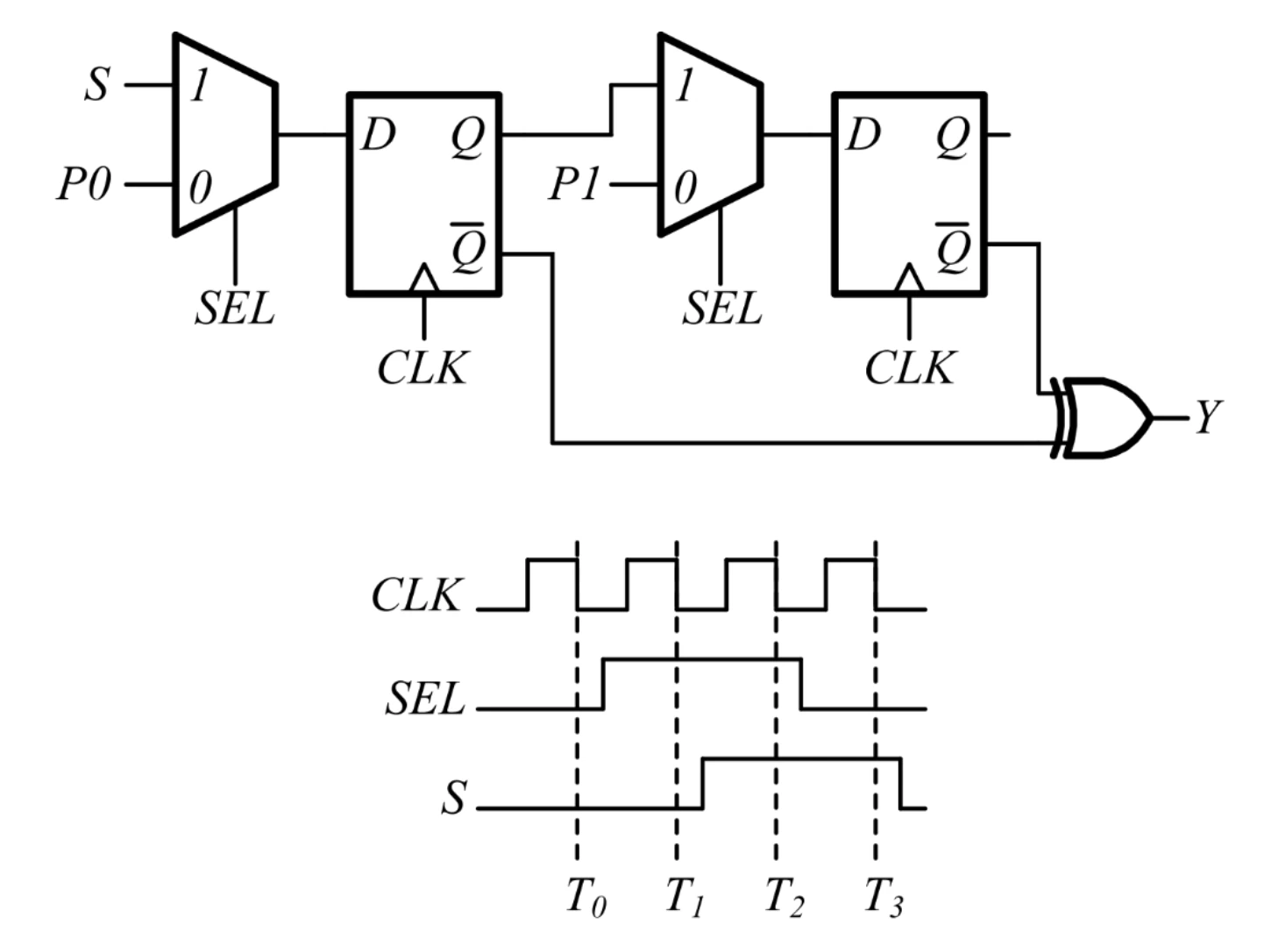
A positive-edge-triggered sequential circuit is shown below. There are no timing violations in the circuit. Input P0 is set to logic ‘0’ and P1 is set to logic ‘1’ at all times. The timing diagram of the inputs SEL and S are also shown below.
The sequence of output Y from time T0 to T3 is ________.
(A)
1011
(B)
0100
(C)
0010
(D)
1101
Answer (official key): A
Worked solution: in your report after you take this paper.
Q46 · Electronic Devices · MCQ · 2 marks
The intrinsic carrier concentration of a semiconductor is 2.5×10¹⁶/m3 at 300 K.
If the electron and hole mobilities are 0.15 m²/Vs and 0.05 m²/Vs, respectively, then the intrinsic resistivity of the semiconductor (in kΩ.m) at 300 K is ________.
(Charge of an electron e=1.6×10⁻¹⁹ C.)
(A)
1.65
(B)
1.25
(C)
0.85
(D)
1.95
Answer (official key): B
Worked solution: in your report after you take this paper.
Q47 · Analog Circuits · MCQ · 2 marks
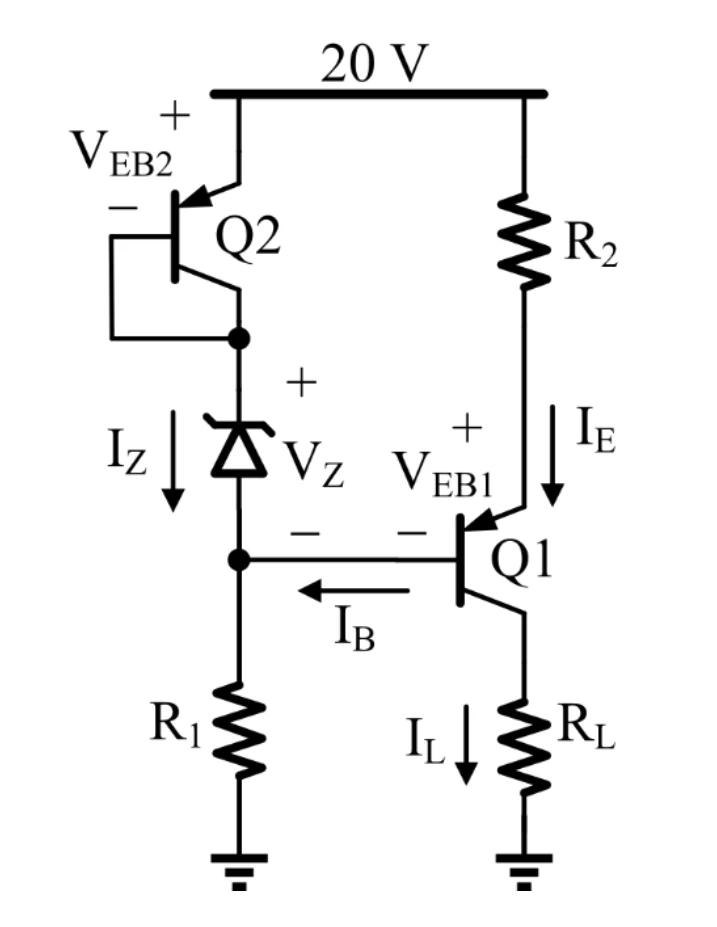
In the circuit shown, the identical transistors Q1 and Q2 are biased in the active region with β=120. The Zener diode is in the breakdown region with VZ=5 V and IZ=25 mA.
If IL=12 mA and VEB1=VEB2=0.7 V, then the values of R1 and R2 (in kΩ, rounded off to one decimal place) are ______, respectively.
(A)
0.6 and 0.4
(B)
1.4 and 2.5
(C)
14.0 and 25.0
(D)
6.0 and 4.0
Answer (official key): A
Worked solution: in your report after you take this paper.
Q48 · Electronic Devices · MCQ · 2 marks
The electron mobility μn in a non-degenerate germanium semiconductor at 300 K is 0.38 m²/Vs.
The electron diffusivity Dn at 300 K (in cm²/s, rounded off to the nearest integer) is _______.
(Consider the Boltzmann constant kB=1.38×10⁻²³ J/K and the charge of an electron e=1.6×10⁻¹⁹ C.)
(A)
26
(B)
98
(C)
38
(D)
10
Answer (official key): B
Worked solution: in your report after you take this paper.
Q49 · Electromagnetics · MCQ · 2 marks
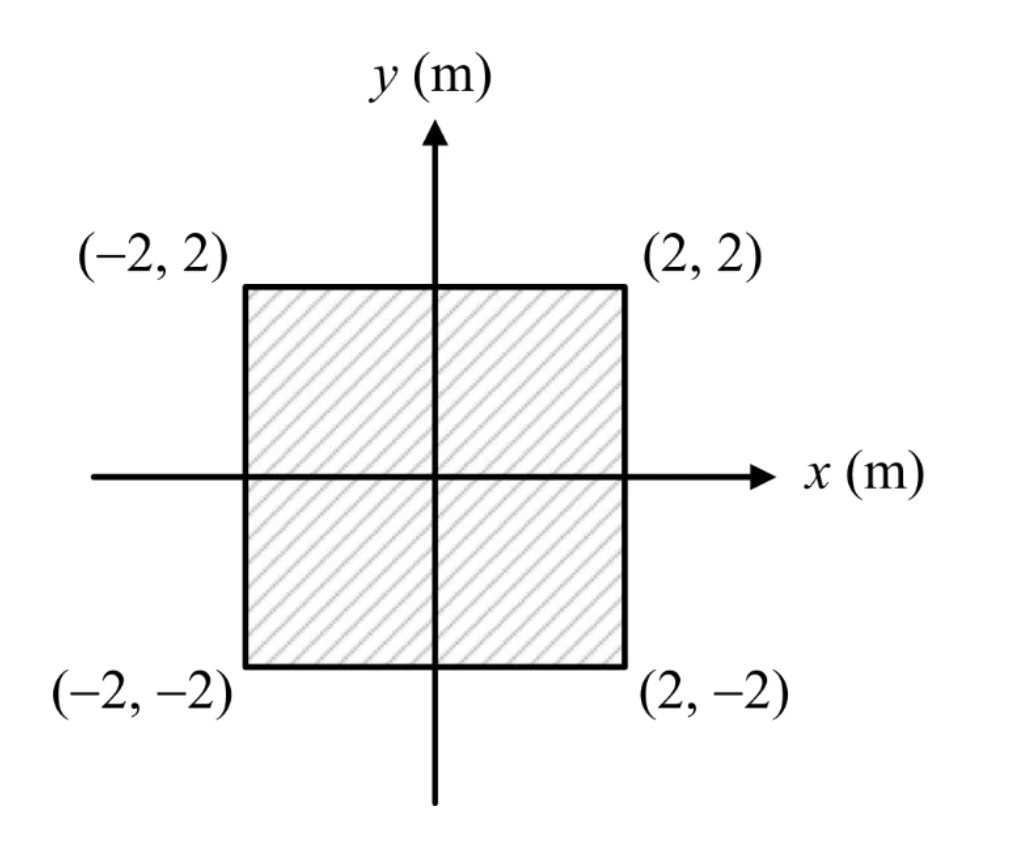
A square metal sheet of 4 m × 4 m is placed on the x-y plane as shown in the figure below.
If the surface charge density (in µC/m²) on the sheet is ρs(x,y)=4∣y∣, then the total charge (in µC, rounded off to the nearest integer) on the sheet is ________.
(A)
16
(B)
85
(C)
64
(D)
256
Answer (official key): C
Worked solution: in your report after you take this paper.
Q50 · Electromagnetics · MCQ · 2 marks
An electric field of 0.01 V/m is applied along the length of a copper wire of circular cross-section with diameter 1 mm. Copper has a conductivity of 5.8×10⁷ S/m.
The current (in Amperes, rounded off to two decimal places) flowing through the wire is _________.
(A)
0.46
(B)
1.82
(C)
0.58
(D)
1.12
Answer (official key): A
Worked solution: in your report after you take this paper.
Q51 · Calculus · MSQ · 2 marks
Consider a non-negative function f(x) which is continuous and bounded over the interval [2, 8]. Let M and m denote, respectively, the maximum and the minimum values of f(x) over the interval.
Among the combinations of α and β given below, choose the one(s) for which the inequality
Which of the following statements involving contour integrals (evaluated counter-clockwise) on the unit circle C in the complex plane is/are TRUE?
(A)
∮Cezdz=0
(B)
∮Czndz=0, where n is an even integer
(C)
∮Ccoszdz=0
(D)
∮Cseczdz=0
Answer (official key): A, B
Worked solution: in your report after you take this paper.
Q53 · Control Systems · MSQ · 2 marks
Consider a system where x1(t), x2(t), and x3(t) are three internal state signals and u(t) is the input signal. The differential equations governing the system are given by
Worked solution: in your report after you take this paper.
Q56 · Control Systems · MSQ · 2 marks
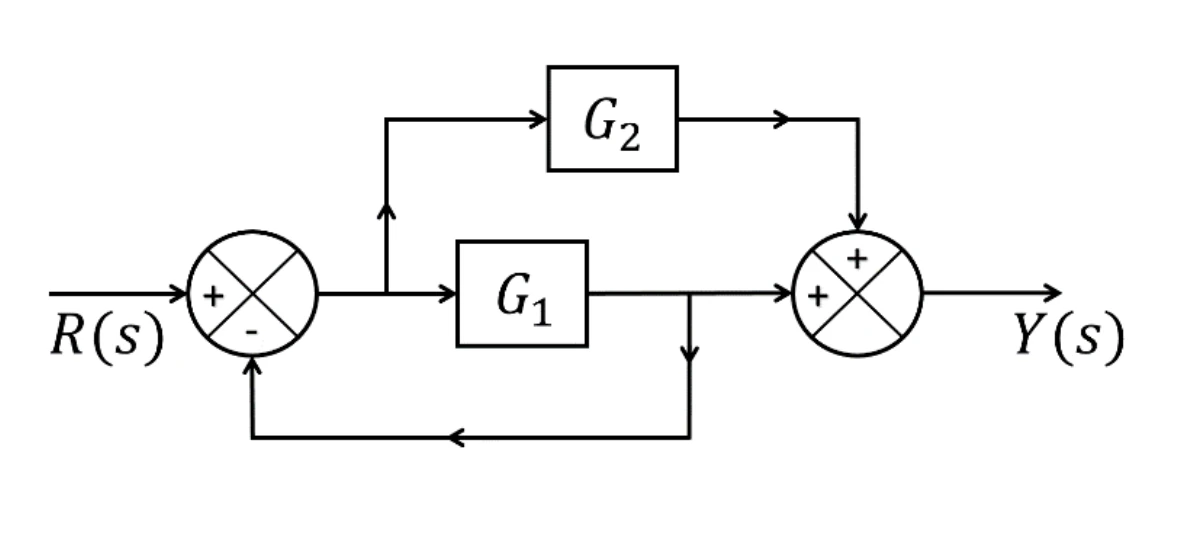
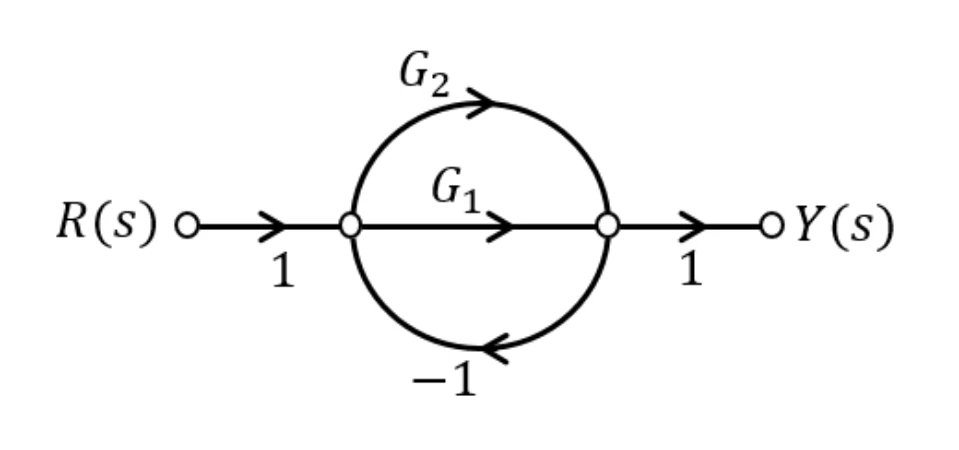
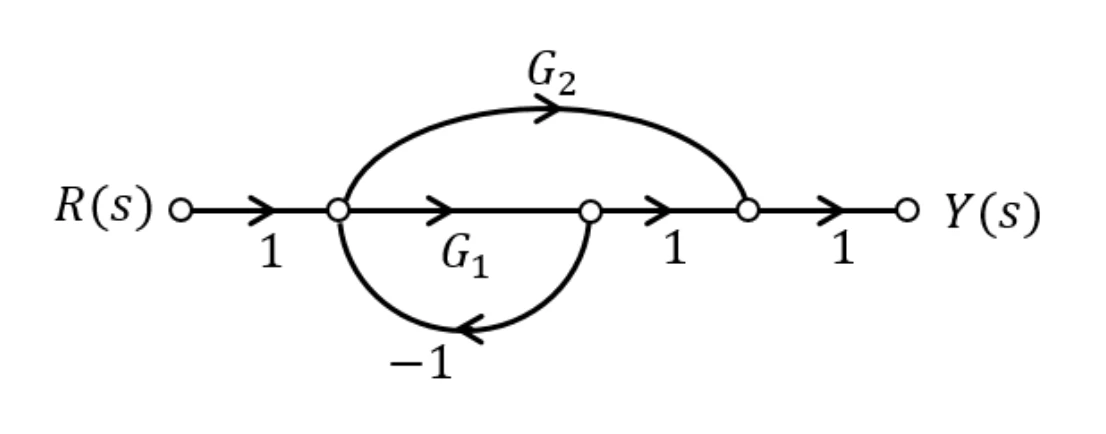
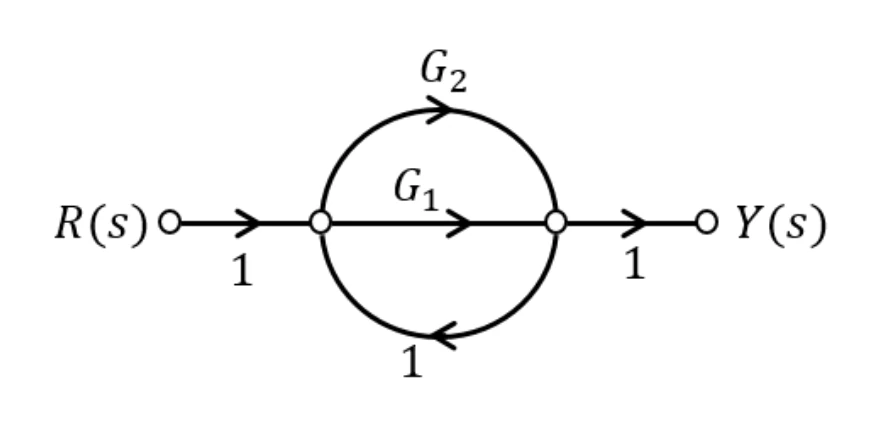
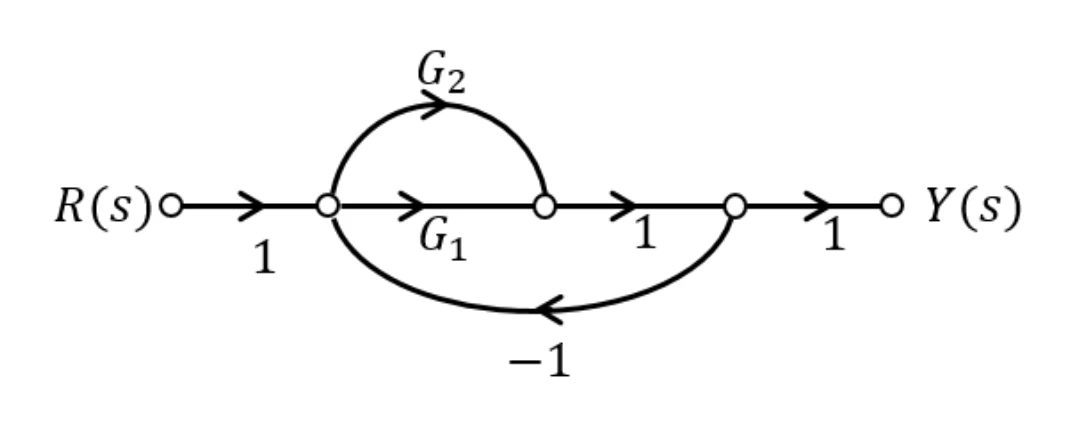
Consider a system represented by the block diagram shown below. Which of the following signal flow graphs represent(s) this system? Choose the correct option(s).
(A)
(B)
(C)
(D)
Answer (official key): B
Worked solution: in your report after you take this paper.
Q57 · Analog Circuits · MSQ · 2 marks
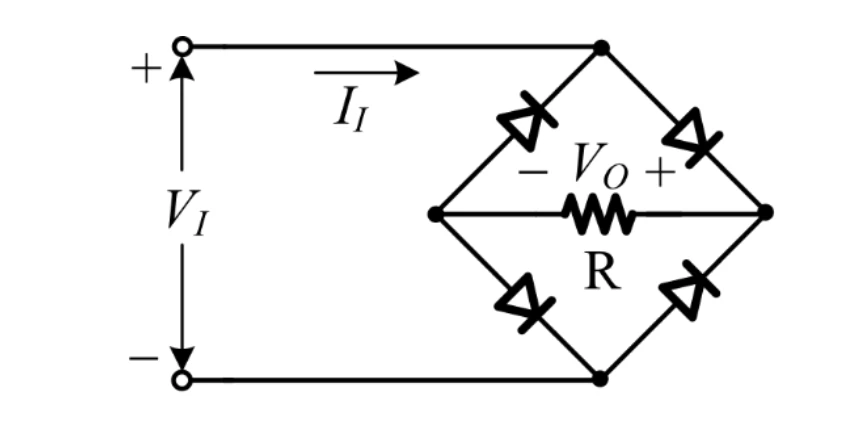
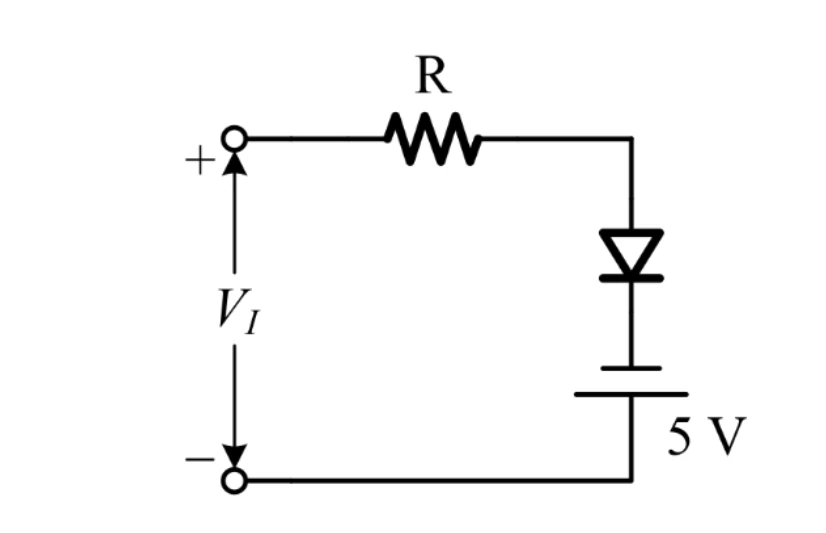
All the diodes in the circuit given below are ideal.
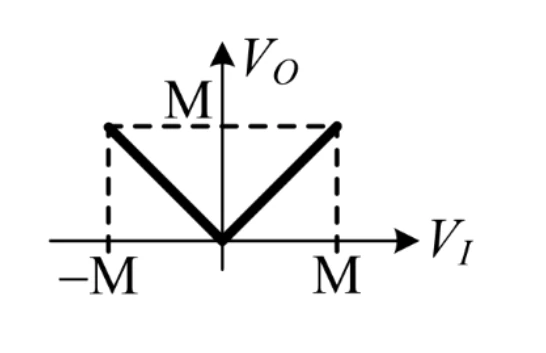
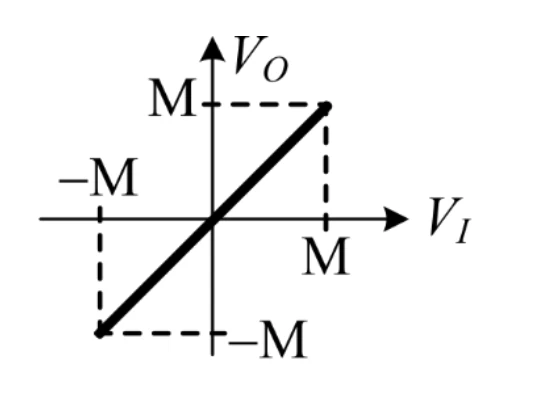
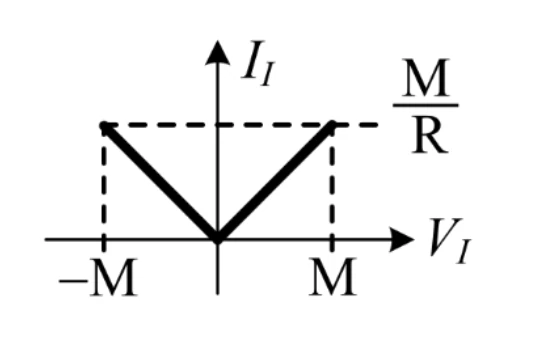
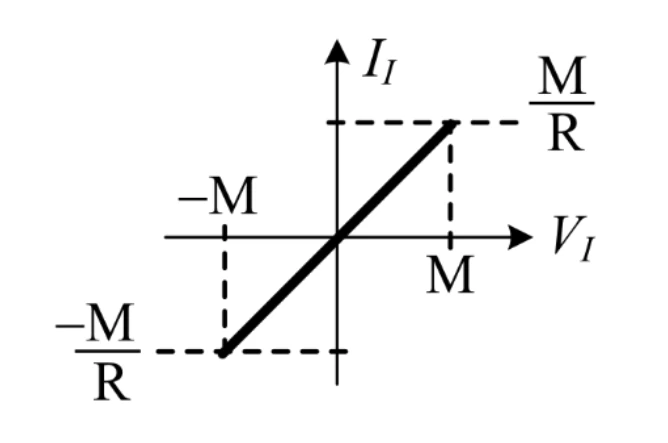
Which of the following plots is/are correct when VI (in Volts) is swept from −M to M ?
(A)
(B)
(C)
(D)
Answer (official key): A, D
Worked solution: in your report after you take this paper.
Q58 · Probability and Statistics · Numerical · 2 marks
Two fair dice (with faces labeled 1, 2, 3, 4, 5, and 6) are rolled. Let the random variable X denote the sum of the outcomes obtained.
The expectation of X is______ (rounded off to two decimal places).
Answer (official key): 6.95 to 7.05
Worked solution: in your report after you take this paper.
Q59 · Linear Algebra · Numerical · 2 marks
Consider the vectors
a=[11],b=[032].
For real-valued scalar variable x, the value of
minx∥ax−b∥2
is ____________ (rounded off to two decimal places).
∥⋅∥2 denotes the Euclidean norm, i.e., for y=[y1y2], ∥y∥2=y12+y22.
The mutual information I(X;Y) is _________ (rounded off to two decimal places).
Answer (official key): 0
Worked solution: in your report after you take this paper.
Q61 · Analog Circuits · Numerical · 2 marks
The diode in the circuit shown below is ideal. The input voltage (in Volts) is given by VI=10sin100πt, where time t is in seconds.
The time duration (in ms, rounded off to two decimal places) for which the diode is forward biased during one period of the input is ___________.
Answer (official key): 13.32 to 13.34
Worked solution: in your report after you take this paper.
Q62 · Digital Circuits · Numerical · 2 marks
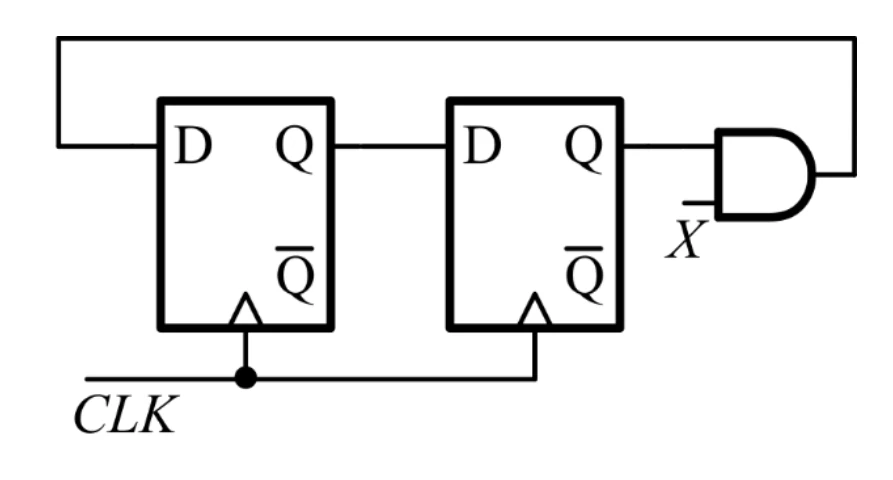
In the circuit shown below, the AND gate has a propagation delay of 1 ns. The edge-triggered flip-flops have a set-up time of 2 ns, a hold-time of 0 ns, and a clock-to-Q delay of 2 ns.
The maximum clock frequency (in MHz, rounded off to the nearest integer) such that there are no setup violations is ________.
Answer (official key): 200
Worked solution: in your report after you take this paper.
Q63 · Electronic Devices · Numerical · 2 marks
An ideal p-n junction germanium diode has a reverse saturation current of 10 µA at 300 K.
The voltage (in Volts, rounded off to two decimal places) to be applied across the junction to get a forward bias current of 100 mA at 300 K is _____.
(Consider the Boltzmann constant kB=1.38×10⁻²³ J/K and the charge of an electron e=1.6×10⁻¹⁹ C.)
Answer (official key): 0.23 to 0.24
Worked solution: in your report after you take this paper.
Q64 · Electromagnetics · Numerical · 2 marks
A 50 Ω lossless transmission line is terminated with a load ZL of (50−j75) Ω.
If the average incident power on the line is 10 mW, then the average power delivered to the load (in mW, rounded off to one decimal place) is __________.
Answer (official key): 6.3 to 6.5
Worked solution: in your report after you take this paper.
Q65 · Electromagnetics · Numerical · 2 marks
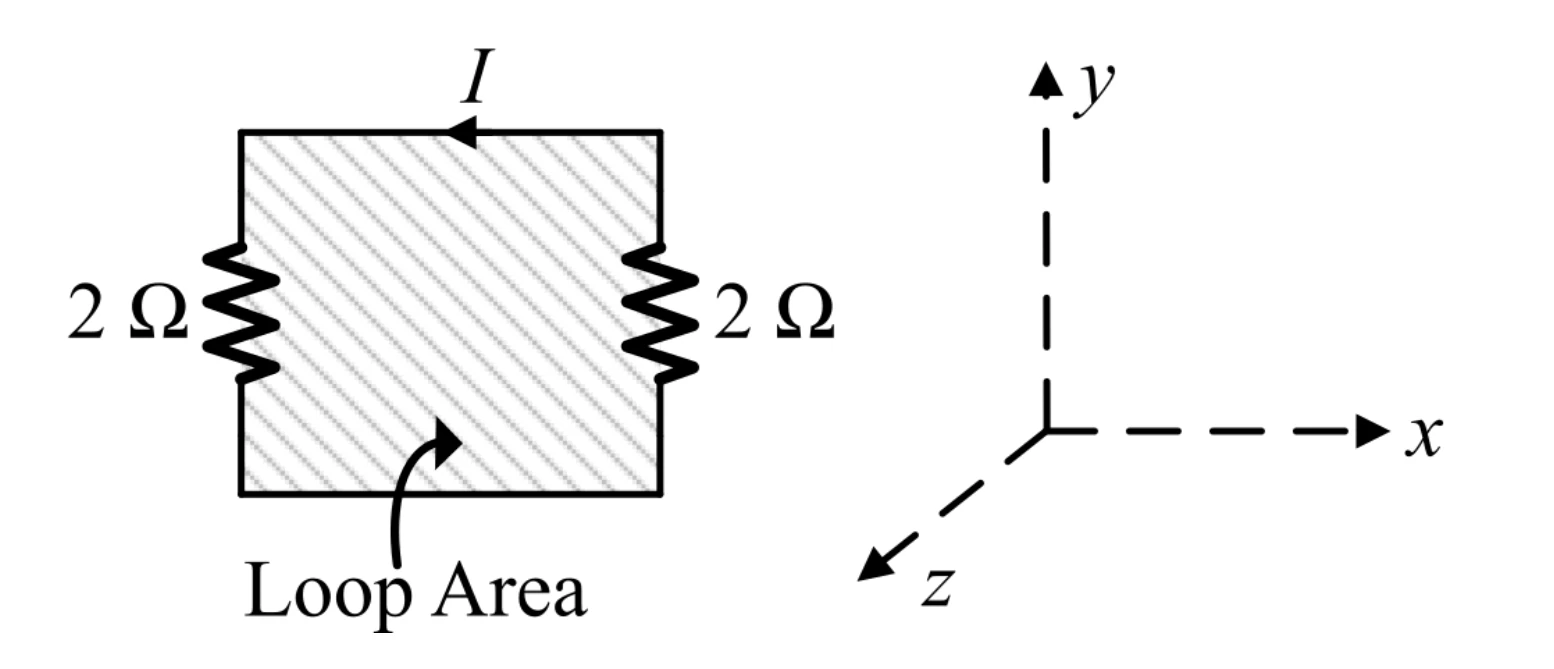
Two resistors are connected in a circuit loop of area 5 m², as shown in the figure below. The circuit loop is placed on the x-y plane.
When a time-varying magnetic flux, with flux-density B(t)=0.5t (in Tesla), is applied along the positive z-axis, the magnitude of current I (in Amperes, rounded off to two decimal places) in the loop is ________.
Answer (official key): 0.62 to 0.63
Worked solution: in your report after you take this paper.