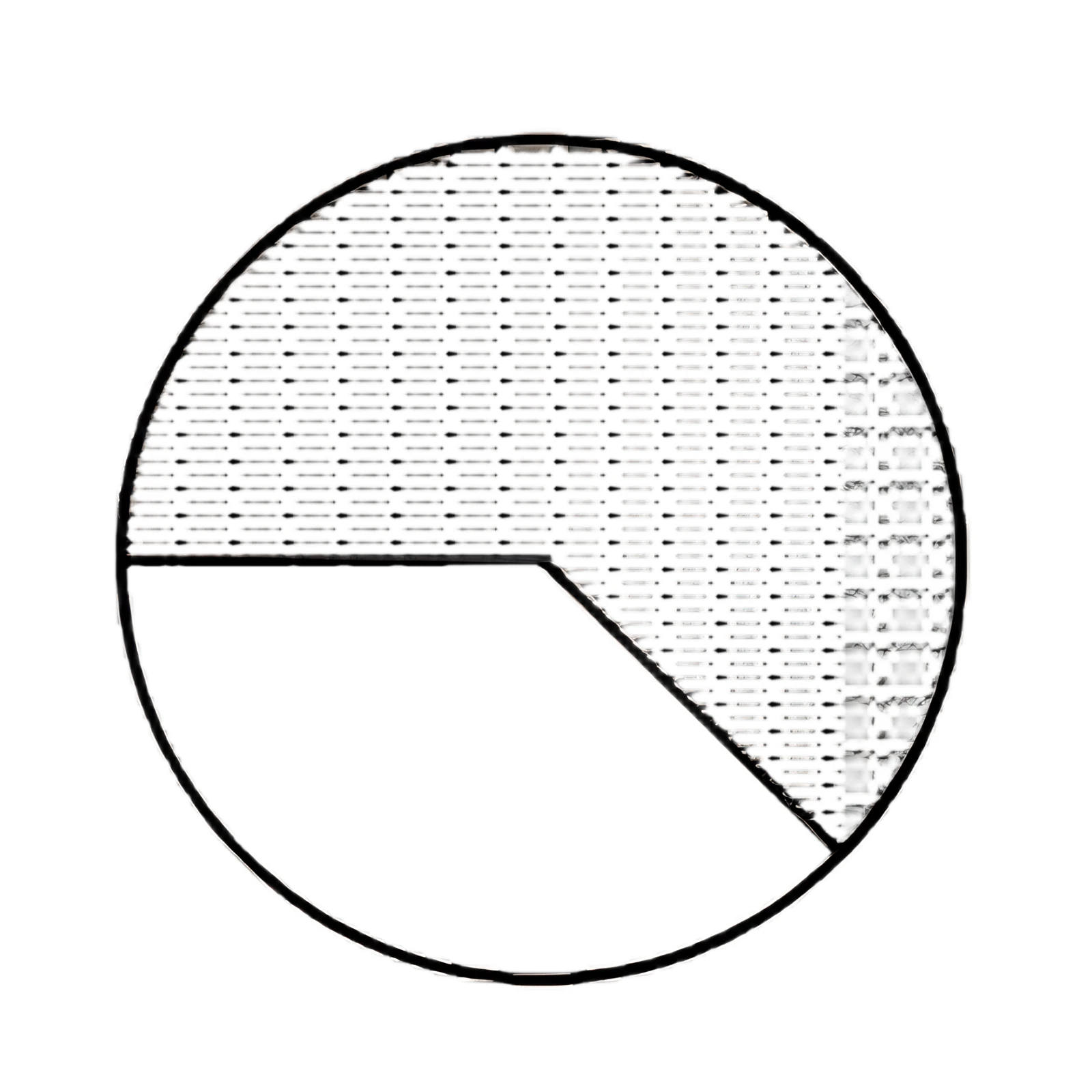
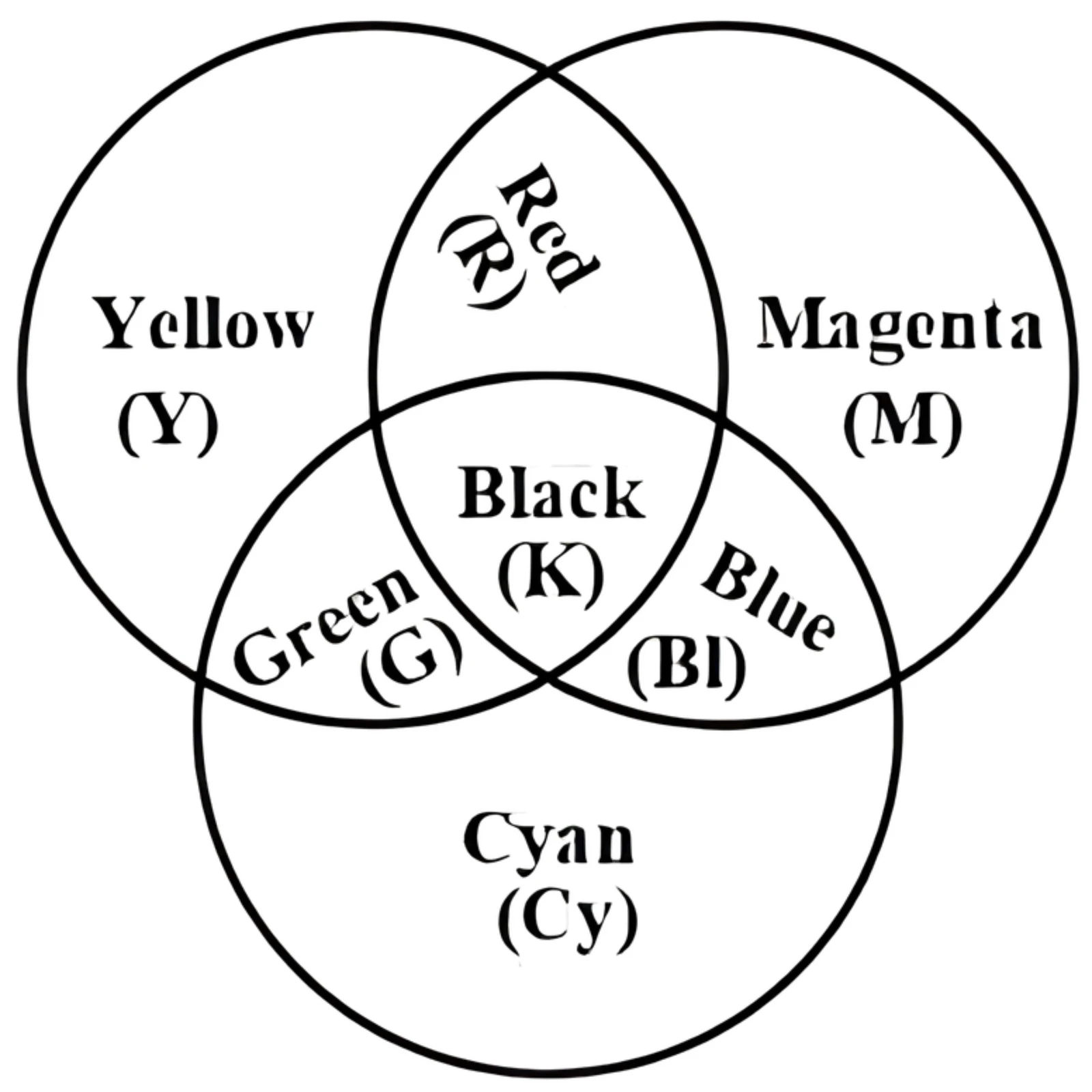
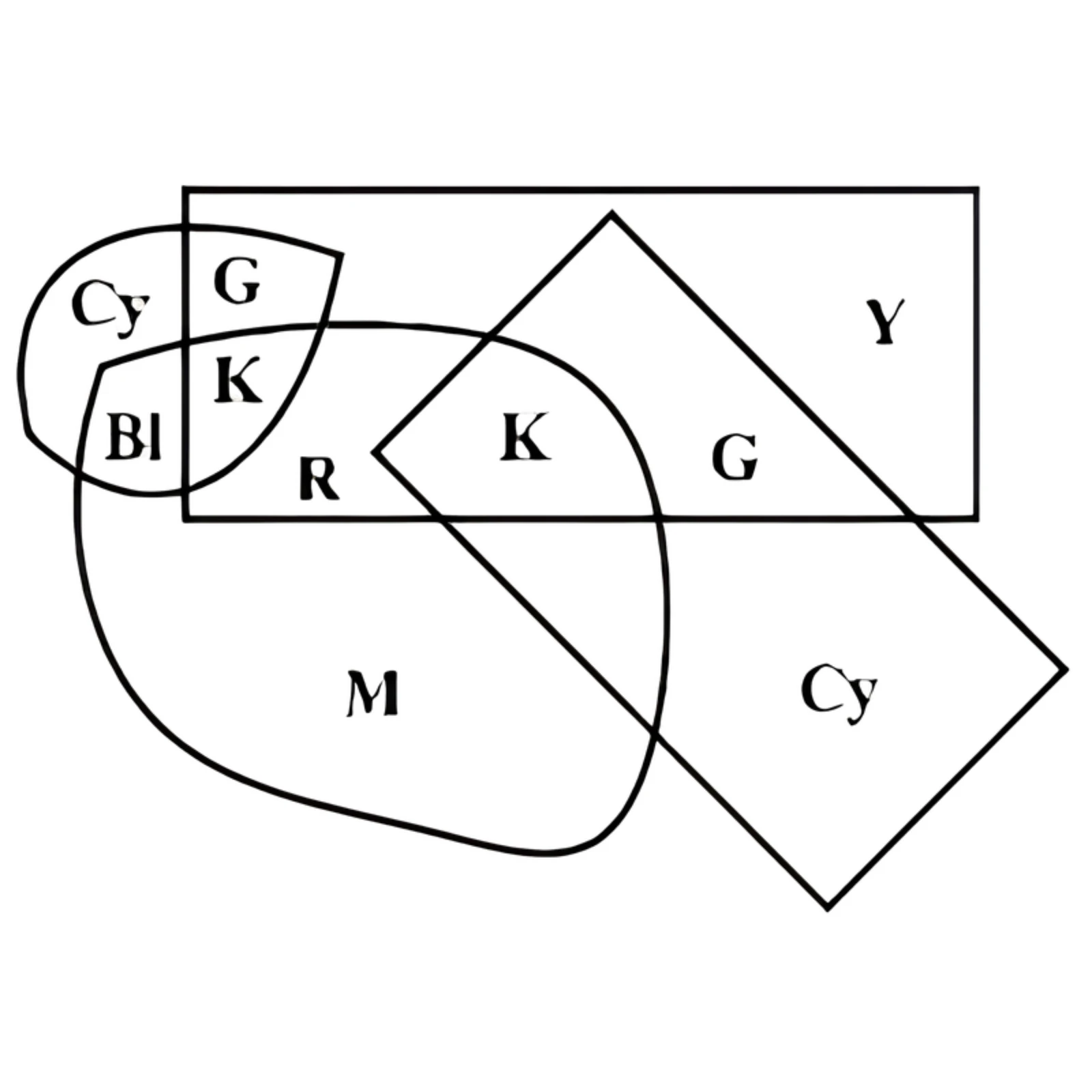
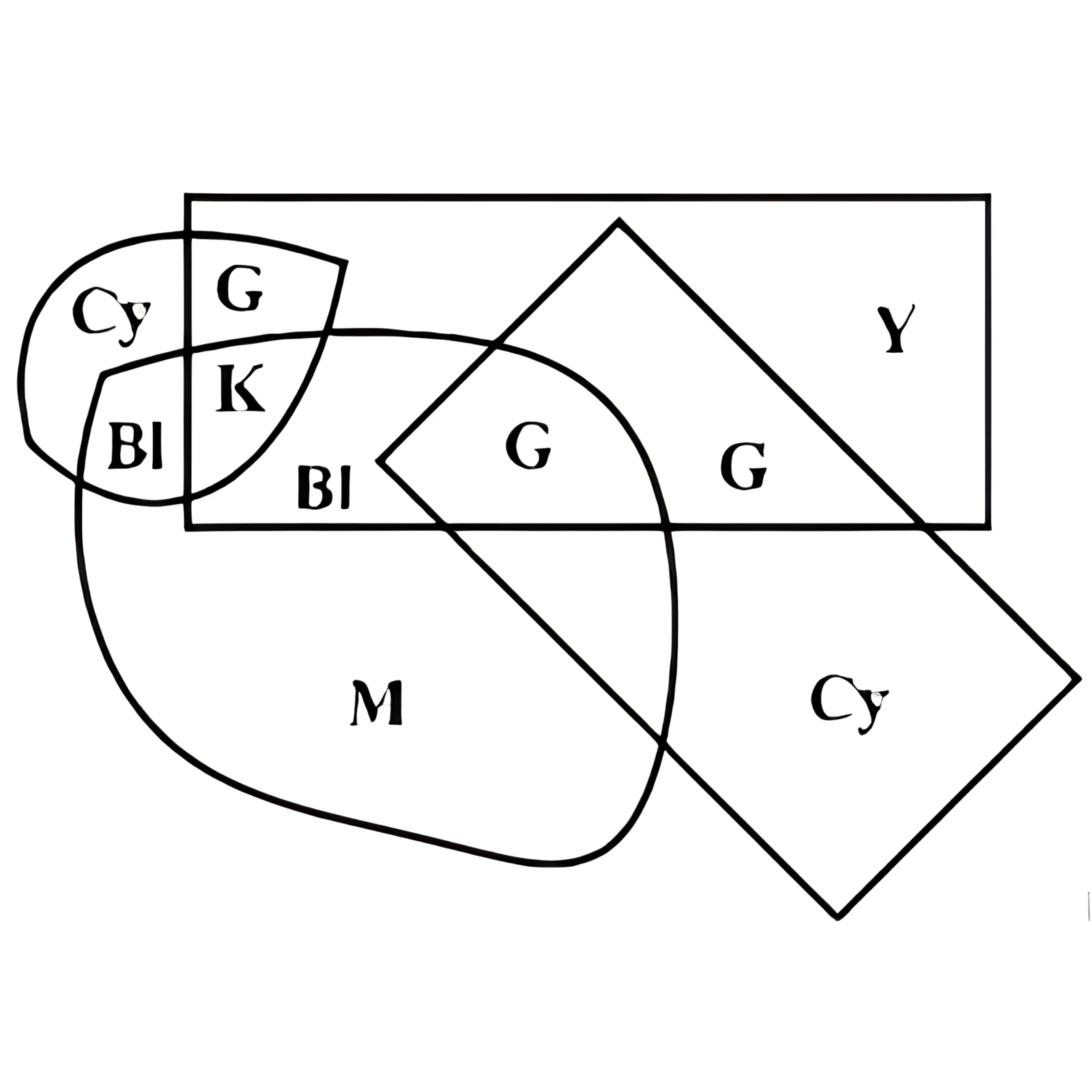
Question text and figures as in the official paper, with the answer from the official key. Worked solutions for every question are in your report after you take the paper as a 3-hour test.
Is there any good show _______ television tonight?
Select the most appropriate option to complete the above sentence.
(A)
in
(B)
at
(C)
within
(D)
on
Answer (official key): D
Worked solution: in your report after you take this paper.
Q2 · General Aptitude · MCQ · 1 mark
As the police officer was found guilty of embezzlement, he was _______ dismissed
from the service in accordance with the Service Rules.
Select the most appropriate option to complete the above sentence.
(A)
sumptuously
(B)
brazenly
(C)
unintentionally
(D)
summarily
Answer (official key): D
Worked solution: in your report after you take this paper.
Q3 · General Aptitude · MCQ · 1 mark
The sum of the following infinite series is:
1!1+2!1+3!1+4!1+5!1+⋯
(A)
π
(B)
1+e
(C)
e−1
(D)
e
Answer (official key): C
Worked solution: in your report after you take this paper.
Q4 · General Aptitude · MCQ · 1 mark
A thin wire is used to construct all the edges of a cube of 1 m side by bending,
cutting and soldering the wire. If the wire is 12 m long, what is the minimum
number of cuts required to construct the wire frame to form the cube?
(A)
3
(B)
4
(C)
6
(D)
12
Answer (official key): A
Worked solution: in your report after you take this paper.
Q5 · General Aptitude · MCQ · 1 mark
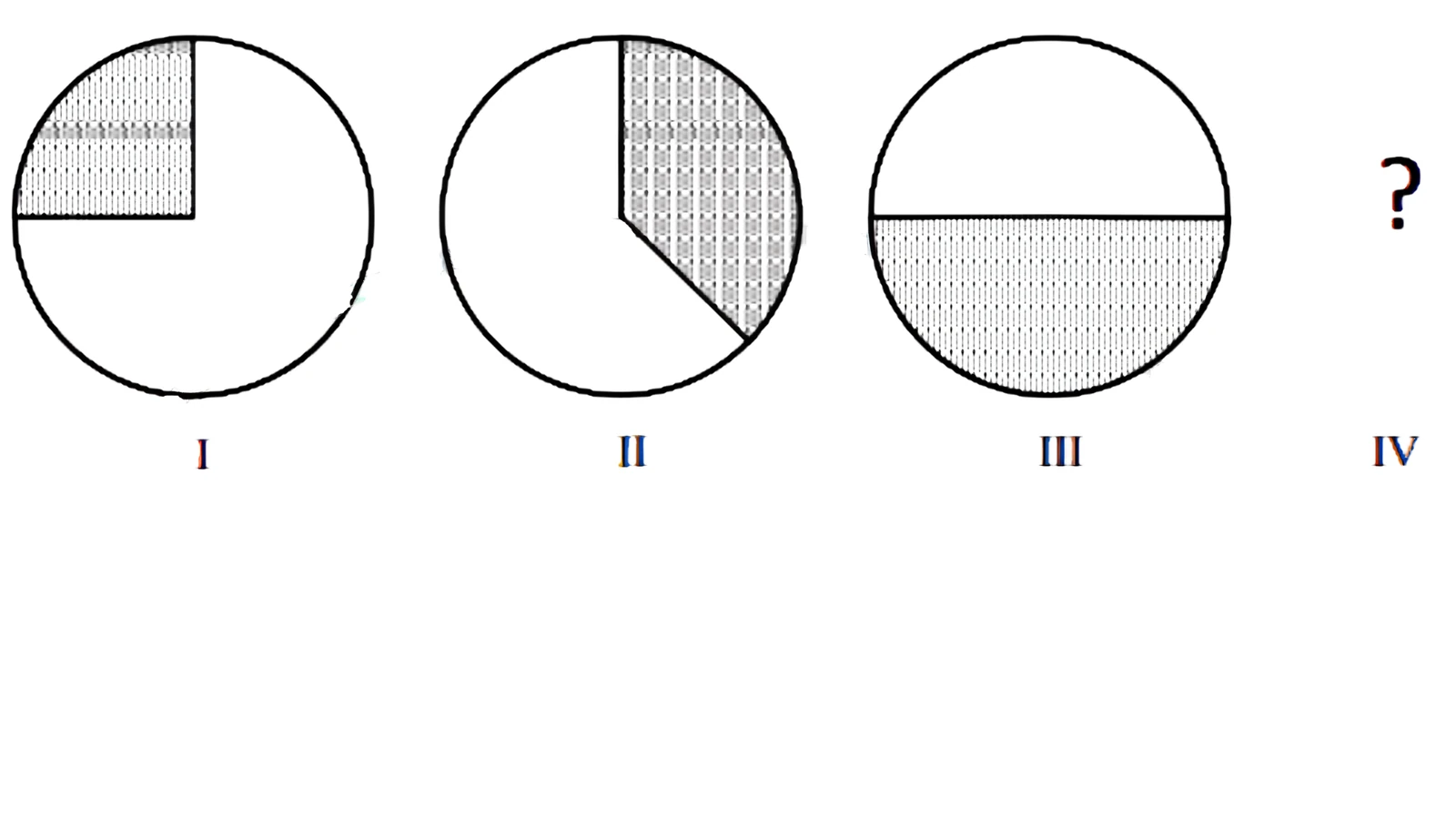
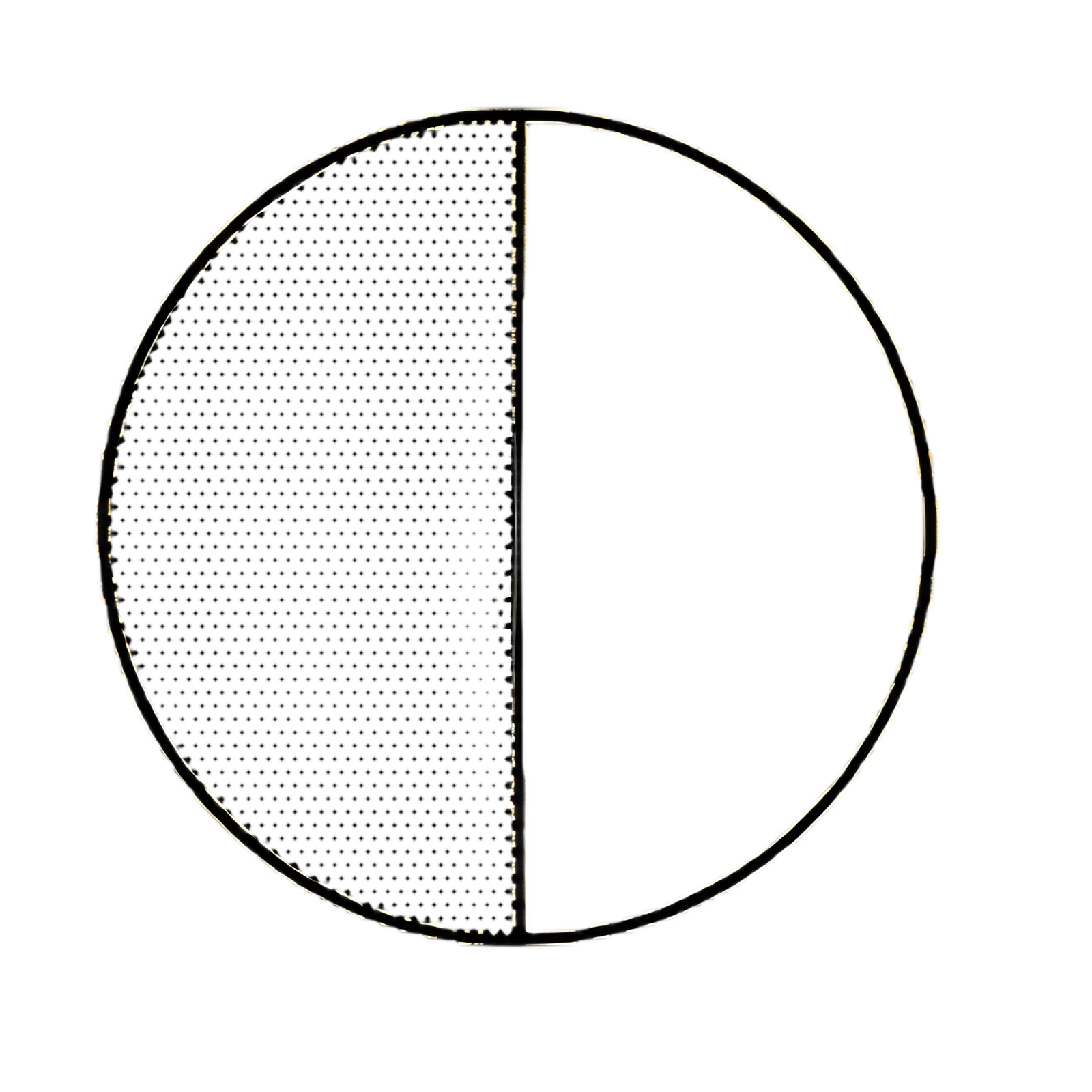
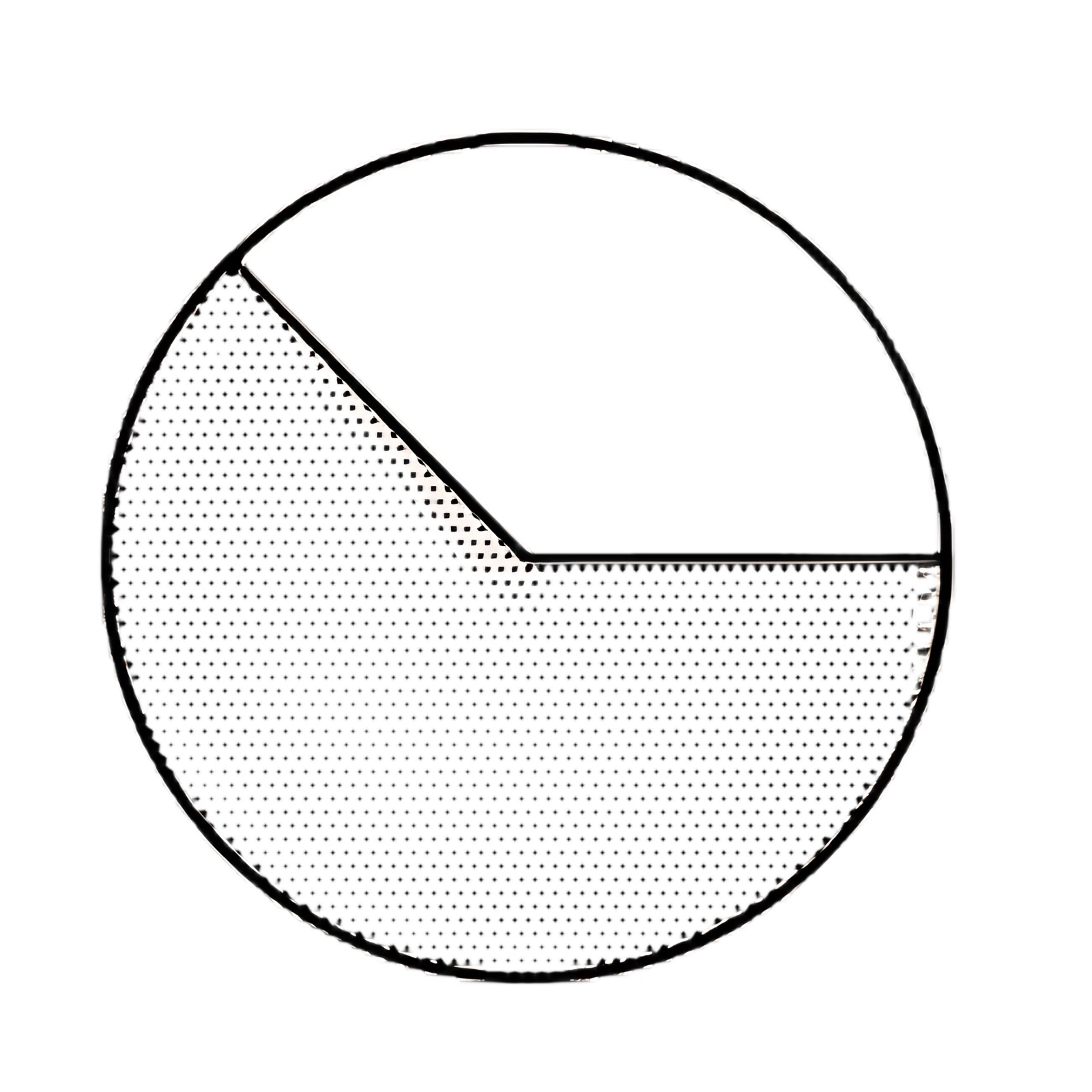
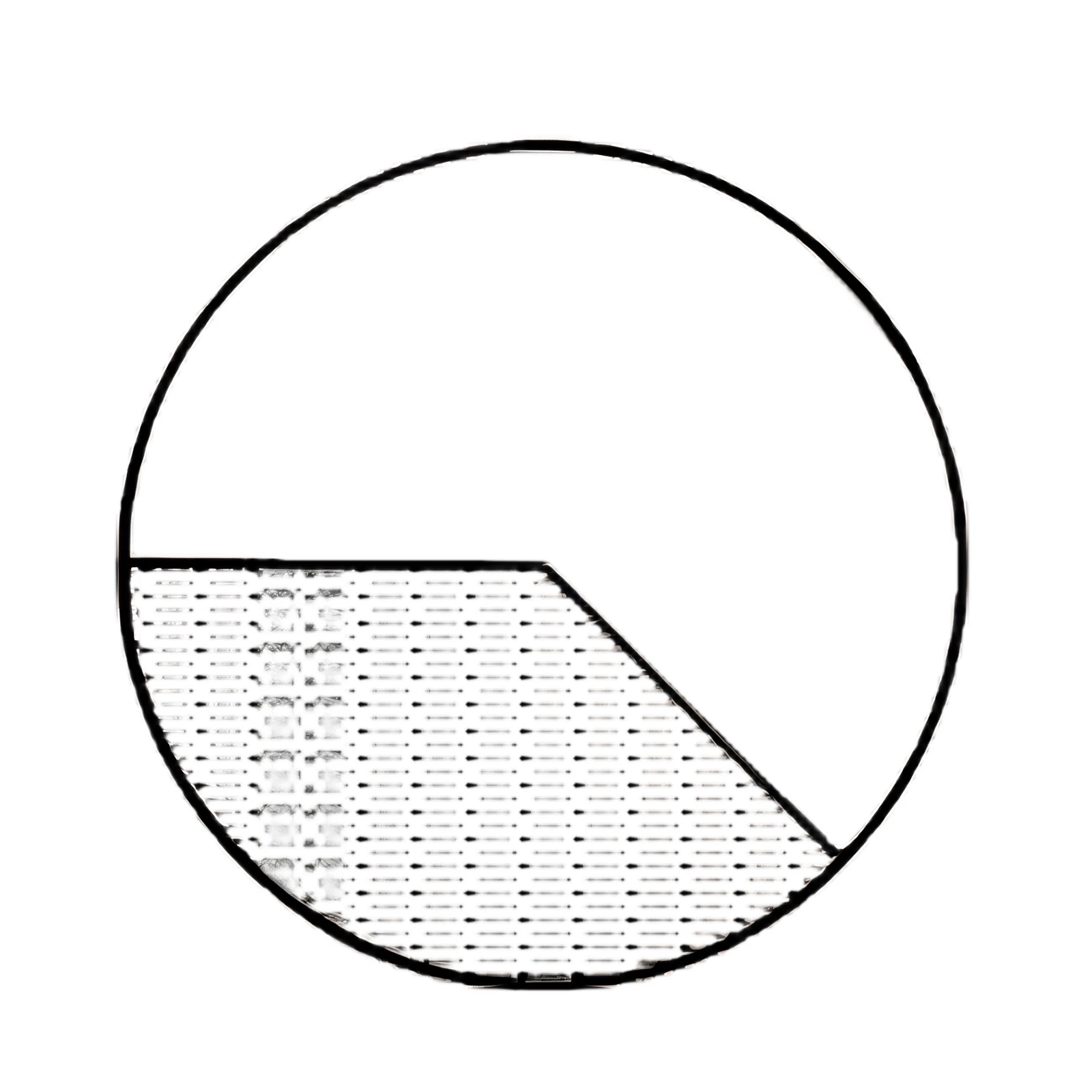
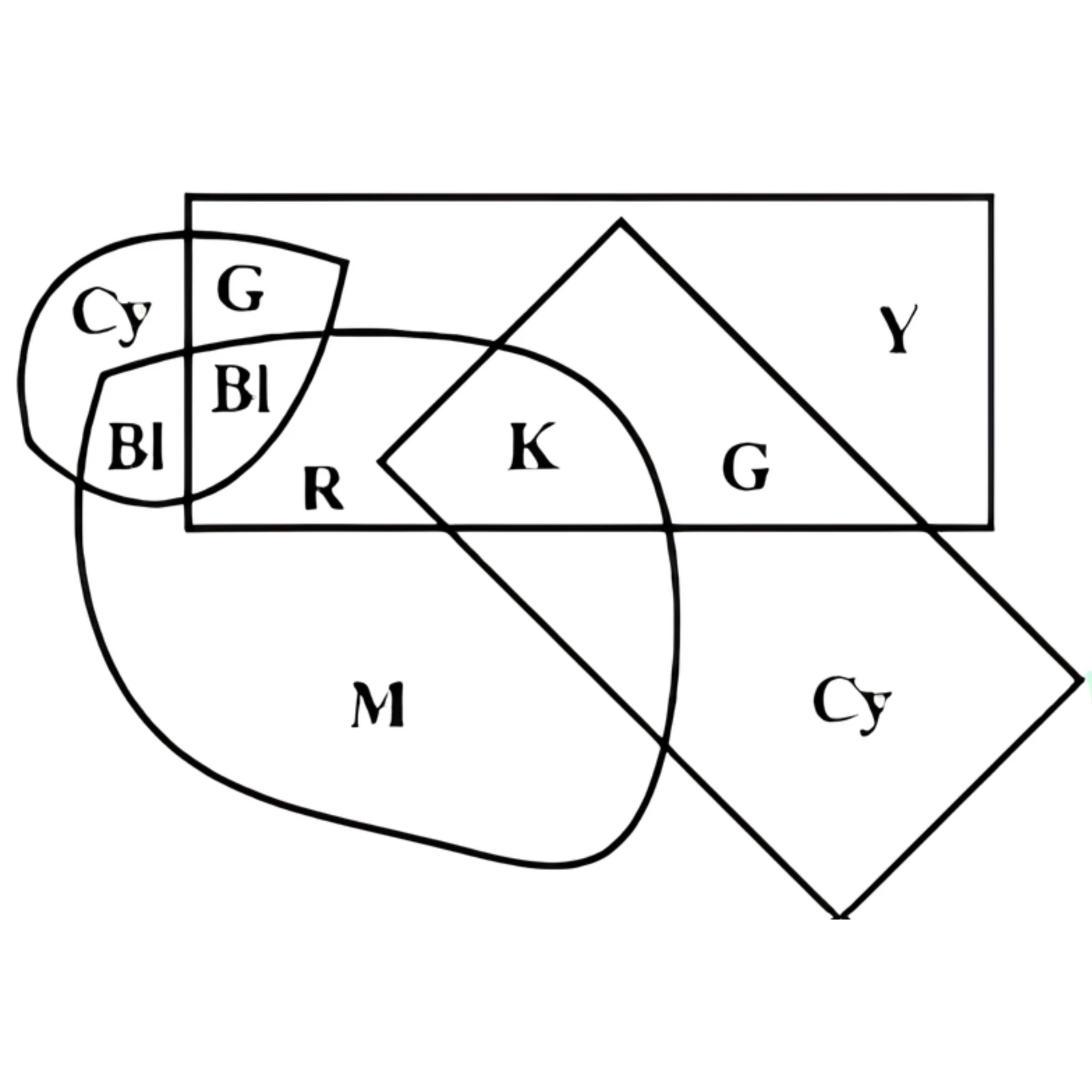
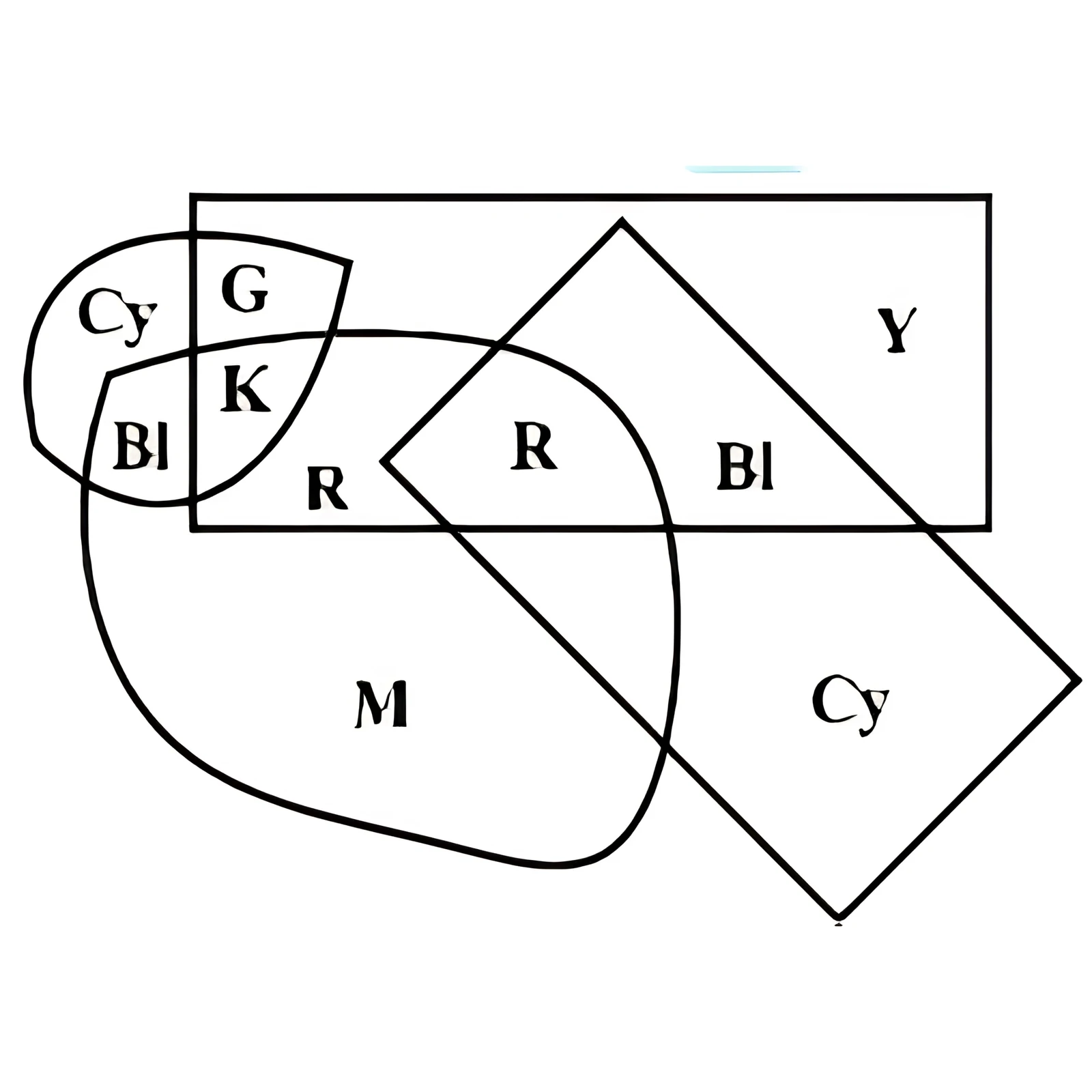
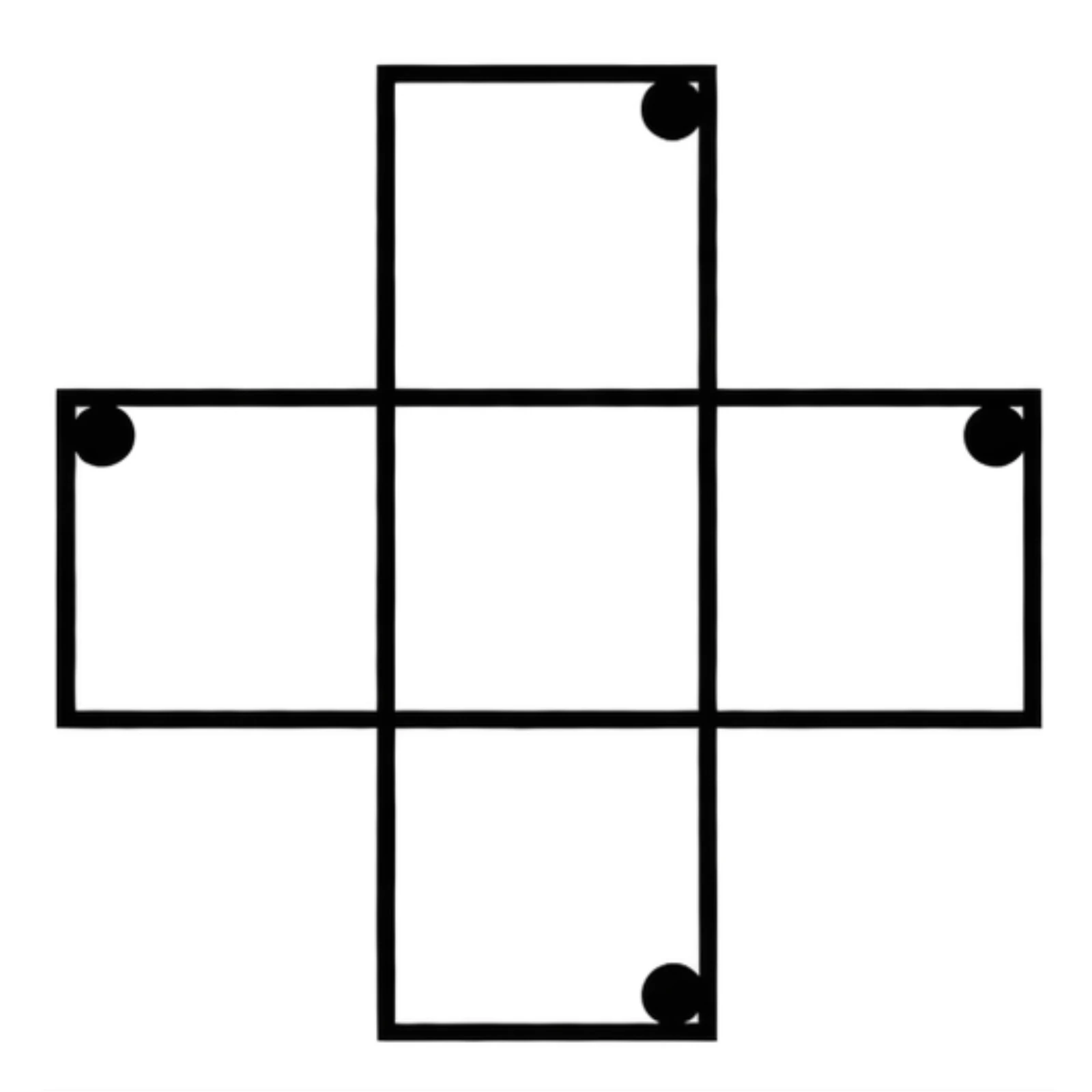
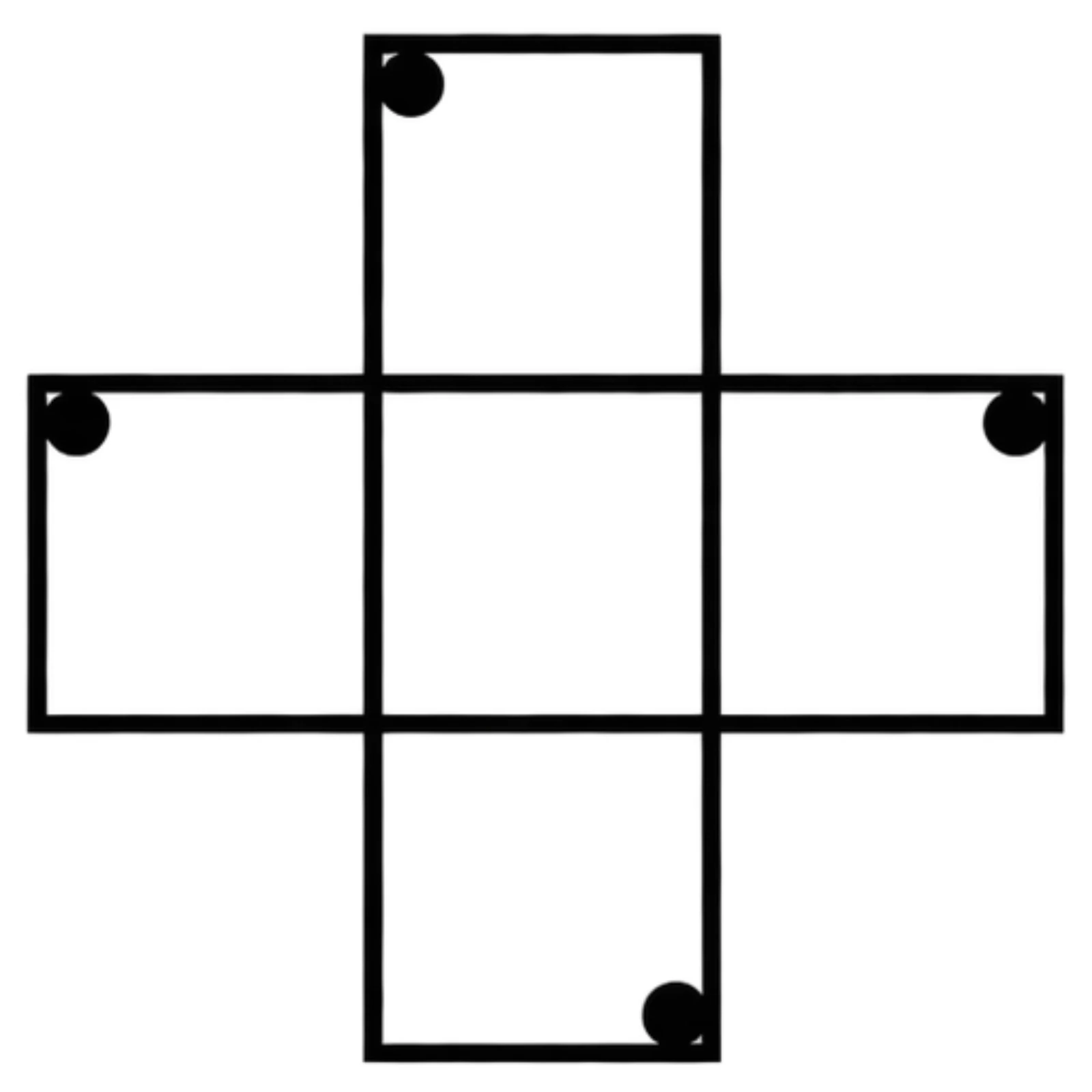
The figures I, II and III are parts of a sequence. Which one of the following
options comes next in the sequence at IV?
(A)
(B)
(C)
(D)
Answer (official key): B
Worked solution: in your report after you take this paper.
Q6 · General Aptitude · MCQ · 2 marks
“Why do they pull down and do away with crooked streets, I wonder, which are my
delight, and hurt no man living? Every day the wealthier nations are pulling down
one or another in their capitals and their great towns: they do not know why they do
it; neither do I. It ought to be enough, surely, to drive the great broad ways which
commerce needs and which are the life-channels of a modern city, without
destroying all history and all the humanity in between: the islands of the past.”
(From Hilaire Belloc’s “The Crooked Streets”)
Based only on the information provided in the above passage, which one of the
following statements is true?
(A)
The author of the passage takes delight in wondering.
(B)
The wealthier nations are pulling down the crooked streets in their capitals.
(C)
In the past, crooked streets were only built on islands.
(D)
Great broad ways are needed to protect commerce and history.
Answer (official key): B
Worked solution: in your report after you take this paper.
Q7 · General Aptitude · MCQ · 2 marks
Rohit goes to a restaurant for lunch at about 1 PM. When he enters the restaurant,
he notices that the hour and minute hands on the wall clock are exactly coinciding.
After about an hour, when he leaves the restaurant, he notices that the clock hands
are again exactly coinciding. How much time (in minutes) did Rohit spend at the
restaurant?
A circle with center at (x,y)=(0.5,0) and radius 0.5 intersects with another
circle with center at (x,y)=(1,1) and radius 1 at two points. One of the
points of intersection (x,y) is:
(A)
(0,0)
(B)
(0.2,0.4)
(C)
(0.5,0.5)
(D)
(1,2)
Answer (official key): B
Worked solution: in your report after you take this paper.
Q10 · General Aptitude · MCQ · 2 marks
An object is said to have an n-fold rotational symmetry if the object, rotated
by an angle of
n2π,
is identical to the original.
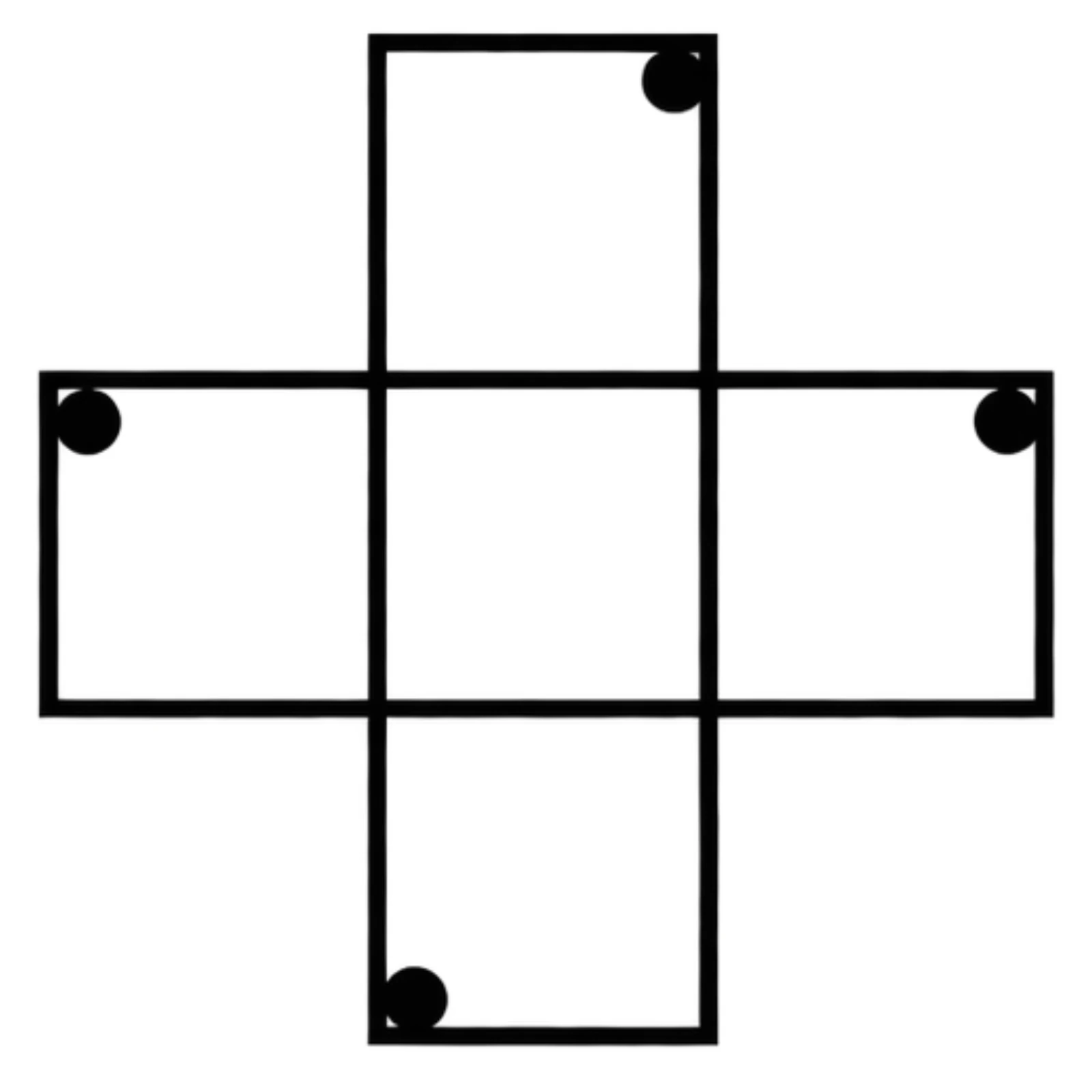
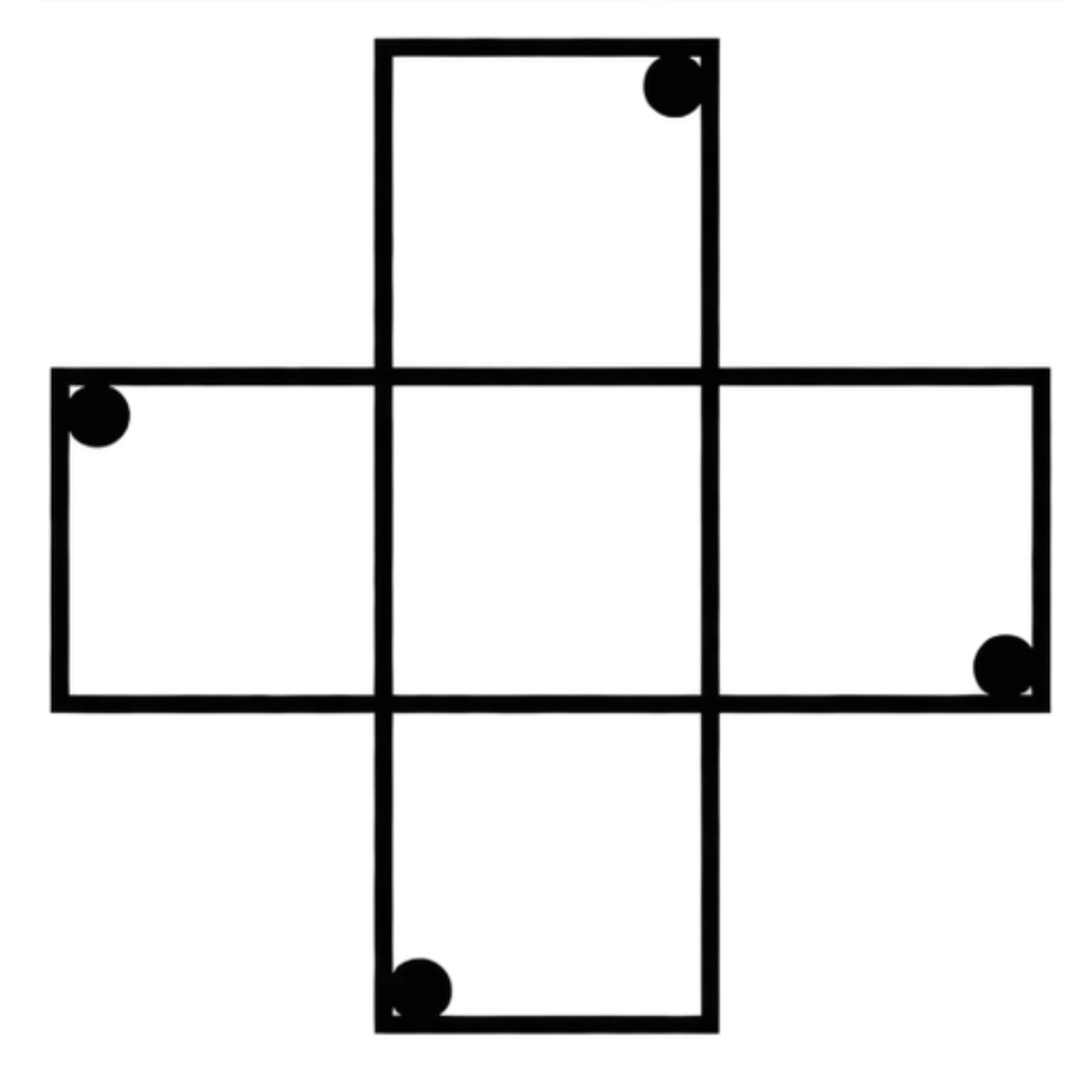
Which one of the following objects exhibits 4-fold rotational symmetry about an
axis perpendicular to the plane of the screen?
Note: The figures shown are representative.
(A)
(B)
(C)
(D)
Answer (official key): B
Worked solution: in your report after you take this paper.
Q11 · Linear Algebra · MCQ · 1 mark
Suppose λ is an eigenvalue of matrix A and x is the corresponding
eigenvector. Let x also be an eigenvector of the matrix
B=A−2I,
where I is the identity matrix.
Then, the eigenvalue of B corresponding to the eigenvector x is equal to
(A)
λ
(B)
λ+2
(C)
2λ
(D)
λ−2
Answer (official key): D
Worked solution: in your report after you take this paper.
Q12 · Linear Algebra · MCQ · 1 mark
Let
A=11−213−3,b=b1b2b3.
For Ax=b to be solvable, which one of the following options is the correct
condition on b1, b2, and b3?
(A)
b1+b2+b3=1
(B)
3b1+b2+2b3=0
(C)
b1+3b2+b3=2
(D)
b1+b2+b3=2
Answer (official key): B
Worked solution: in your report after you take this paper.
Q13 · Partial Differential Equations · MCQ · 1 mark
Which one of the following options is the correct Fourier series of the periodic
function f(x) described below?
f(x)=⎩⎨⎧0,2k,0,−2<x<−1,−1<x<1,1<x<2,period=4.
(A)
f(x)=2k+π2k(cos2πx−31cos23πx+51cos25πx−⋯)
(B)
f(x)=2k+π2k(sin2πx−31sin23πx+51sin25πx−⋯)
(C)
f(x)=k+π4k(cos2πx−31cos23πx+51cos25πx−⋯)
(D)
f(x)=k+π4k(sin2πx−31sin23πx+51sin25πx−⋯)
Answer (official key): C
Worked solution: in your report after you take this paper.
Q14 · Probability and Statistics · MCQ · 1 mark
X is a random variable that can take any one of the values 0, 1, 7, 11,
and 12. The probability mass function for X is
Worked solution: in your report after you take this paper.
Q15 · Structural Engineering · MCQ · 1 mark
As per IS 456:2000 provisions for two-way slabs with continuous edges, the
longitudinal steel reinforcement to be provided in the edge strip is based on
(A)
the calculated minimum bending moment
(B)
the area of longitudinal steel provided in the middle strip in the shorter span
(C)
the area of longitudinal steel provided in the middle strip in the longer span
(D)
the prescribed minimum cross-sectional area of longitudinal steel for slabs
Answer (official key): D
Worked solution: in your report after you take this paper.
Q16 · Construction Materials and Management · MCQ · 1 mark
Identify the FALSE statement from the following options:
(A)
The compressive strength of a concrete test specimen can vary depending on its shape and size
(B)
Air-dried and saturated test specimens show the same compressive strength for concrete
(C)
Curing conditions, such as temperature and relative humidity, can influence the compressive strength of concrete
(D)
Compressive strength depends on the water-to-binder ratio used in the concrete mixture
Answer (official key): B
Worked solution: in your report after you take this paper.
Q17 · Geotechnical Engineering · MCQ · 1 mark
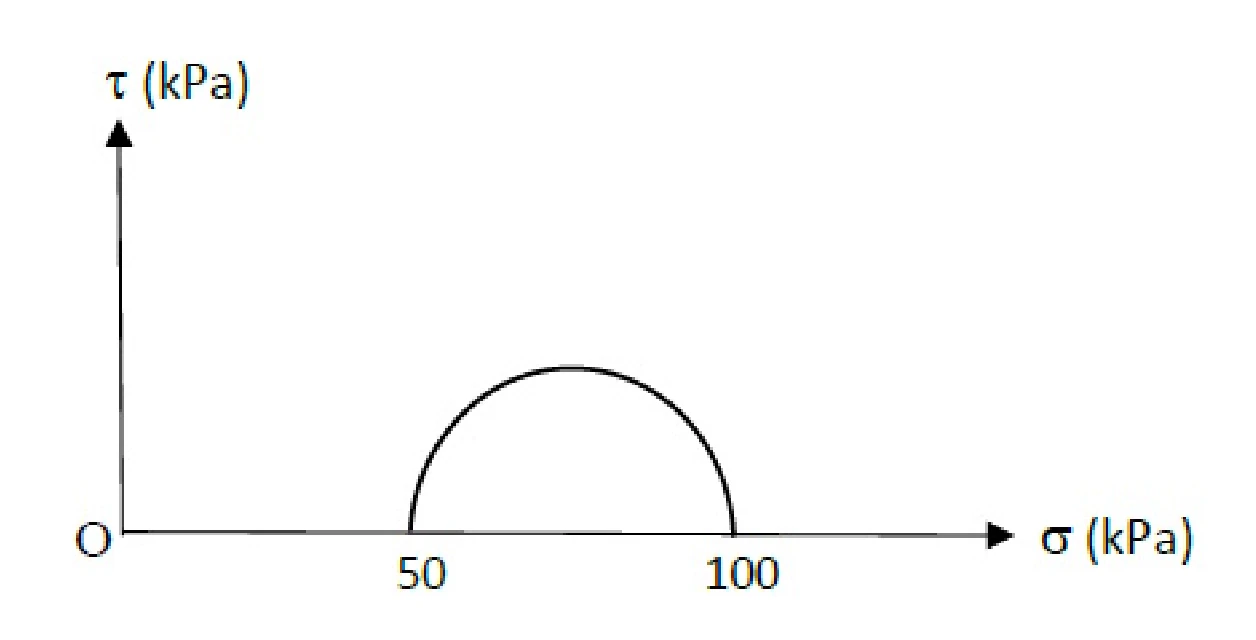
The results of a consolidated drained triaxial test on a normally consolidated
clay are shown in the figure.
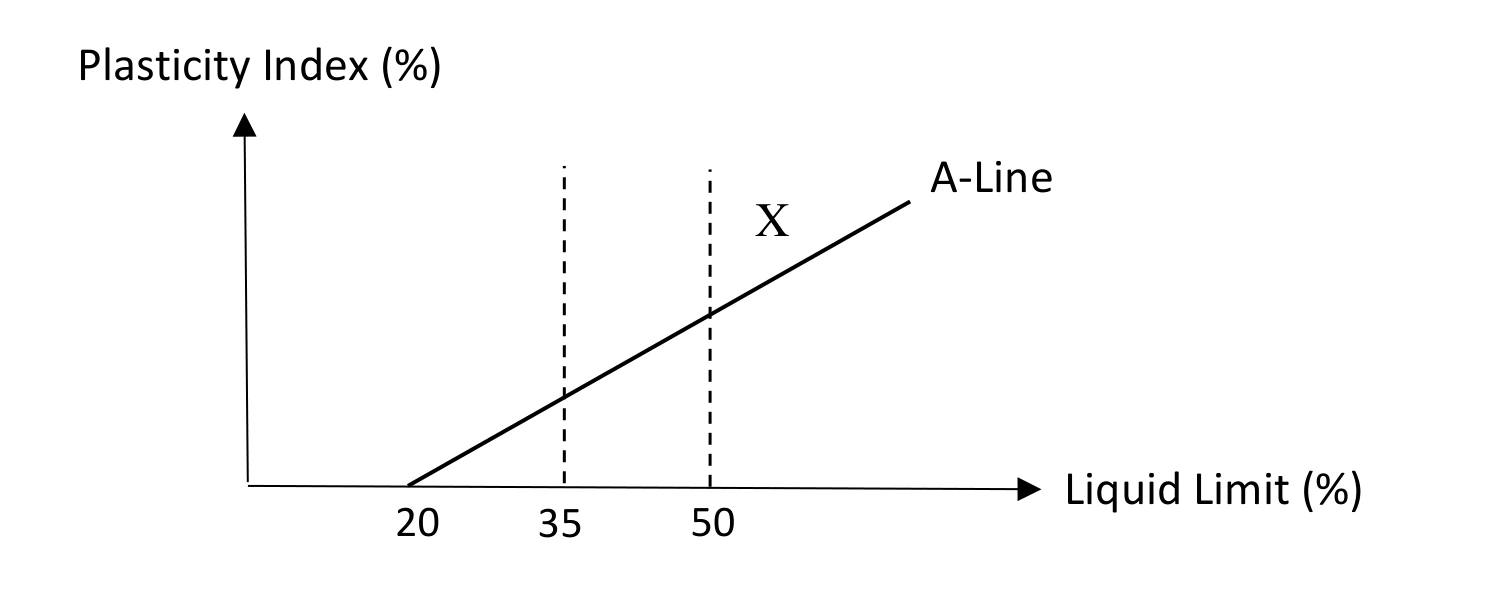
The standard plasticity chart for the classification of a fine-grained soil is
shown in the figure.
As per the Indian standard soil classification system, X represents
(A)
inorganic clay with medium plasticity
(B)
inorganic silt with medium plasticity
(C)
inorganic clay with high plasticity
(D)
inorganic silt with high compressibility
Answer (official key): C
Worked solution: in your report after you take this paper.
Q19 · Water Resources Engineering · MCQ · 1 mark
For a flowing fluid, a dimensionless combination of velocity (V), length scale
(l), and acceleration due to gravity (g) would be
(A)
glV2
(B)
lVg
(C)
Vgl2
(D)
V2gl
Answer (official key): A
Worked solution: in your report after you take this paper.
Q20 · Water Resources Engineering · MCQ · 1 mark
To derive the total flood hydrograph at a catchment outlet from an isolated
storm, the order in which the following methods are applied, from the first method
to the last method, is
P. Obtaining the hyetograph
Q. Addition of baseflow
R. Estimation of initial and infiltration losses
S. Application of unit hydrograph
(A)
PRSQ
(B)
PQRS
(C)
RPSQ
(D)
PSQR
Answer (official key): A
Worked solution: in your report after you take this paper.
Q21 · Environmental Engineering · MCQ · 1 mark
Fecal Coliform (FC) concentration in river water was measured as
10780 cfu/100 ml. The FC concentration after the conventional water treatment,
but before chlorination, was measured as 23 cfu/100 ml.
The ‘Log Kill’ (inactivation) of FC due to the conventional water treatment is
closest to
(A)
4.00
(B)
2.50
(C)
2.67
(D)
3.00
Answer (official key): C
Worked solution: in your report after you take this paper.
Q22 · Environmental Engineering · MCQ · 1 mark
A hydrocarbon (CnHm) is burnt in air (O2+3.78N2). The stoichiometric
fuel-to-air mass ratio for this process is
Note:
Atomic Weight: C(12), H(1)
Effective Molecular Weight: Air(28.8)
Ignore any conversion of N2 in air to the oxides of nitrogen (NOx).
(A)
0.029112n+m4n+m
(B)
34.424n+m12n+m
(C)
34.4212n+m4n+m
(D)
0.02914n+m12n+m
Answer (official key): D
Worked solution: in your report after you take this paper.
Q23 · Transportation Engineering · MCQ · 1 mark
All the vehicles that come during a particular peak hour come during a 10-minute
period within this hour. The 15-minute peak hour factor for this peak hour is
(A)
0.25
(B)
0.167
(C)
0.75
(D)
1.0
Answer (official key): A
Worked solution: in your report after you take this paper.
Q24 · Transportation Engineering · MCQ · 1 mark
In the context of testing bitumen, which one of the following statements is FALSE?
(A)
The depth of penetration of needle in the standard penetration test is measured in the units of one-tenth of millimeter
(B)
Softening point is measured using a ring and ball apparatus
(C)
Softening point is measured in the units of time
(D)
Ductility is measured in the units of length
Answer (official key): C
Worked solution: in your report after you take this paper.
Q25 · Transportation Engineering · MCQ · 1 mark
The maximum degree of the curve that can be used for railways in a mountainous
region is
(A)
10
(B)
20
(C)
50
(D)
40
Answer (official key): D
Worked solution: in your report after you take this paper.
Q26 · Geomatics Engineering · MCQ · 1 mark
If the horizontal distance between a staff point and the point of observation is
d, the error due to the curvature of earth is proportional to
(A)
d
(B)
1/d
(C)
d2
(D)
1/d2
Answer (official key): C
Worked solution: in your report after you take this paper.
Q27 · Geomatics Engineering · MCQ · 1 mark
If the quadrantal bearing of a line is N30∘W, then the whole circle
bearing of the line is
(A)
120∘
(B)
210∘
(C)
300∘
(D)
330∘
Answer (official key): D
Worked solution: in your report after you take this paper.
Q28 · Partial Differential Equations · MSQ · 1 mark
Which of the following equations belong/belongs to the class of second-order,
linear, homogeneous partial differential equations?
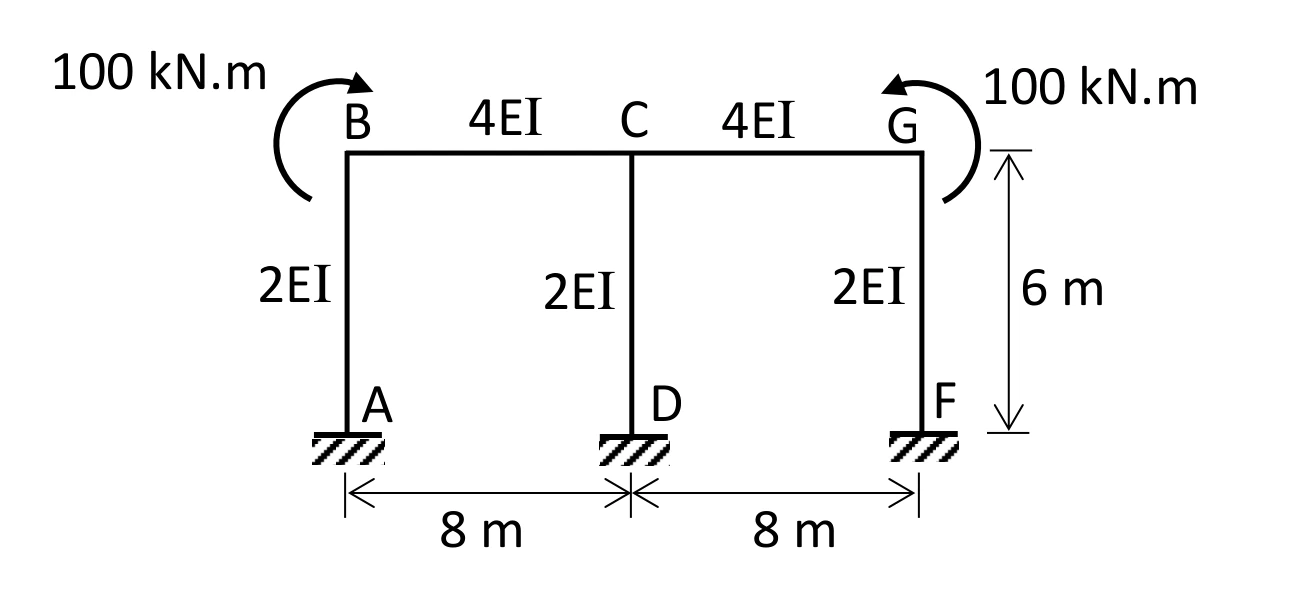
Consider the frame shown in the figure under the loading of 100 kN-m couples at
the joints B and G. Considering only the effects of flexural deformations, which
of the following statements is/are true?
(A)
Axial force is zero in the member CD
(B)
Shear force is zero in the member CD
(C)
There is no rotation in the joint C
(D)
The magnitude of bending moment developed in the member BC at the end C is more than 50 kN-m
Answer (official key): B, C
Worked solution: in your report after you take this paper.
Q30 · Water Resources Engineering · MSQ · 1 mark
For the Bernoulli’s equation to be applicable in a fluid flow situation, which of
the following conditions is/are to be satisfied?
(A)
Fluid should be frictionless
(B)
Fluid should be incompressible
(C)
Flow should be steady
(D)
Flow should be rotational
Answer (official key): A, B, C
Worked solution: in your report after you take this paper.
Q31 · Environmental Engineering · MSQ · 1 mark
The Surface Overflow Rate (SOR) in a rectangular sedimentation tank is
45 m3/m2/d. Minimum diameters of spherical inorganic and organic particles
expected to be completely removed in this tank are calculated. Assume that
Stokes' law is applicable.
Specific gravity of inorganic particles = 2.65
Specific gravity of organic particles = 1.20
Acceleration due to gravity (g) = 9.81 m/s2
Kinematic viscosity (ν) = 1×10⁻⁶ m2/s
Which of the following options is/are correct?
(A)
Minimum diameter of inorganic particles is 24 μm
(B)
Minimum diameter of organic particles is 69 μm
(C)
Minimum diameter of inorganic particles is 15 μm
(D)
Minimum diameter of organic particles is 55 μm
Answer (official key): A, B
Worked solution: in your report after you take this paper.
Q32 · Environmental Engineering · MSQ · 1 mark
Aeration is employed as a treatment option for the removal of several pollutants
from contaminated water.
Identify the pollutant(s), where aeration is employed as a part of their removal:
(A)
Iron
(B)
Cadmium
(C)
Manganese
(D)
Zinc
Answer (official key): A, C
Worked solution: in your report after you take this paper.
Q33 · Construction Materials and Management · Numerical · 1 mark
If the weights retained on the 2.36 mm, 1.18 mm, 600 µm, and 300 µm sieves are
30%, 35%, 15%, and 20%, respectively, of the total weight of an aggregate sample,
then the fineness modulus of the sample is __________________
(rounded off to 2 decimal places).
Q34 · Water Resources Engineering · Numerical · 1 mark
A water resources project with an expected life of 25 years has to be designed
for an acceptable risk of 5% against a design flood. The return period for the
design flood (in years) is _________________
(rounded off to the nearest integer).
Answer (official key): 476 to 500
Worked solution: in your report after you take this paper.
Q35 · Transportation Engineering · Numerical · 1 mark
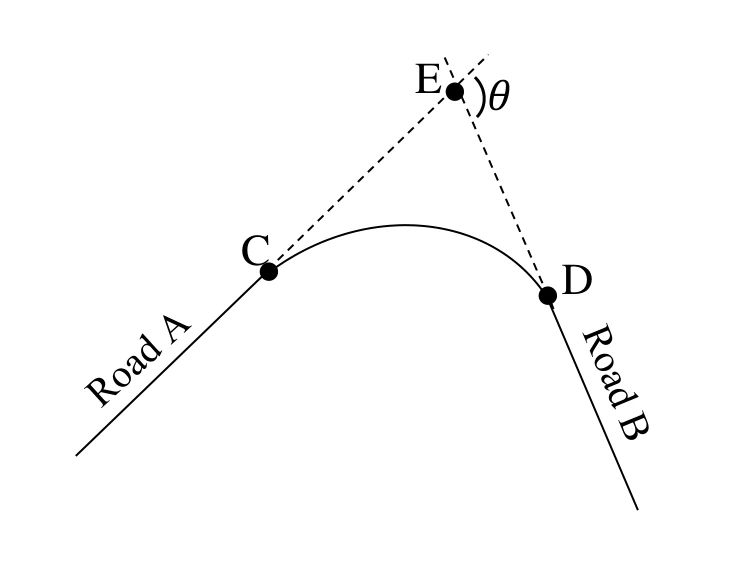
Road A and Road B are joined by a circular horizontal curve of radius 200 m as
shown in the figure. Road A and Road B are tangential to the curve at the points
C and D, respectively. Had the curve not been there, straight roads A and B would
have met at the point E. The distance from C to E is 92 m.
The value of angle θ (in degrees) is ______________
(rounded off to 1 decimal place).
Note: The value of angle θ is to be calculated only from the consideration
of Euclidean geometry and the data given in the problem.
Answer (official key): 48 to 51
Worked solution: in your report after you take this paper.
Q36 · Calculus · MCQ · 2 marks
The value of
x→∞lim(x−x2+x)
is equal to
(A)
−1
(B)
−0.5
(C)
−2
(D)
0
Answer (official key): B
Worked solution: in your report after you take this paper.
Q37 · Structural Engineering · MCQ · 2 marks
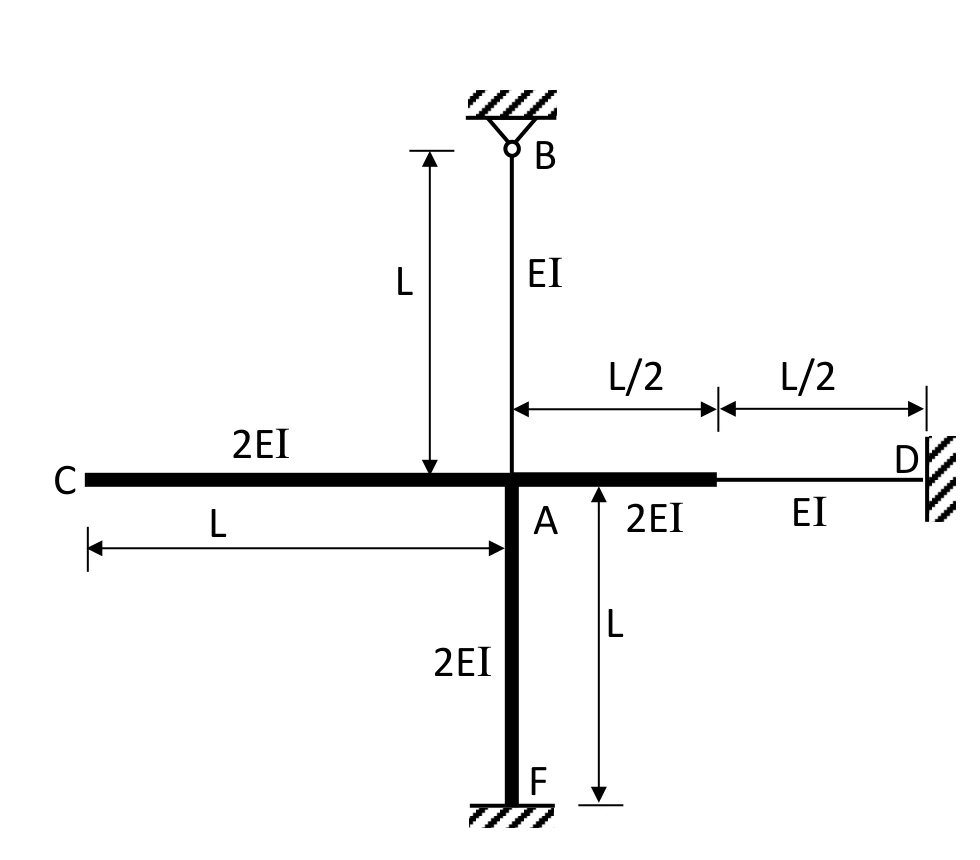
In the rigid-jointed frame shown in the figure, the distribution factor of the
member AD is closest to
(A)
0.254
(B)
0.267
(C)
0.398
(D)
0.421
Answer (official key): C
Worked solution: in your report after you take this paper.
Q38 · Geotechnical Engineering · MCQ · 2 marks
In an oedometer apparatus a specimen of fully saturated clay has been consolidated
under a vertical pressure of 100 kPa and is at equilibrium state. Immediately on
increasing the vertical pressure to 150 kPa, the effective stress σ′ and excess
pore water pressure Δu will be
(A)
σ′=50 kPa, Δu=100 kPa
(B)
σ′=100 kPa, Δu=50 kPa
(C)
σ′=150 kPa, Δu=50 kPa
(D)
σ′=100 kPa, Δu=150 kPa
Answer (official key): B
Worked solution: in your report after you take this paper.
Q39 · Water Resources Engineering · MCQ · 2 marks
The mean rainfall over a catchment has to be estimated. The data for four rain
gauges located in and around the catchment is listed in the table.
Rain gauge station
P
Q
R
S
Located inside catchment?
Yes
Yes
Yes
No
Thiessen weightage factor
0.25
0.50
0.10
0.15
Rainfall (mm)
100
110
100
125
Which one of the following statements is correct?
(A)
The estimate obtained from the Thiessen-mean method is greater than that obtained using the arithmetic-mean method
(B)
The estimate obtained from the Thiessen-mean method is equal to that obtained using the arithmetic-mean method
(C)
The estimate obtained from the Thiessen-mean method is less than that obtained using the arithmetic-mean method
(D)
The Thiessen-mean method cannot be applied in this case
Answer (official key): A
Worked solution: in your report after you take this paper.
Q40 · Transportation Engineering · MCQ · 2 marks
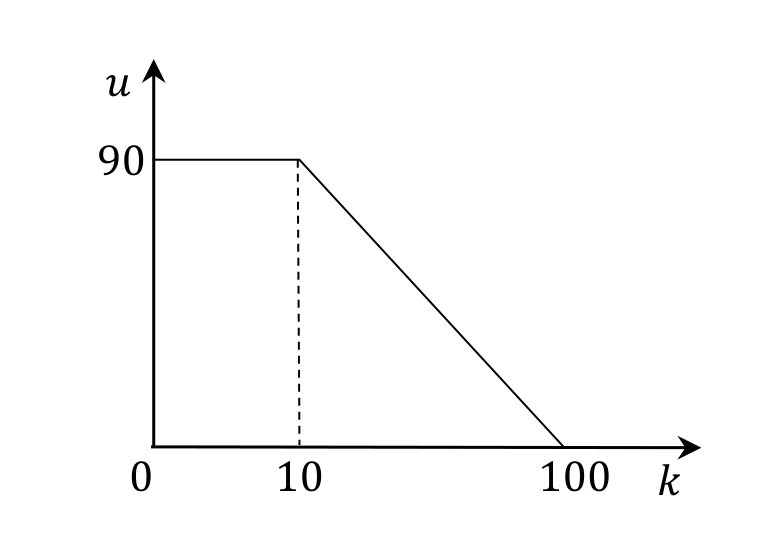
The speed-density relation on a one-way, single lane road is shown in the figure,
where speed u is in km/hour and density k is in vehicles/km.
The maximum flow (in vehicles/hour) on this road is
(A)
2500
(B)
900
(C)
2250
(D)
2000
Answer (official key): A
Worked solution: in your report after you take this paper.
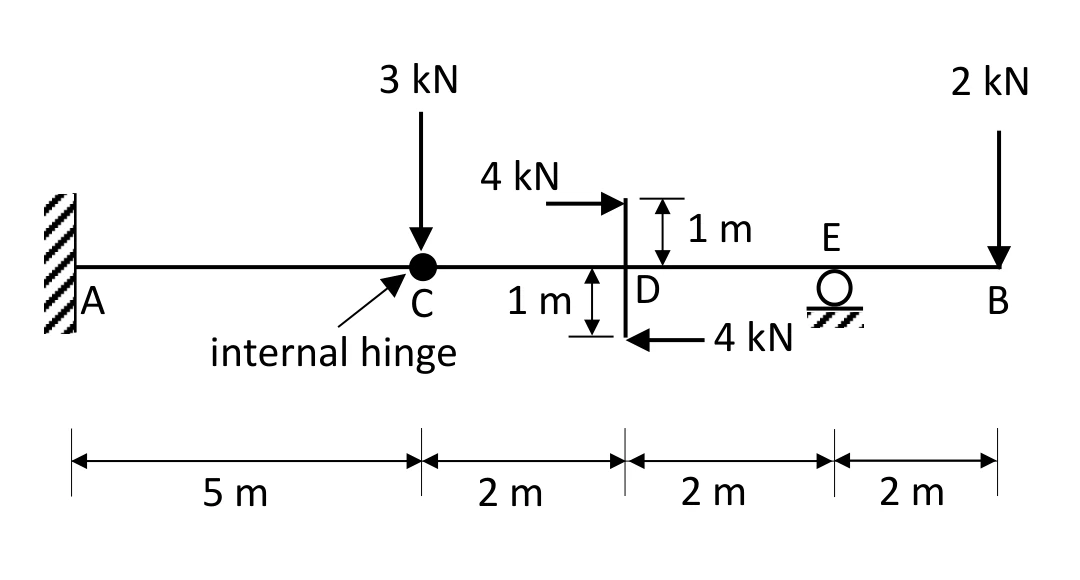
Q41 · Structural Engineering · MSQ · 2 marks
Consider the beam ACDEB given in the figure. Which of the following statements
is/are correct?
(A)
Bending moment is zero between the points A and C
(B)
There is a sudden jump in shear force at the point D
(C)
There is a sudden jump in bending moment at the point E
(D)
Bending moment is zero somewhere between the points D and E
Answer (official key): A, D
Worked solution: in your report after you take this paper.
Q42 · Construction Materials and Management · MSQ · 2 marks
In the context of construction project management, which of the following
statements is/are true?
(A)
A dummy activity will consume time and resources
(B)
The programme evaluation and review technique (PERT) is best suited for projects with large uncertainties in the duration of activities
(C)
A Gantt chart is commonly used for identifying the ‘critical path’ of activities in a project
(D)
Free float is the amount of time by which the start of an activity can be delayed without causing a delay in the start of a following activity
Answer (official key): B, D
Worked solution: in your report after you take this paper.
Q43 · Water Resources Engineering · MSQ · 2 marks
Lacey’s regime equations, followed in India for making scour calculations while
designing hydraulic structures across alluvial channels, are given below:
D=0.470(fsQ)1/3,P=4.75Q,fs=1.76d,
where Q is discharge and fs is silt factor.
Regarding these equations, which of the following statements is/are true?
(A)
D is the depth of scour below the existing riverbed
(B)
P is the Lacey’s waterway width
(C)
d is the average grain size diameter of the bed material in centimetres
(D)
D is the depth of scour below the design flood level
Answer (official key): B, D
Worked solution: in your report after you take this paper.
Q44 · Environmental Engineering · MSQ · 2 marks
MgCl2 and CaSO4 salts are added to 1 litre of distilled deionized water and
mixed until completely dissolved. Total Dissolved Solids (TDS) concentration is
500 mg/l, and Total Hardness (TH) is 400 mg/l (as CaCO3).
The amounts of MgCl2 and CaSO4 added are calculated (rounded off to the
nearest integer). Which of the following options is/are true?
Worked solution: in your report after you take this paper.
Q45 · Environmental Engineering · MSQ · 2 marks
A facultative pond system is employed for wastewater treatment. Which of the
following statements is/are true?
(A)
The dissolved oxygen concentration will be high during daytime compared to night-time
(B)
The pH will be high during daytime compared to night-time
(C)
The dissolved oxygen concentration will be low during daytime compared to night-time
(D)
The pH will be low during daytime compared to night-time
Answer (official key): A, B
Worked solution: in your report after you take this paper.
Q46 · Environmental Engineering · MSQ · 2 marks
Organic fraction of municipal solid waste (OFMSW) with bulk density of
315 kg/m3 and water content of 30% is mixed with municipal sludge of bulk
density 700 kg/m3 and water content of 70%, such that the water content of the
mixture is 40%.
The amount of sludge to be mixed per kg of OFMSW and the density of the mixture
are calculated. Which of the following options is/are true?
(A)
0.33 kg of sludge added per kg of OFMSW
(B)
Density of the mixture is 365 kg/m3
(C)
0.66 kg of sludge added per kg of OFMSW
(D)
Density of the mixture is 450 kg/m3
Answer (official key): A, B
Worked solution: in your report after you take this paper.
Q47 · Ordinary Differential Equations · Numerical · 2 marks
Let y be the solution of the initial value problem
y′′+0.8y′+0.16y=0,
where
y(0)=3,y′(0)=4.5.
Then, y(1) is equal to ______________________
(rounded off to 1 decimal place).
Answer (official key): 5.7 to 5.9
Worked solution: in your report after you take this paper.
Q48 · Calculus · Numerical · 2 marks
The maximum value of the function
h(x)=−x3+2x2
in the interval [−1,1.5] is equal to _________________________
(rounded off to 1 decimal place).
Answer (official key): 2.9 to 3.1
Worked solution: in your report after you take this paper.
Q49 · Numerical Methods · Numerical · 2 marks
Consider the differential equation given below. Using the Euler method with the
step size (h) of 0.5, the value of y at x=1.0 is equal to ____________
(rounded off to 1 decimal place).
dxdy=y+2x−x2,y(0)=1.
Answer (official key): 2.4 to 2.8
Worked solution: in your report after you take this paper.
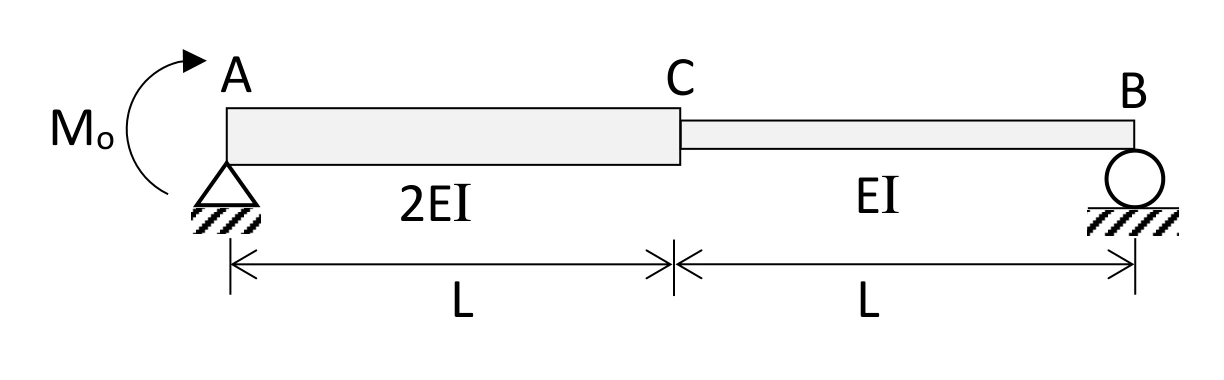
Q50 · Structural Engineering · Numerical · 2 marks
For the beam and loading shown in the figure, the second derivative of the
deflection curve of the beam at the mid-point of AC is given by
8EIαM0.
The value of α is ___________________
(rounded off to the nearest integer).
Answer (official key): 3
Worked solution: in your report after you take this paper.
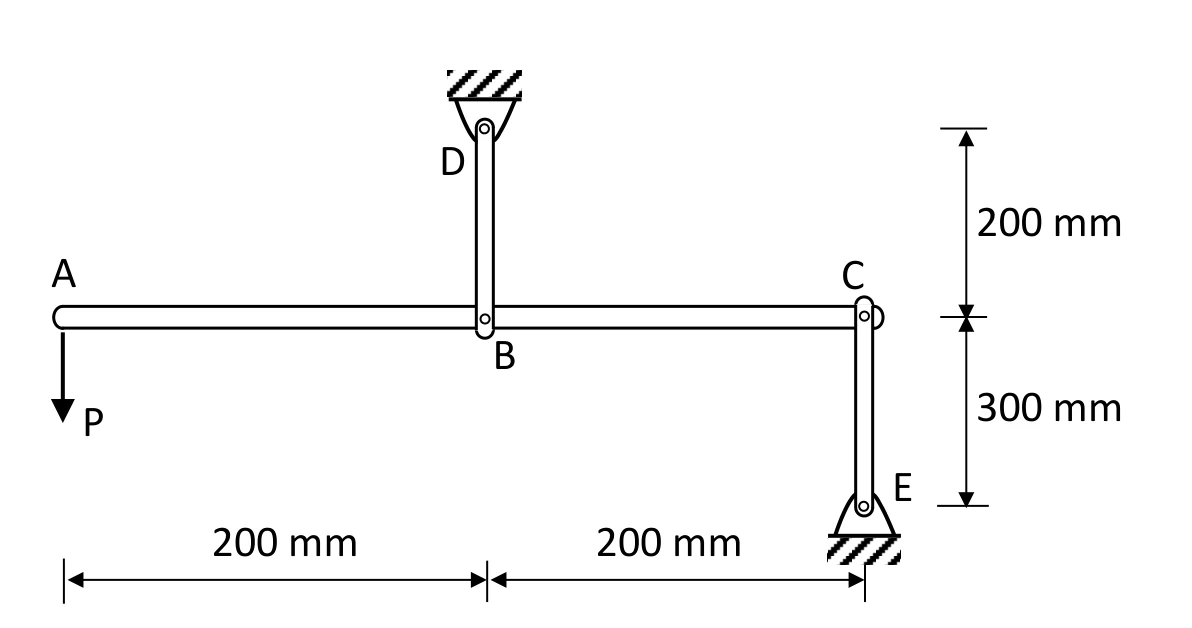
Q51 · Structural Engineering · Numerical · 2 marks
Consider the rigid bar ABC supported by the pin-jointed links BD and CE and
subjected to a load P at the end A, as shown in the figure. The axial rigidities
of BD and CE are 22500 kN and 15000 kN, respectively. If CE elongates by
5 mm due to the load P, the magnitude of the downward deflection (in mm) of the
end A would be ________________________
(rounded off to the nearest integer).
Answer (official key): 14
Worked solution: in your report after you take this paper.
Q52 · Structural Engineering · Numerical · 2 marks
Consider a reinforced concrete beam section of 300 mm width and 700 mm depth.
The beam is reinforced with tension steel of 2000 mm2 area at an effective
cover of 50 mm. Concrete in the tension zone is assumed to be cracked. Assume
the modular ratio of 12 and Young’s modulus of 200 GPa for steel.
When the extreme fibre in the compression zone undergoes the strain of 0.0004
due to the applied bending moment, the stress in the steel (in MPa) is
______________ (rounded off to the nearest integer).
Answer (official key): 125 to 127
Worked solution: in your report after you take this paper.
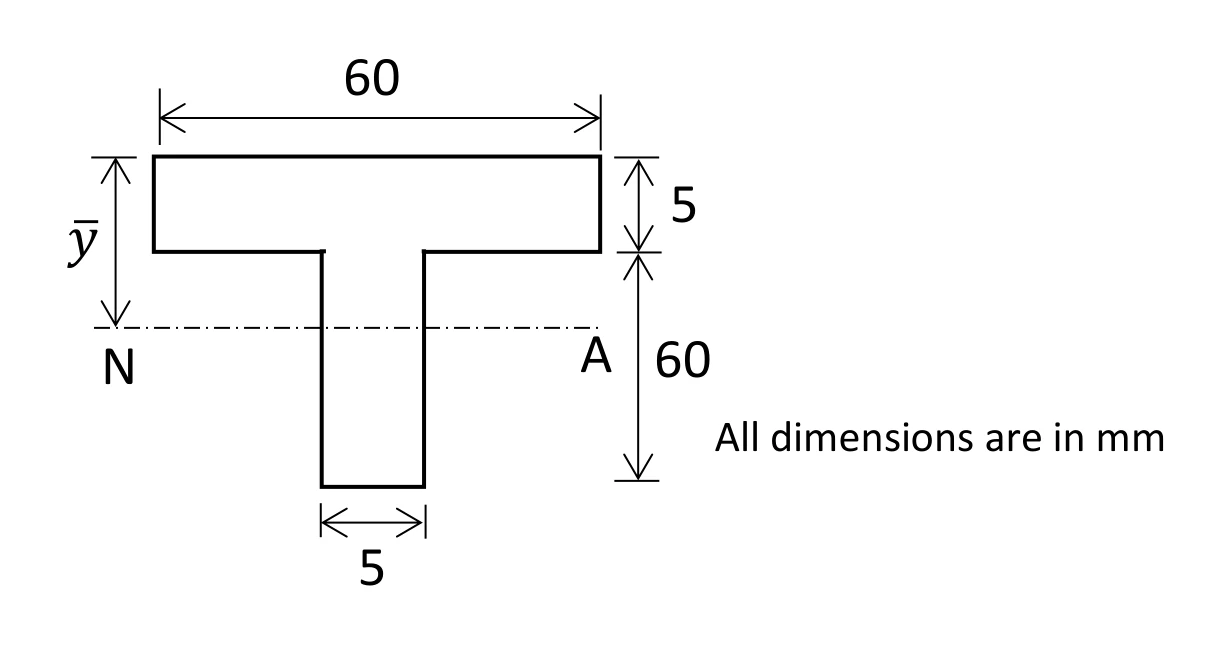
Q53 · Structural Engineering · Numerical · 2 marks
Consider the beam section shown in the figure, with yˉ indicating the depth
of neutral axis (NA). The section is only subjected to an increasing bending
moment. It is given that yˉ=18.75 mm when the section has not yielded at
the top and bottom fibres. Further, yˉ decreases to 5 mm when the entire
section has yielded.
The shape factor of the section is _____________
(rounded off to 2 decimal places).
Answer (official key): 1.8 to 1.82
Worked solution: in your report after you take this paper.
Q54 · Structural Engineering · Numerical · 2 marks
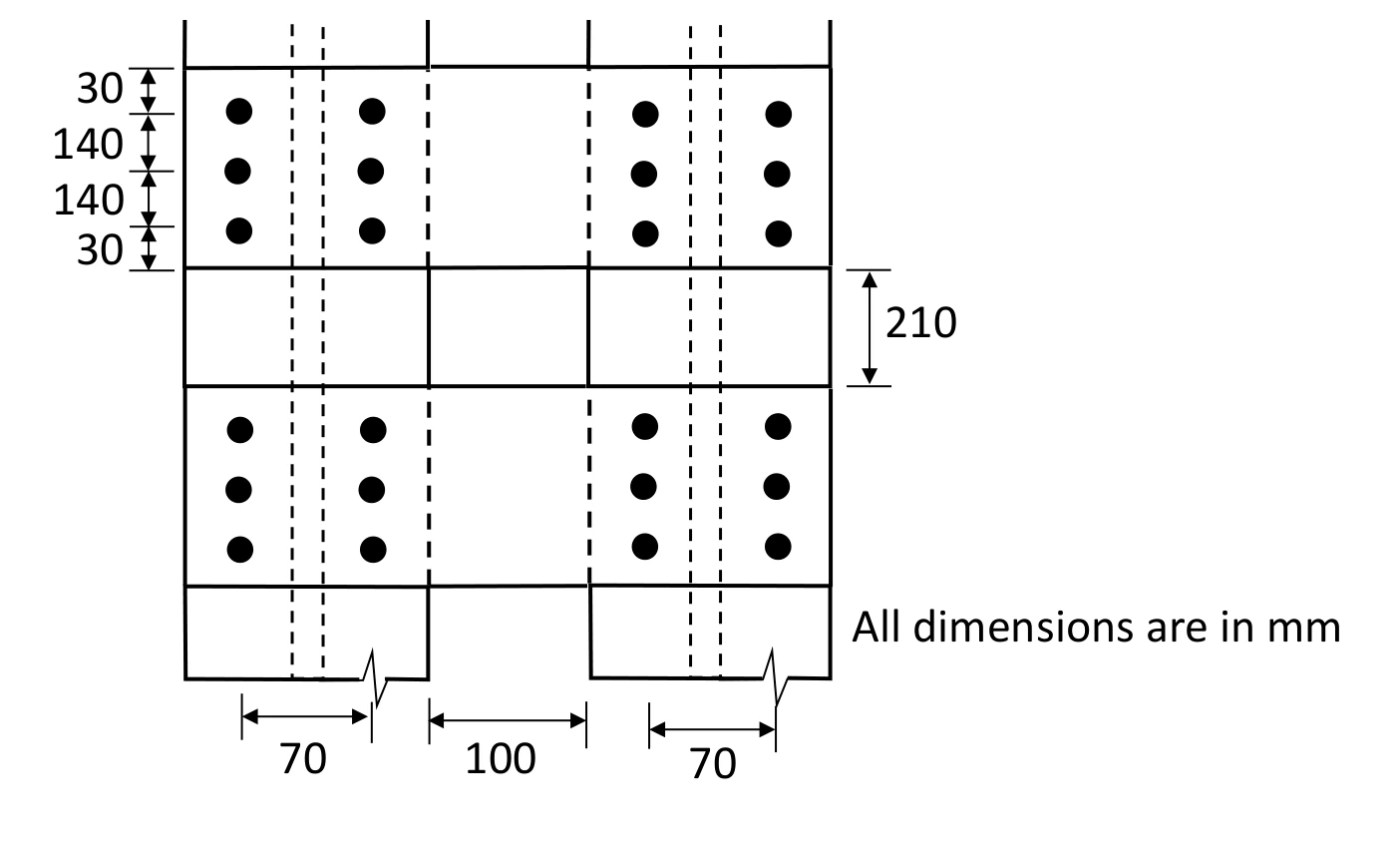
Consider the built-up column made of two I-sections as shown in the figure, with
each batten plate bolted to a component I-section of the column through 6 black
bolts. Each connection of the batten plate with the component section is to be
designed for a longitudinal shear of 70 kN and moment of 10 kN-m.
The minimum bolt value required (in kN) is _____________
(rounded off to the nearest integer).
Answer (official key): 21 to 24
Worked solution: in your report after you take this paper.
Q55 · Geotechnical Engineering · Numerical · 2 marks
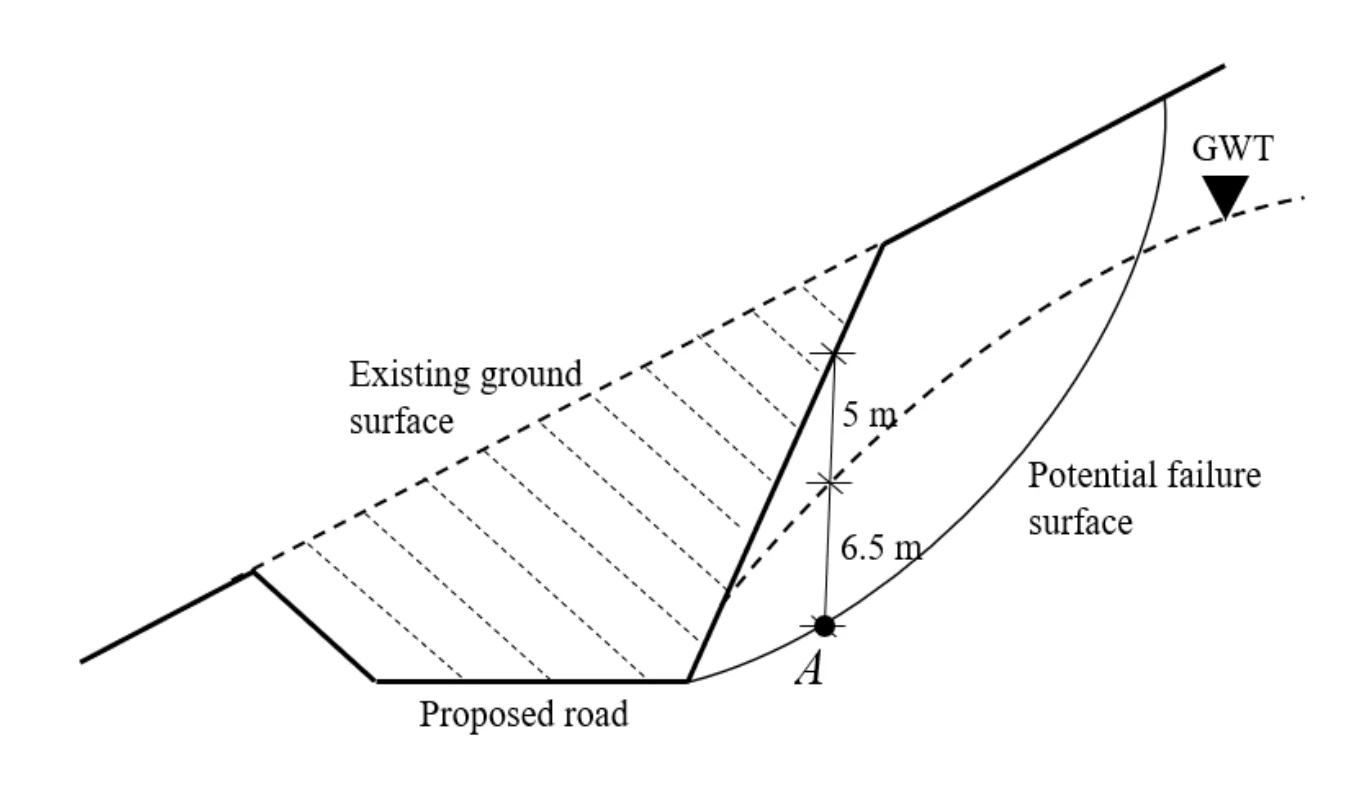
A cut slope is made in a silty clay soil for a new road project, as shown in the
figure. The locations of ground water table (GWT) and potential failure surface
are shown in the figure. After the cut is made, the excess pore water pressure is
fully dissipated, and the shear stress at the point A is 60 kN/m2.
The factor of safety at the point A for long-term stability is
___________________ (rounded off to 2 decimal places).
Note:
Shear strength properties of silty clay:
c′=15 kN/m2, ϕ′=15∘, and cu=75 kN/m2
Unit weight of soil above the GWT:
γ=19 kN/m3
Unit weight of soil below the GWT:
γsat=20 kN/m3
Unit weight of water:
γw=9.81 kN/m3
Answer (official key): 0.96 to 0.98
Worked solution: in your report after you take this paper.
Q56 · Geotechnical Engineering · Numerical · 2 marks
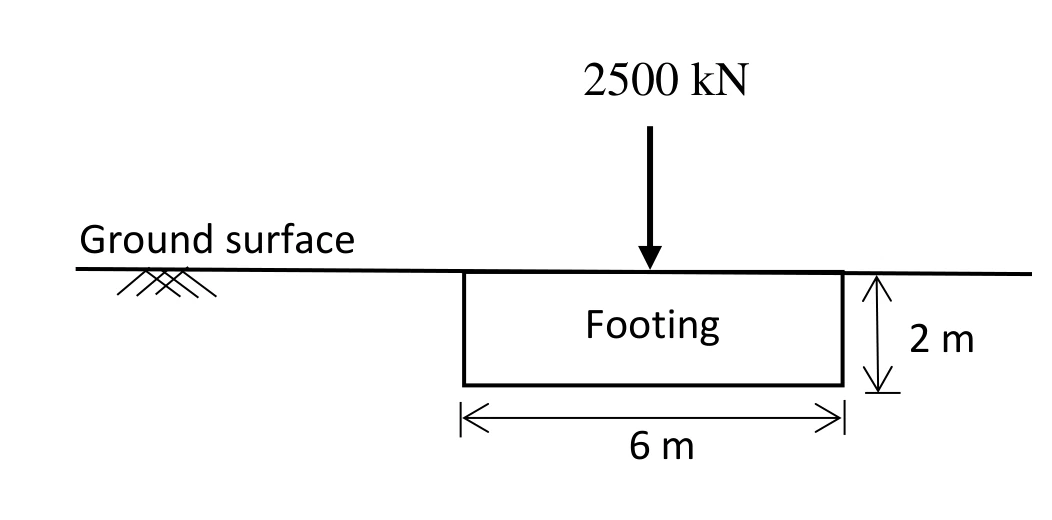
A 6 m × 6 m square footing constructed in clay is subjected to a vertical load of
2500 kN at its centre. The base of the footing is 2 m below the ground surface,
as shown in the figure. The footing is made of 2 m thick concrete. The ground
water table is at a great depth.
Considering Terzaghi’s bearing capacity theory, the factor of safety of footing
against the bearing capacity failure is ____________
(rounded off to 2 decimal places).
Note:
Unit weight of concrete = 24 kN/m3
Properties of clay:
c=50 kN/m2, ϕ=0∘, and γ=19 kN/m3
For ϕ=0∘:
Nc=5.7, Nq=1, Nγ=0
Answer (official key): 4.62 to 4.7
Worked solution: in your report after you take this paper.
Q57 · Geotechnical Engineering · Numerical · 2 marks
A clayey soil has a moisture content of 18%, a specific gravity of soil solids of
2.74, and a degree of saturation of 65%. The soil soaks up water during a rain
event, and the degree of saturation increases to 85.2%. The change of the volume
during the soaking is negligible.
The new moisture content (in %) of the soil will be ____________________
(rounded off to 2 decimal places).
Answer (official key): 23.3 to 23.7
Worked solution: in your report after you take this paper.
Q58 · Geotechnical Engineering · Numerical · 2 marks
A single pile with 450 mm diameter has been driven into a homogeneous clay layer,
which has an undrained cohesion (cu) of 20 kPa and unit weight of
18 kN/m3. The ground water table is found to be at the surface of the clay
layer. The adhesion factor (α) of the soil is 0.95 and bearing capacity
factor (Nc) is 9. The pile is supporting a column load of 144 kN with a factor
of safety of 3.0 against ultimate axial pile capacity in compression.
The required embedment depth of the pile (in m) is ________________
(rounded off to the nearest integer).
Answer (official key): 15 to 16
Worked solution: in your report after you take this paper.
Q59 · Geotechnical Engineering · Numerical · 2 marks
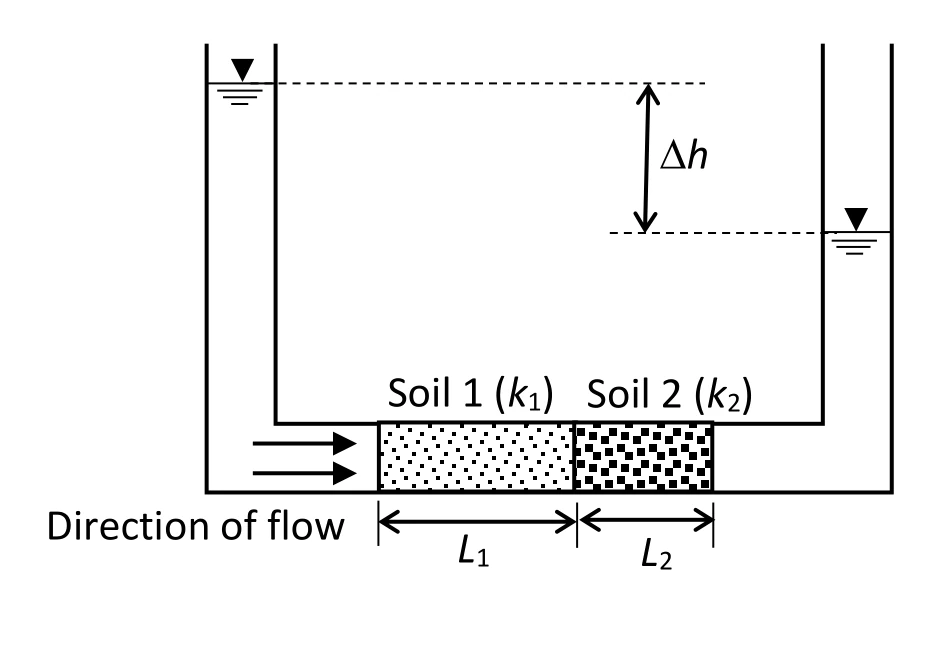
Two soils of permeabilities k1 and k2 are placed in a horizontal flow
apparatus, as shown in the figure.
For Soil 1,
L1=50 cm and k1=0.055 cm/s.
For Soil 2,
L2=30 cm and k2=0.035 cm/s.
The cross-sectional area of the horizontal pipe is 100 cm2, and the head
difference (Δh) is 150 cm.
The discharge (in cm3/s) through the soils is ___________
(rounded off to 2 decimal places).
Answer (official key): 8.44 to 8.56
Worked solution: in your report after you take this paper.
Q60 · Water Resources Engineering · Numerical · 2 marks
A hydraulic jump is formed in a 5 m wide rectangular channel, which has a
horizontal bed and is carrying a discharge of 15 m3/s. The depth of water
upstream of the jump is 0.5 m.
The power dissipated by the jump (in kW) is ___________
(rounded off to the nearest integer).
Note:
Acceleration due to gravity = 9.81 m/s2
Density of water = 1000 kg/m3
Kinetic energy correction factor = 1.0
Answer (official key): 69 to 75
Worked solution: in your report after you take this paper.
Q61 · Water Resources Engineering · Numerical · 2 marks
A symmetrical trapezoidal canal is 100 km long. The bottom width is 10 m and
the side slope is 1 Horizontal : 1 Vertical. The average flow depth in the canal
is 2.5 m throughout the month of April. The measurement from a Class-A
evaporimeter in the vicinity of the canal indicated an average evaporation rate
of 0.5 cm/day in April.
The volume of water evaporated from the canal (in m3) in the month of April
is close to __________________ ×103
(rounded off to 1 decimal place).
Answer (official key): 120 to 180
Worked solution: in your report after you take this paper.
Q62 · Water Resources Engineering · Numerical · 2 marks
A 5.0 m wide rectangular channel carries a discharge of 10 m3/s at a depth
of 1.5 m under uniform flow. To produce critical flow conditions without affecting
the upstream conditions, the channel bottom elevation should be raised (in m) by
__________________ (rounded off to 2 decimal places).
Assume that there is no loss of head at the raise, kinetic energy correction factor
is 1.0, and acceleration due to gravity is 9.81 m/s2.
Answer (official key): 0.45 to 0.51
Worked solution: in your report after you take this paper.
Q63 · Transportation Engineering · Numerical · 2 marks
A one-way, single lane road has traffic that consists of 30% trucks and 70% cars.
The speed of trucks (in km/h) is a uniform random variable on the interval
(30, 60), and the speed of cars (in km/h) is a uniform random variable on the
interval (40, 80). The speed limit on the road is 50 km/h.
The percentage of vehicles that exceed the speed limit is __________________
(rounded off to 1 decimal place).
Note: X is a uniform random variable on the interval (α,β) if its
probability density function is
f(x)=⎩⎨⎧β−α1,0,α<x<β,otherwise.
Answer (official key): 61 to 63
Worked solution: in your report after you take this paper.
Q64 · Geomatics Engineering · Numerical · 2 marks
In levelling between two points A and B on the opposite banks of a river, the
readings are taken by setting the instrument both at A and B, as shown in the table.
If the RL of A is 150.000 m, the RL of B (in m) is _______________
(rounded off to 3 decimal places).
Level position
Staff reading at A (m)
Staff reading at B (m)
A
1.800
1.350
B
1.450
0.950
Answer (official key): 150.47 to 150.48
Worked solution: in your report after you take this paper.
Q65 · Transportation Engineering · Numerical · 2 marks
During determination of the bulk specific gravity of compacted bituminous
specimen, the mass in air of the specimen is 1260 g and volume is 525 cm3.
The density of water is 1.0 g/cm3. The theoretical maximum specific gravity of
mix is 2.510.
The percentage air voids in the compacted specimen is ____________________
(rounded off to 2 decimal places).
Answer (official key): 4.22 to 4.56
Worked solution: in your report after you take this paper.