Question text and figures as in the official paper, with the answer from the official key. Worked solutions for every question are in your report after you take the paper as a 3-hour test.
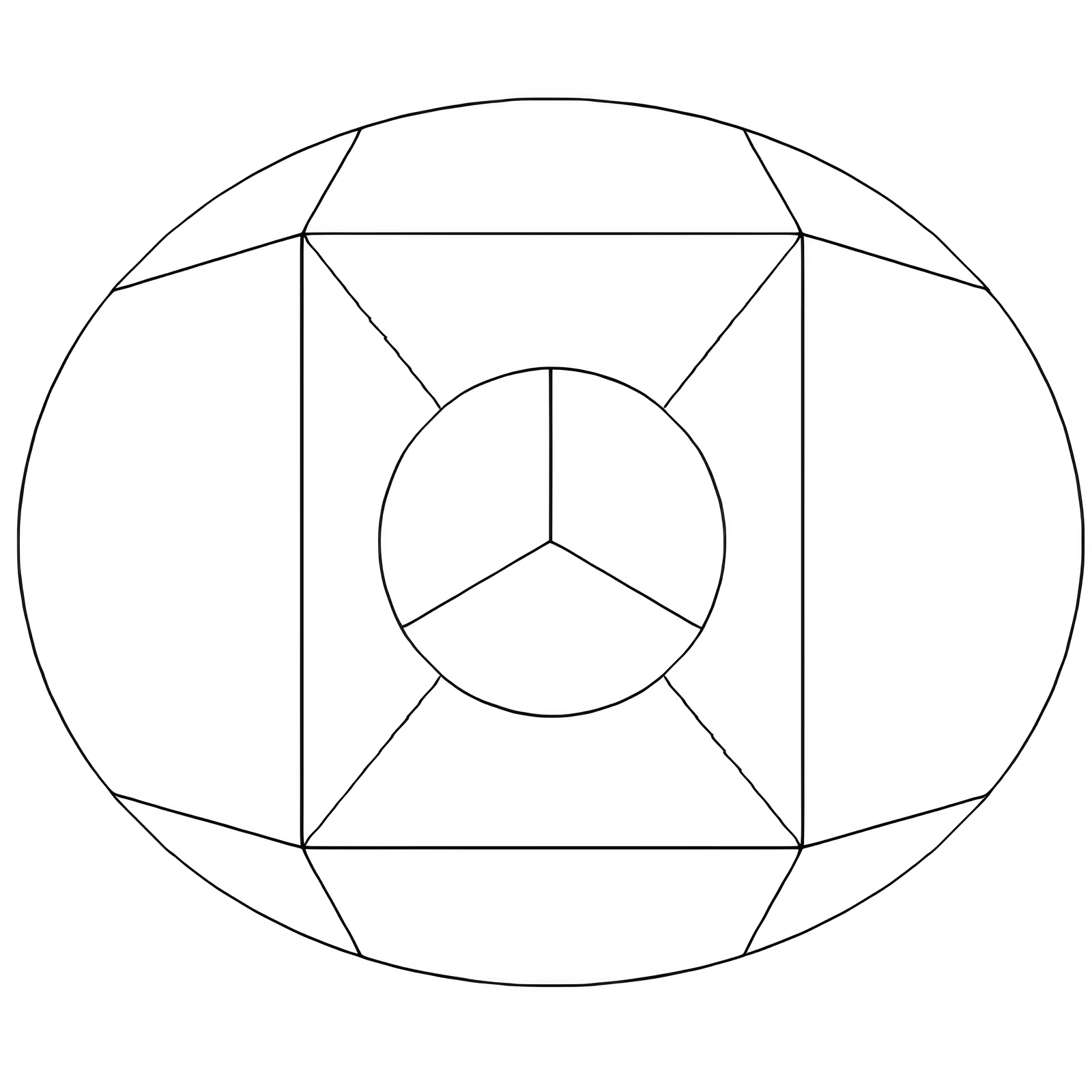
The 15 parts of the given figure are to be painted such that no two adjacent parts with shared boundaries (excluding corners) have the same color. The minimum number of colors required is
(A)
4
(B)
3
(C)
5
(D)
6
Answer (official key): A
Worked solution: in your report after you take this paper.
Q2 · General Aptitude · MCQ · 1 mark
How many 4-digit positive integers divisible by 3 can be formed using only the digits {1, 3, 4, 6, 7}, such that no digit appears more than once in a number?
(A)
24
(B)
48
(C)
72
(D)
12
Answer (official key): B
Worked solution: in your report after you take this paper.
Q3 · General Aptitude · MCQ · 1 mark
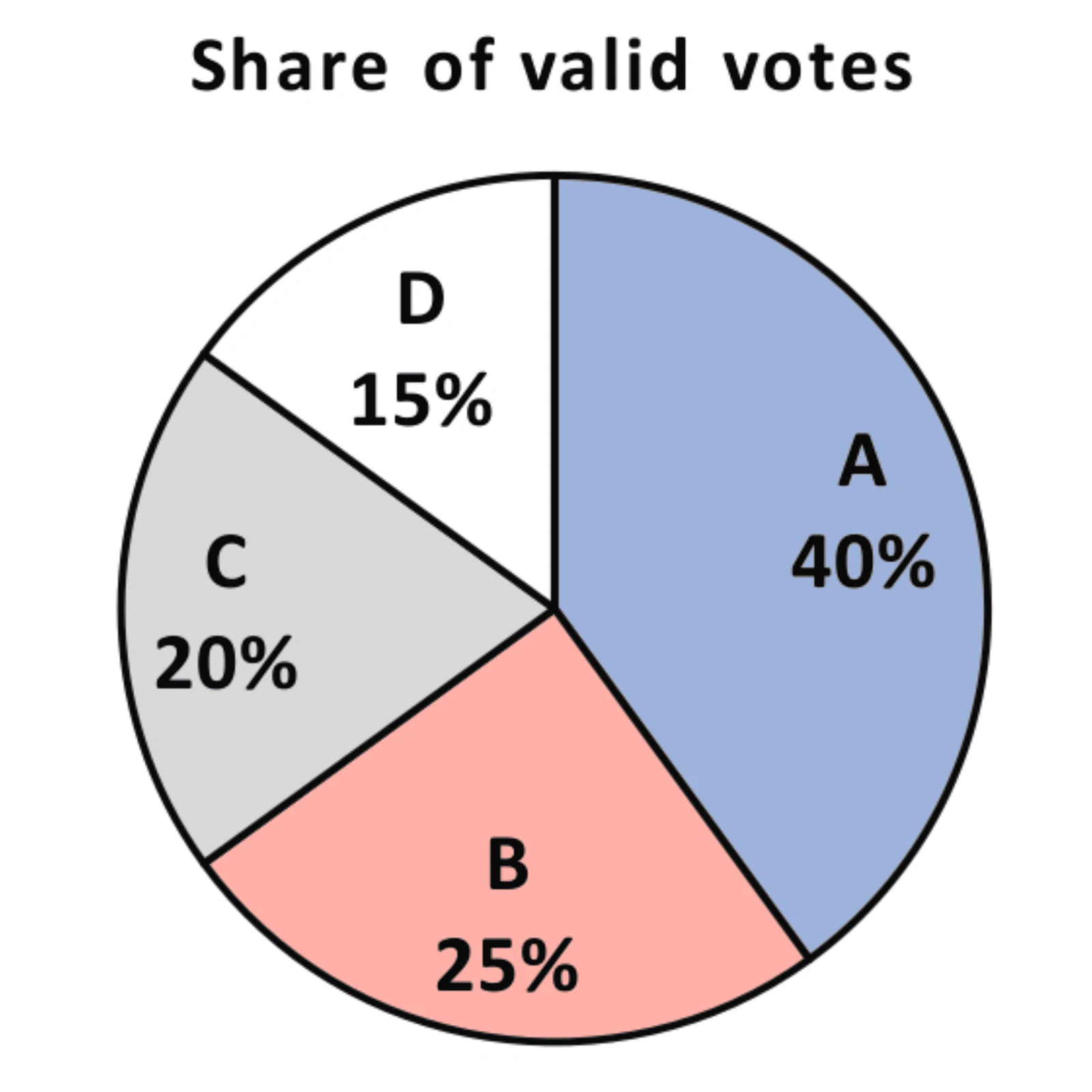
In an election, the share of valid votes received by the four candidates A, B, C, and D is represented by the pie chart shown. The total number of votes cast in the election were 1,15,000, out of which 5,000 were invalid.
Based on the data provided, the total number of valid votes received by the candidates B and C is
Worked solution: in your report after you take this paper.
Q6 · General Aptitude · MCQ · 2 marks
Visualize two identical right circular cones such that one is inverted over the other and they share a common circular base. If a cutting plane passes through the vertices of the assembled cones, what shape does the outer boundary of the resulting cross-section make?
(A)
A rhombus
(B)
A triangle
(C)
An ellipse
(D)
A hexagon
Answer (official key): A
Worked solution: in your report after you take this paper.
Q7 · General Aptitude · MCQ · 2 marks
The probability of a boy or a girl being born is 1/2. For a family having only three children, what is the probability of having two girls and one boy?
(A)
3/8
(B)
1/8
(C)
1/4
(D)
1/2
Answer (official key): A
Worked solution: in your report after you take this paper.
Q8 · General Aptitude · MCQ · 2 marks
Thousands of years ago, some people began dairy farming. This coincided with a number of mutations in a particular gene that resulted in these people developing the ability to digest dairy milk.
Based on the given passage, which of the following can be inferred?
(A)
All human beings can digest dairy milk.
(B)
No human being can digest dairy milk.
(C)
Digestion of dairy milk is essential for human beings.
(D)
In human beings, digestion of dairy milk resulted from a mutated gene.
Answer (official key): D
Worked solution: in your report after you take this paper.
Q9 · General Aptitude · MCQ · 2 marks
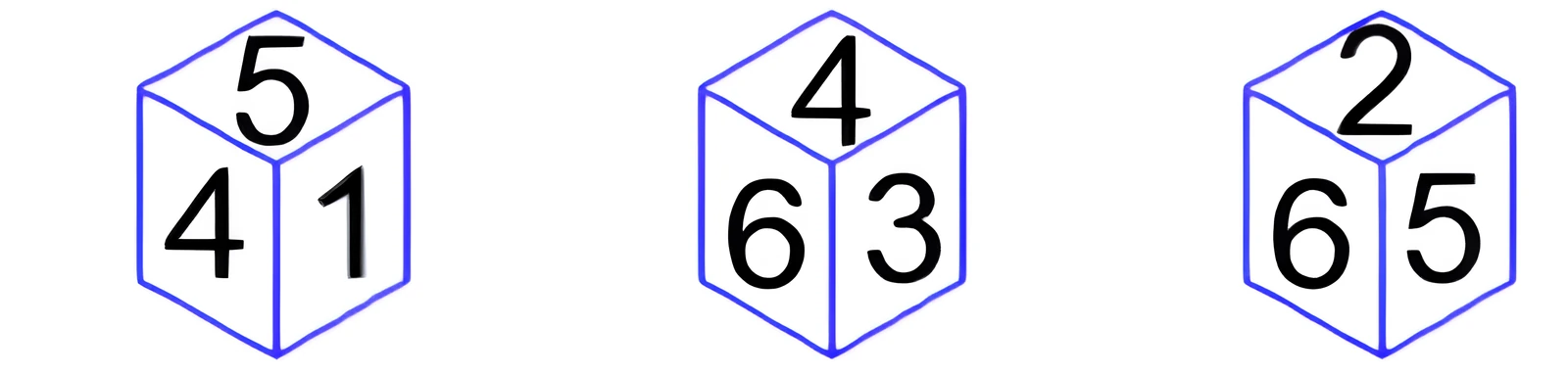
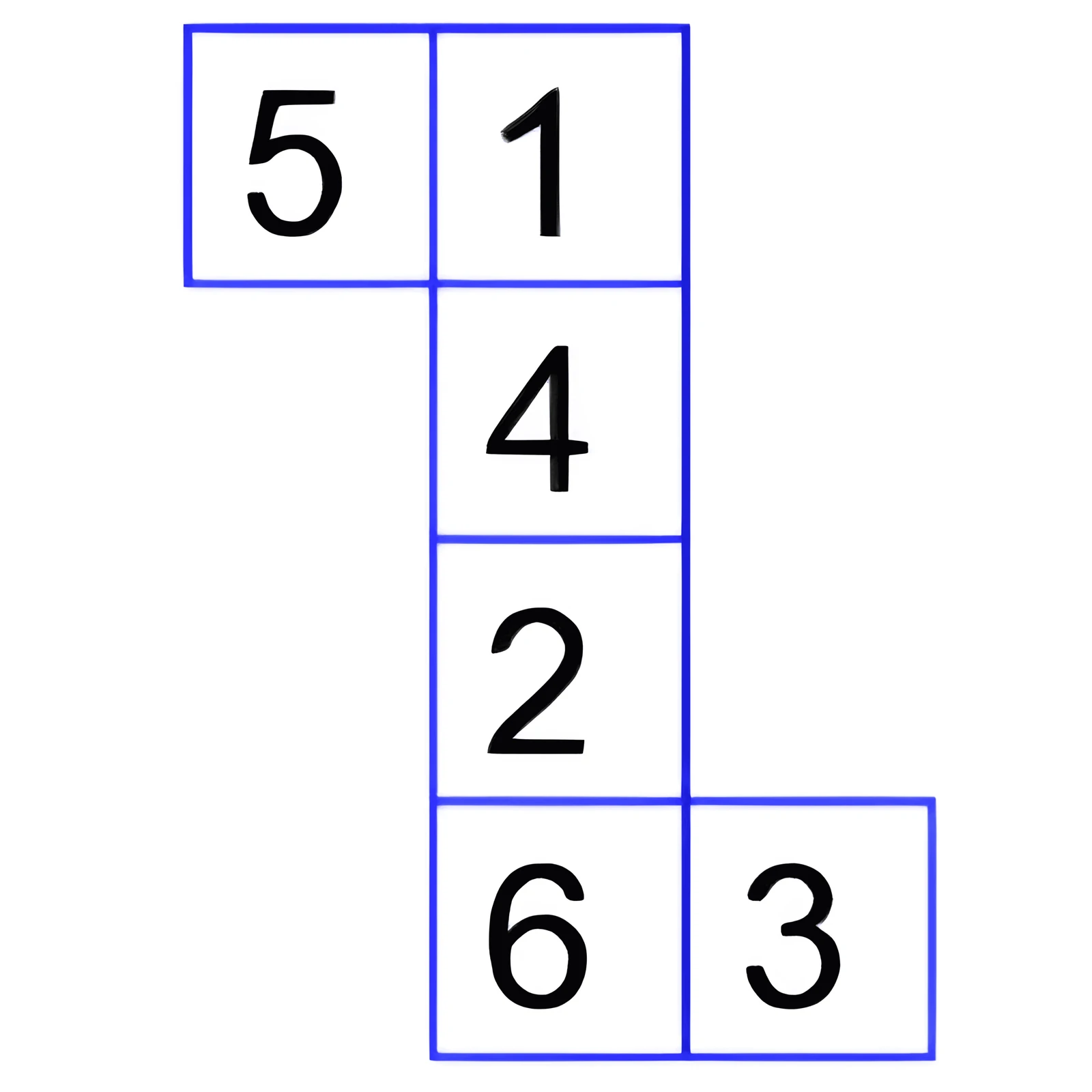
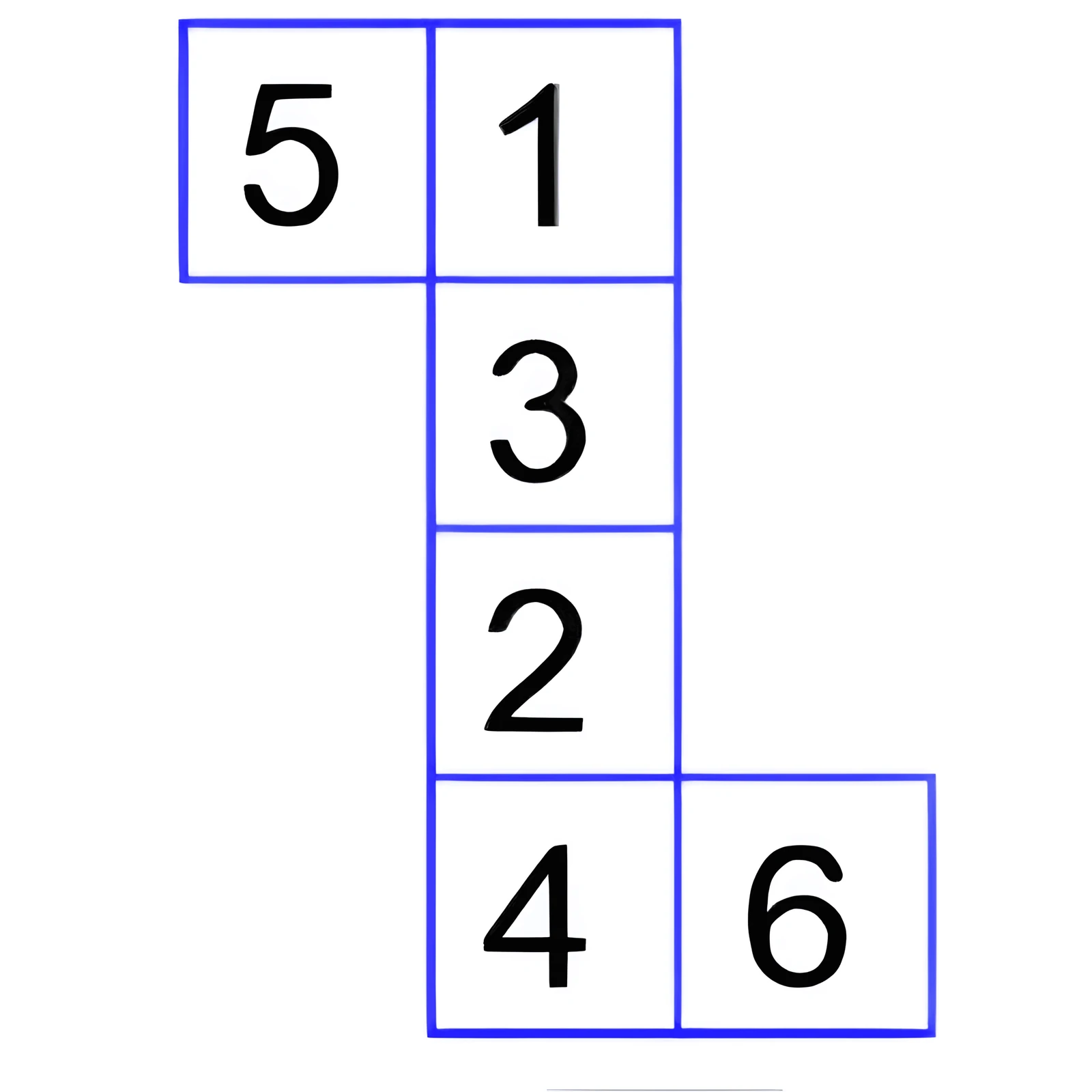
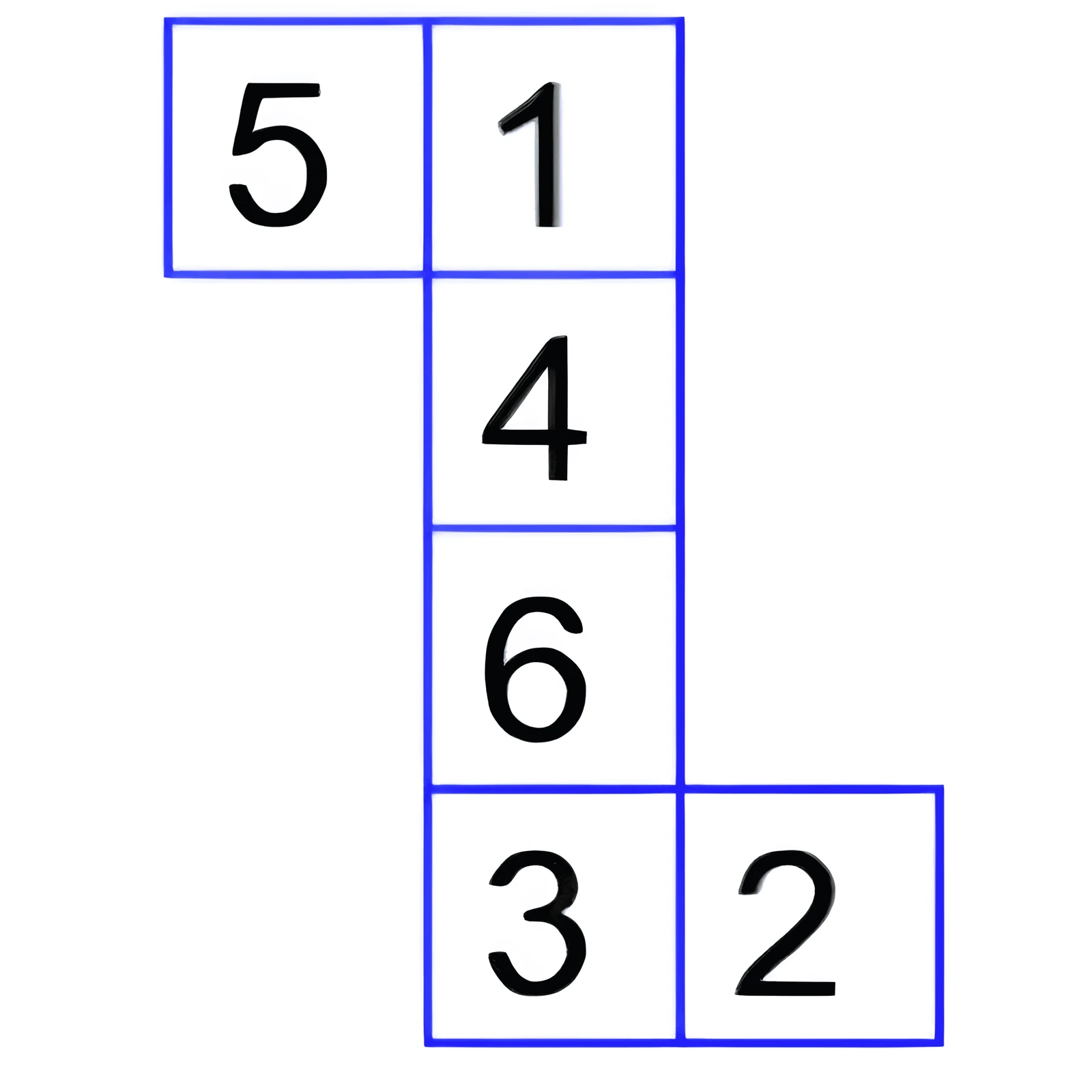
Three different views of a dice are shown in the figure below.
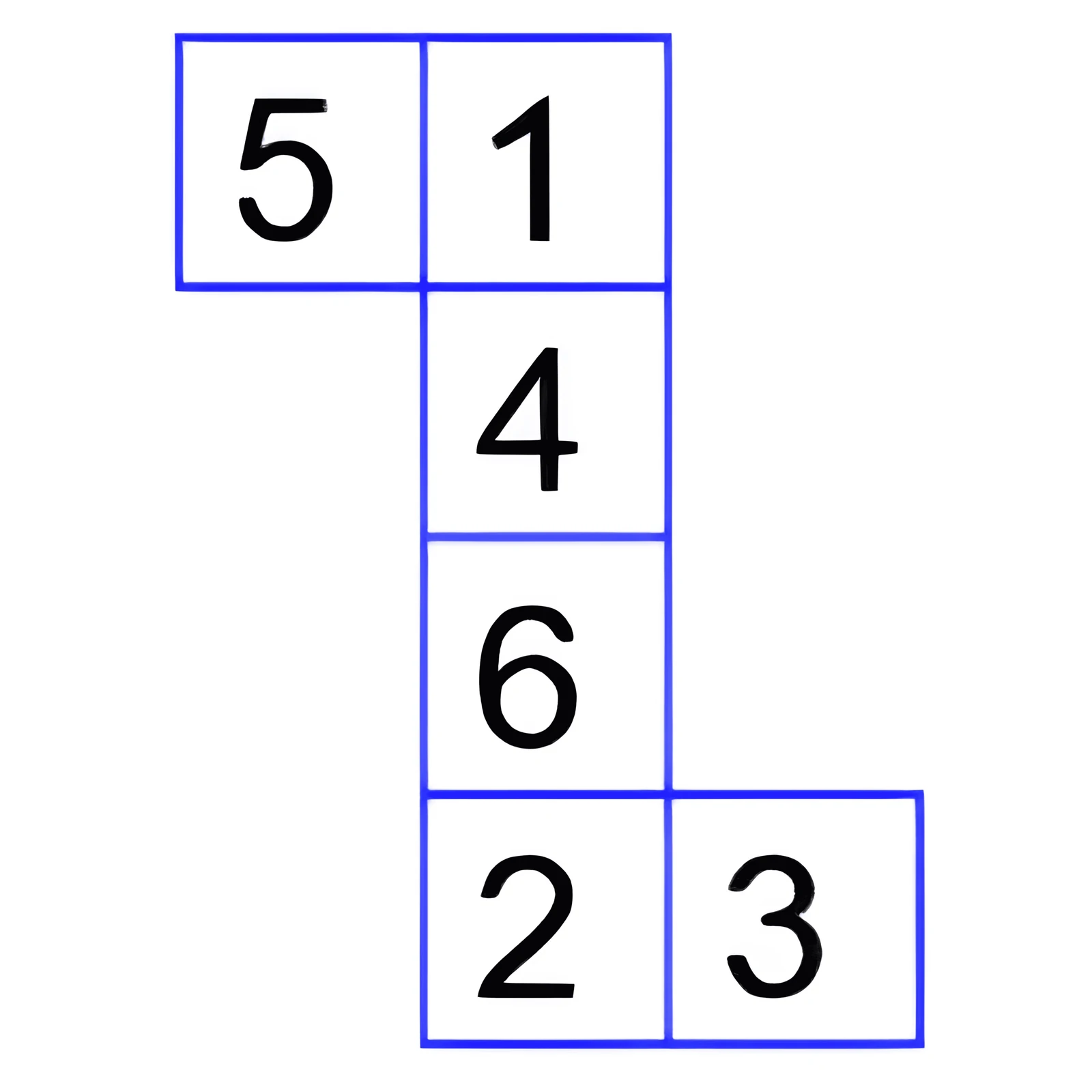
The piece of paper that can be folded to make this dice is
(A)
(B)
(C)
(D)
Answer (official key): A
Worked solution: in your report after you take this paper.
Q10 · General Aptitude · MCQ · 2 marks
Person 1 and Person 2 invest in three mutual funds A, B, and C. The amounts they invest in each of these mutual funds are given in the table.
Mutual fund A
Mutual fund B
Mutual fund C
Person 1
₹10,000
₹20,000
₹20,000
Person 2
₹20,000
₹15,000
₹15,000
At the end of one year, the total amount that Person 1 gets is ₹500 more than Person 2. The annual rate of return for the mutual funds B and C is 15% each. What is the annual rate of return for the mutual fund A?
(A)
7.5%
(B)
10%
(C)
15%
(D)
20%
Answer (official key): B
Worked solution: in your report after you take this paper.
Q11 · Machine Learning · MCQ · 1 mark
Euclidean distance based k-means clustering algorithm was run on a dataset of 100 points with k=3. If the points
[11]and[−11]
are both part of cluster 3, then which ONE of the following points is necessarily also part of cluster 3?
(A)
[00]
(B)
[02]
(C)
[20]
(D)
[01]
Answer (official key): D
Worked solution: in your report after you take this paper.
Q12 · Linear Algebra · MCQ · 1 mark
Consider the matrix
M=[23−11].
Which ONE of the following statements is TRUE?
(A)
The eigenvalues of M are non-negative and real
(B)
The eigenvalues of M are complex conjugate pairs
(C)
One eigenvalue is positive and real, and another is zero
(D)
One eigenvalue is non-negative and real, and another is negative and real
Answer (official key): B
Worked solution: in your report after you take this paper.
Q13 · Probability and Statistics · MCQ · 1 mark
Three fair coins are tossed independently. T is the event that two or more tosses result in heads. S is the event that two or more tosses result in tails.
What is the probability of the event T∩S?
(A)
0
(B)
0.5
(C)
0.25
(D)
1
Answer (official key): A
Worked solution: in your report after you take this paper.
Q14 · Programming, Data Structures and Algorithms · MCQ · 1 mark
Match the items in Column 1 with the items in Column 2 in the following table:
Column 1
Column 2
(p) First In First Out
(i) Stacks
(q) Lookup Operation
(ii) Queues
(r) Last In First Out
(iii) Hash Tables
(A)
(p) − (ii), (q) − (iii), (r) − (i)
(B)
(p) − (ii), (q) − (i), (r) − (iii)
(C)
(p) − (i), (q) − (ii), (r) − (iii)
(D)
(p) − (i), (q) − (iii), (r) − (ii)
Answer (official key): A
Worked solution: in your report after you take this paper.
Q15 · Calculus and Optimization · MCQ · 1 mark
For any twice differentiable function f:R→R, if at some x∗∈R,
f′(x∗)=0andf′′(x∗)>0,
then the function f necessarily has a ______ at x=x∗.
(A)
local minimum
(B)
global minimum
(C)
local maximum
(D)
global maximum
Answer (official key): A
Worked solution: in your report after you take this paper.
A hard margin linear support vector machine is trained on the above dataset. Which ONE of the following sets is a possible set of support vectors?
(A)
{x1,x2,x5}
(B)
{x3,x4,x5}
(C)
{x4,x5}
(D)
{x1,x2,x3,x4}
Answer (official key): D
Worked solution: in your report after you take this paper.
Q17 · Machine Learning · MCQ · 1 mark
Given a dataset with K binary-valued attributes (where K>2) for a two-class classification task, the number of parameters to be estimated for learning a naïve Bayes classifier is
(A)
2K+1
(B)
2K+1
(C)
2K+1+1
(D)
K2+1
Answer (official key): B
Worked solution: in your report after you take this paper.
Q18 · Programming, Data Structures and Algorithms · MCQ · 1 mark
Consider performing depth-first search (DFS) on an undirected and unweighted graph G starting at vertex s. For any vertex u in G, d[u] is the length of the shortest path from s to u. Let (u,v) be an edge in G such that d[u]<d[v]. If the edge (u,v) is explored first in the direction from u to v during the above DFS, then (u,v) becomes a ______ edge.
(A)
tree
(B)
cross
(C)
back
(D)
gray
Answer (official key): A
Worked solution: in your report after you take this paper.
Q19 · Machine Learning · MCQ · 1 mark
Match the items in Column 1 with the items in Column 2 in the following table:
Column 1
Column 2
(p) Principal Component Analysis
(i) Discriminative Model
(q) Naïve Bayes Classification
(ii) Dimensionality Reduction
(r) Logistic Regression
(iii) Generative Model
(A)
(p) − (iii), (q) − (i), (r) − (ii)
(B)
(p) − (ii), (q) − (i), (r) − (iii)
(C)
(p) − (ii), (q) − (iii), (r) − (i)
(D)
(p) − (iii), (q) − (ii), (r) − (i)
Answer (official key): C
Worked solution: in your report after you take this paper.
Q20 · Probability and Statistics · MCQ · 1 mark
Consider the following statements:
(i) The mean and variance of a Poisson random variable are equal.
(ii) For a standard normal random variable, the mean is zero and the variance is one.
Which ONE of the following options is correct?
(A)
Both (i) and (ii) are true
(B)
(i) is true and (ii) is false
(C)
(ii) is true and (i) is false
(D)
Both (i) and (ii) are false
Answer (official key): A
Worked solution: in your report after you take this paper.
Q21 · Artificial Intelligence · MCQ · 1 mark
Consider the following statement:
In adversarial search, α–β pruning can be applied to game trees of any depth where α is the (m) value choice we have formed so far at any choice point along the path for the MAX player and β is the (n) value choice we have formed so far at any choice point along the path for the MIN player.
Which ONE of the following choices of (m) and (n) makes the above statement valid?
(A)
(m) = highest, (n) = highest
(B)
(m) = lowest, (n) = highest
(C)
(m) = highest, (n) = lowest
(D)
(m) = lowest, (n) = lowest
Answer (official key): C
Worked solution: in your report after you take this paper.
Q22 · Database Management and Warehousing · MCQ · 1 mark
Consider a database that includes the following relations:
Which ONE of the following relational algebra expressions checks that every name occurring in Team appears in either Defender or Forward, where ϕ denotes the empty set?
(A)
Πname(Team)∖(Πname(Defender)∩Πname(Forward))=ϕ
(B)
(Πname(Defender)∩Πname(Forward))∖Πname(Team)=ϕ
(C)
Πname(Team)∖(Πname(Defender)∪Πname(Forward))=ϕ
(D)
(Πname(Defender)∪Πname(Forward))∖Πname(Team)=ϕ
Answer (official key): C
Worked solution: in your report after you take this paper.
Q23 · Probability and Statistics · MCQ · 1 mark
Let the minimum, maximum, mean and standard deviation values for the attribute income of data scientists be ₹46000, ₹170000, ₹96000, and ₹21000, respectively. The z-score normalized income value of ₹106000 is closest to which ONE of the following options?
(A)
0.217
(B)
0.476
(C)
0.623
(D)
2.304
Answer (official key): B
Worked solution: in your report after you take this paper.
Q24 · Programming, Data Structures and Algorithms · MCQ · 1 mark
Consider performing uniform hashing on an open address hash table with load factor
α=mn<1,
where n elements are stored in the table with m slots. The expected number of probes in an unsuccessful search is at most
1−α1.
Inserting an element in this hash table requires at most ______ probes, on average.
(A)
ln(1−α1)
(B)
1−α1
(C)
1+2α
(D)
1+α1
Answer (official key): B
Worked solution: in your report after you take this paper.
Q25 · Artificial Intelligence · MCQ · 1 mark
Let h1 and h2 be two admissible heuristics used in A* search.
Which ONE of the following expressions is always an admissible heuristic?
(A)
h1+h2
(B)
h1×h2
(C)
h1/h2, (h2=0)
(D)
∣h1−h2∣
Answer (official key): D
Worked solution: in your report after you take this paper.
Q26 · Machine Learning · MCQ · 1 mark
For any binary classification dataset, let SB∈Rd×d and SW∈Rd×d be the between-class and within-class scatter matrices, respectively. The Fisher linear discriminant is defined by u∗∈Rd, that maximizes
J(u)=u⊤SWuu⊤SBu.
If λ=J(u∗), SW is non-singular and SB=0, then (u∗,λ) must satisfy which ONE of the following equations?
(A)
SW−1SBu∗=λu∗
(B)
SWu∗=λSBu∗
(C)
SBSWu∗=λu∗
(D)
u∗⊤u∗=λ2
Answer (official key): A
Worked solution: in your report after you take this paper.
Q27 · Artificial Intelligence · MCQ · 1 mark
Consider five random variables U,V,W,X, and Y whose joint distribution satisfies:
P(U,V,W,X,Y)=P(U)P(V)P(W∣U,V)P(X∣W)P(Y∣W).
Which ONE of the following statements is FALSE?
(A)
Y is conditionally independent of V given W
(B)
X is conditionally independent of U given W
(C)
U and V are conditionally independent given W
(D)
Y and X are conditionally independent given W
Answer (official key): C
Worked solution: in your report after you take this paper.
Q28 · Programming, Data Structures and Algorithms · MSQ · 1 mark
Consider the following tree traversals on a full binary tree:
(i) Preorder
(ii) Inorder
(iii) Postorder
Which of the following traversal options is/are sufficient to uniquely reconstruct the full binary tree?
Let x and y be two propositions. Which of the following statements is a tautology / are tautologies?
(A)
(¬x∧y)⟹(y⟹x)
(B)
(x∧¬y)⟹(¬x⟹y)
(C)
(¬x∧y)⟹(¬x⟹y)
(D)
(x∧¬y)⟹(y⟹x)
Answer (official key): B, C, D
Worked solution: in your report after you take this paper.
Q31 · Calculus and Optimization · Numerical · 1 mark
Let f:R→R be the function
f(x)=1+e−x1.
The value of the derivative of f at x where f(x)=0.4 is ______.
(Rounded off to two decimal places)
Answer (official key): 0.24
Worked solution: in your report after you take this paper.
Q32 · Probability and Statistics · Numerical · 1 mark
The sample average of 50 data points is 40. The updated sample average after including a new data point taking the value of 142 is ______.
Answer (official key): 42
Worked solution: in your report after you take this paper.
Q33 · Linear Algebra · Numerical · 1 mark
Consider the 3×3 matrix
M=134213336.
The determinant of (M2+12M) is ______.
Answer (official key): 0
Worked solution: in your report after you take this paper.
Q34 · Database Management and Warehousing · Numerical · 1 mark
Consider the following two tables named Raider and Team in a relational database maintained by a Kabaddi league. The attribute ID in table Team references the primary key of the Raider table, ID.
Raider
ID
Name
Raids
RaidPoints
1
Arjun
200
250
2
Ankush
190
219
3
Sunil
150
200
4
Reza
150
190
5
Pratham
175
220
6
Gopal
193
215
Team
City
ID
BidPoints
Jaipur
2
200
Patna
3
195
Hyderabad
5
175
Jaipur
1
250
Patna
4
200
Jaipur
6
200
The SQL query described below is executed on this database:
SELECT *
FROM Raider, Team
WHERE Raider.ID = Team.ID
  AND City = 'Jaipur'
  AND RaidPoints > 200;
The number of rows returned by this query is ______.
Answer (official key): 3
Worked solution: in your report after you take this paper.
Q35 · Programming, Data Structures and Algorithms · Numerical · 1 mark
The fundamental operations in a double-ended queue D are:
insertFirst(e) – Insert a new element e at the beginning of D
insertLast(e) – Insert a new element e at the end of D
removeFirst() – Remove and return the first element of D
removeLast() – Remove and return the last element of D
In an empty double-ended queue, the following operations are performed:
insertFirst(10)
insertLast(32)
a ← removeFirst()
insertLast(28)
insertLast(17)
a ← removeFirst()
a ← removeLast()
The value of a is ______.
Answer (official key): 17
Worked solution: in your report after you take this paper.
Q36 · Calculus and Optimization · MCQ · 2 marks
Let f:R→R be a function:
f(x)=⎩⎨⎧−x,ax2+bx+c,x,x<−2x∈[−2,2]x>2
Which ONE of the following choices gives the values of a,b,c that make the function f continuous and differentiable?
(A)
a=41,b=0,c=1
(B)
a=21,b=0,c=0
(C)
a=0,b=0,c=0
(D)
a=1,b=1,c=−4
Answer (official key): A
Worked solution: in your report after you take this paper.
Q37 · Probability and Statistics · MCQ · 2 marks
A fair six-sided die (with faces numbered 1, 2, 3, 4, 5, 6) is repeatedly thrown independently.
What is the expected number of times the die is thrown until two consecutive throws of even numbers are seen?
(A)
2
(B)
4
(C)
6
(D)
8
Answer (official key): C
Worked solution: in your report after you take this paper.
Q38 · Programming, Data Structures and Algorithms · MCQ · 2 marks
Let F(n) denote the maximum number of comparisons made while searching for an entry in a sorted array of size n using binary search.
Which ONE of the following options is TRUE?
(A)
F(n)=F(⌊n/2⌋)+1
(B)
F(n)=F(⌊n/2⌋)+F(⌈n/2⌉)
(C)
F(n)=F(⌊n/2⌋)
(D)
F(n)=F(n−1)+1
Answer (official key): A
Worked solution: in your report after you take this paper.
Q39 · Programming, Data Structures and Algorithms · MCQ · 2 marks
Consider the following Python code:
def count(child_dict, i):
    if i not in child_dict.keys():
        return 1
    ans = 1
    for j in child_dict[i]:
        ans += count(child_dict, j)
    return ans

child_dict = dict()
child_dict[0] = [1,2]
child_dict[1] = [3,4,5]
child_dict[2] = [6,7,8]

print(count(child_dict,0))
Which ONE of the following is the output of this code?
(A)
6
(B)
1
(C)
8
(D)
9
Answer (official key): D
Worked solution: in your report after you take this paper.
Q40 · Programming, Data Structures and Algorithms · MCQ · 2 marks
Consider the function computeS(X) whose pseudocode is given below:
computeS(X)
S[1] ← 1
for i ← 2 to length(X)
    S[i] ← 1
    if X[i − 1] ≤ X[i]
        S[i] ← S[i] + S[i − 1]
    end if
end for
return S
Which ONE of the following values is returned by the function computeS(X) for
X=[6,3,5,4,10]?
(A)
[1, 1, 2, 3, 4]
(B)
[1, 1, 2, 3, 3]
(C)
[1, 1, 2, 1, 2]
(D)
[1, 1, 2, 1, 5]
Answer (official key): C
Worked solution: in your report after you take this paper.
Q41 · Linear Algebra · MSQ · 2 marks
Select all choices that are subspaces of R3.
(A)
⎩⎨⎧x∈R3:x=α110+β100,α,β∈R⎭⎬⎫
(B)
⎩⎨⎧x∈R3:x=α2120+β2101,α,β∈R⎭⎬⎫
(C)
{x∈R3:5x1+2x3=0,4x1−2x2+3x3=0}
(D)
{x∈R3:5x1+2x3+4=0}
Answer (official key): A, C
Worked solution: in your report after you take this paper.
Q42 · Artificial Intelligence · MCQ · 2 marks
Consider a state space where the start state is number 1. The successor function for the state numbered n returns two states numbered n+1 and n+2. Assume that the states in the unexpanded state list are expanded in the ascending order of numbers and the previously expanded states are not added to the unexpanded state list.
Which ONE of the following statements about breadth-first search (BFS) and depth-first search (DFS) is true, when reaching the goal state number 6?
(A)
BFS expands more states than DFS.
(B)
DFS expands more states than BFS.
(C)
Both BFS and DFS expand equal number of states.
(D)
Both BFS and DFS do not reach the goal state number 6.
Answer (official key): C
Worked solution: in your report after you take this paper.
Q43 · Programming, Data Structures and Algorithms · MCQ · 2 marks
Consider the following sorting algorithms:
(i) Bubble sort
(ii) Insertion sort
(iii) Selection sort
Which ONE among the following choices of sorting algorithms sorts the numbers in the array
[4,3,2,1,5]
in increasing order after exactly two passes over the array?
(A)
(i) only
(B)
(iii) only
(C)
(i) and (iii) only
(D)
(ii) and (iii) only
Answer (official key): B
Worked solution: in your report after you take this paper.
Q44 · Programming, Data Structures and Algorithms · MCQ · 2 marks
What does this Python function fun() do? Select the ONE appropriate option below.
(A)
It finds the smallest element in D from index s1 to s2, both inclusive.
(B)
It performs a merge sort in-place on this list D between indices s1 and s2, both inclusive.
(C)
It reverses the list D between indices s1 and s2, both inclusive.
(D)
It swaps the elements in D at indices s1 and s2, and leaves the remaining elements unchanged.
Answer (official key): C
Worked solution: in your report after you take this paper.
Q45 · Linear Algebra · MSQ · 2 marks
Which of the following statements is/are TRUE?
Note: R denotes the set of real numbers.
(A)
There exist M∈R3×3, p∈R3, and q∈R3 such that Mx=p has a unique solution and Mx=q has infinite solutions.
(B)
There exist M∈R3×3, p∈R3, and q∈R3 such that Mx=p has no solutions and Mx=q has infinite solutions.
(C)
There exist M∈R2×3, p∈R2, and q∈R2 such that Mx=p has a unique solution and Mx=q has infinite solutions.
(D)
There exist M∈R3×2, p∈R3, and q∈R3 such that Mx=p has a unique solution and Mx=q has no solutions.
Answer (official key): B, D
Worked solution: in your report after you take this paper.
Q46 · Linear Algebra · MSQ · 2 marks
Let R be the set of real numbers, U be a subspace of R3 and M∈R3×3 be the matrix corresponding to the projection on to the subspace U.
Which of the following statements is/are TRUE?
(A)
If U is a 1-dimensional subspace of R3, then the null space of M is a 1-dimensional subspace.
(B)
If U is a 2-dimensional subspace of R3, then the null space of M is a 1-dimensional subspace.
(C)
M2=M
(D)
M3=M
Answer (official key): B, C, D
Worked solution: in your report after you take this paper.
Q47 · Calculus and Optimization · MSQ · 2 marks
Consider the function
f:R→R,f(x)=4x4−32x3−23x2+1.
Which of the following statements is/are TRUE?
(A)
x=0 is a local maximum of f
(B)
x=3 is a local minimum of f
(C)
x=−1 is a local maximum of f
(D)
x=0 is a local minimum of f
Answer (official key): A, B
Worked solution: in your report after you take this paper.
Q48 · Database Management and Warehousing · MSQ · 2 marks
Given the relational schema
R=(U,V,W,X,Y,Z)
and the set of functional dependencies
{U→V,U→W,WX→Y,WX→Z,V→X},
which of the following functional dependencies can be derived from the above set?
(A)
VW→YZ
(B)
WX→YZ
(C)
VW→U
(D)
VW→Y
Answer (official key): A, B, D
Worked solution: in your report after you take this paper.
Q49 · Machine Learning · MCQ · 2 marks
Consider the table below, where the (i,j)-th element of the table is the distance between points xi and xj. Single linkage clustering is performed on data points x1,x2,x3,x4,x5.
x1
x2
x3
x4
x5
x1
0
1
4
3
6
x2
1
0
3
5
3
x3
4
3
0
2
5
x4
3
5
2
0
1
x5
6
3
5
1
0
Which ONE of the following is the correct representation of the clusters produced?
(A)
First merge (x1,x2) and (x4,x5), then merge x3 with (x4,x5), and finally merge the two larger clusters.
(B)
First merge (x1,x2), then merge x3 with (x1,x2), while separately merging (x4,x5), and finally merge the two larger clusters.
(C)
First merge (x1,x2) and (x3,x4), then merge x5 with (x3,x4), and finally merge the two larger clusters.
(D)
First merge (x1,x2) and (x3,x4), then merge those two clusters, and finally merge x5 at the end.
Answer (official key): A
Worked solution: in your report after you take this paper.
Q50 · Machine Learning · MCQ · 2 marks
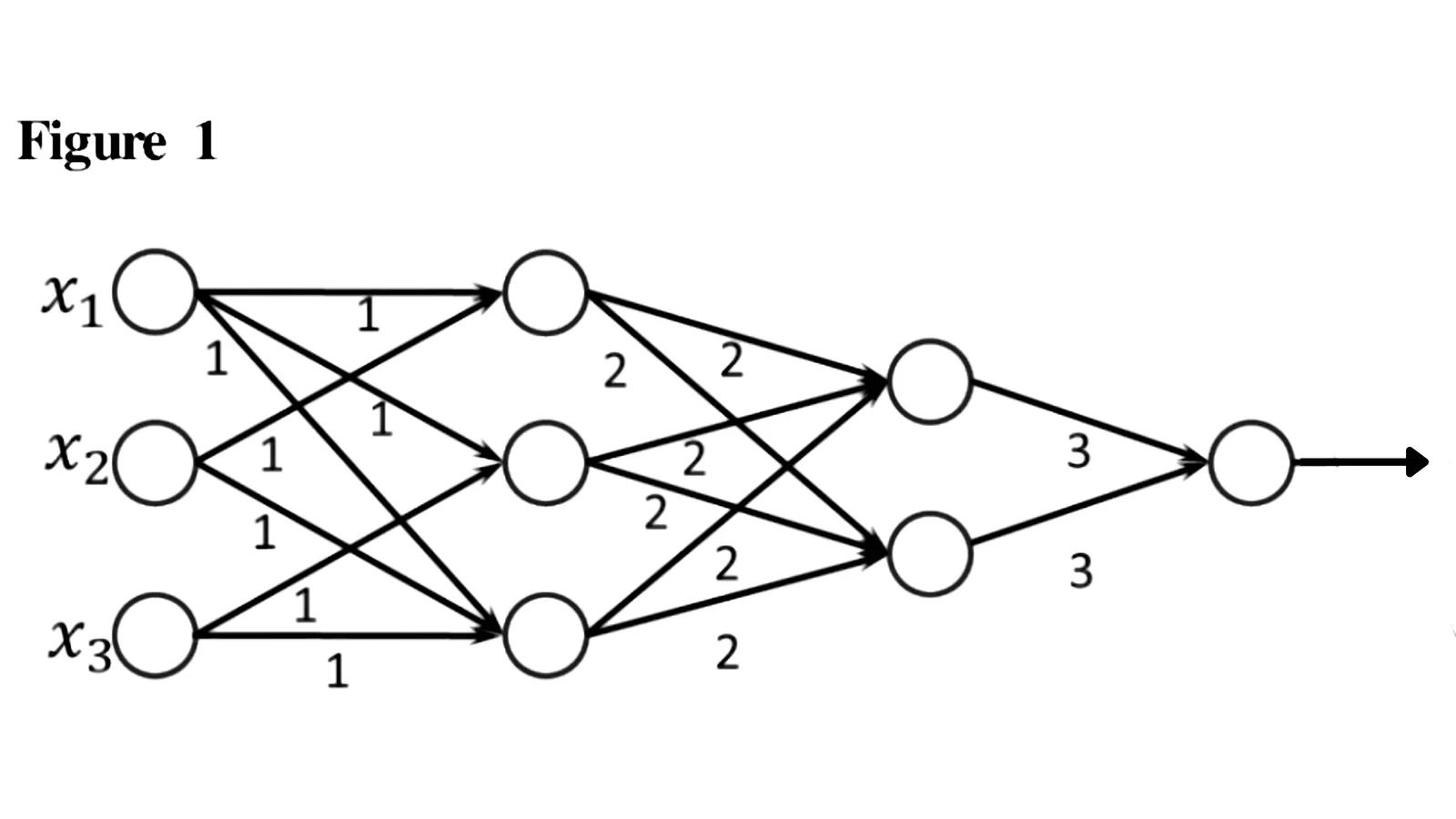
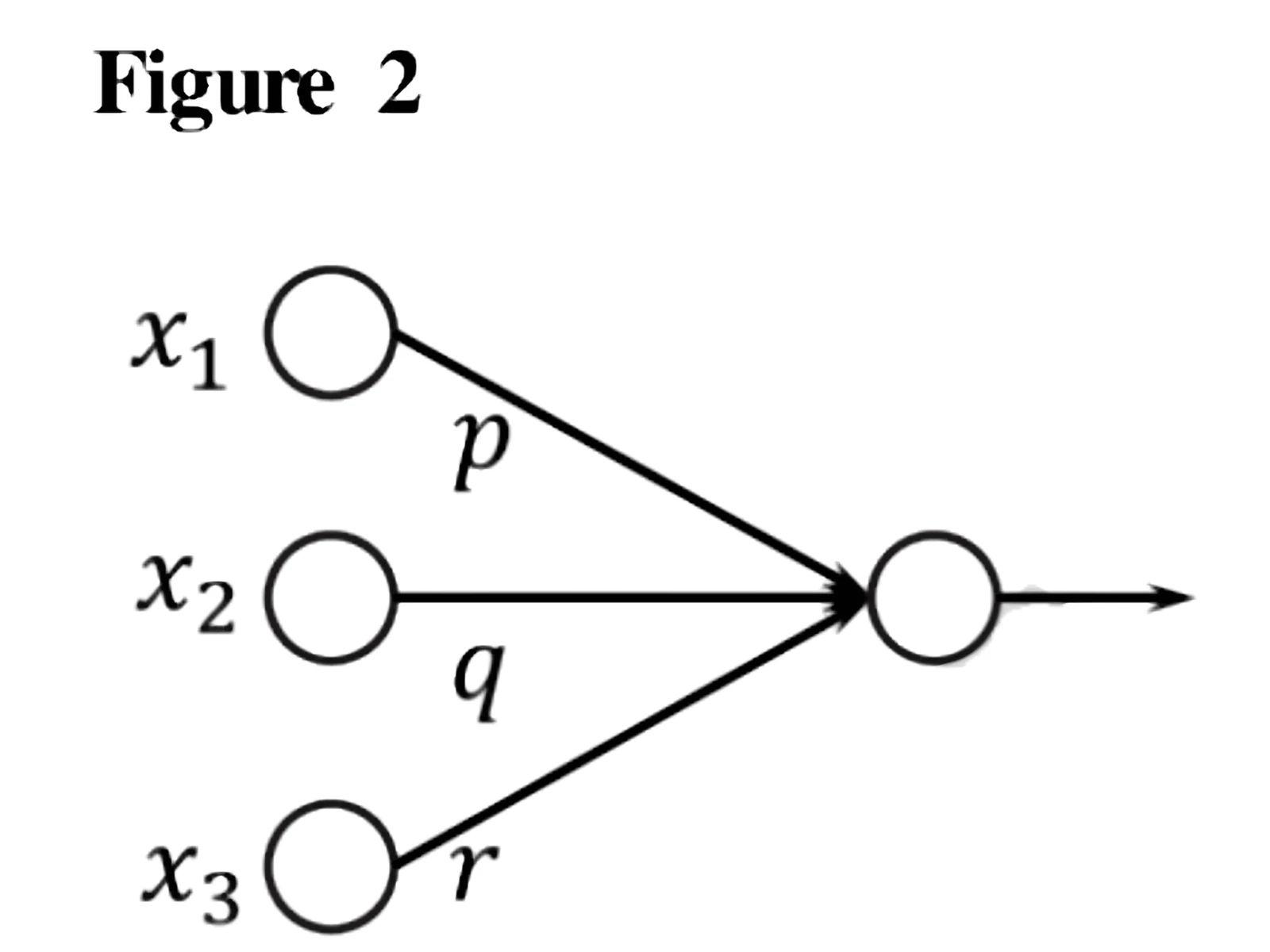
Consider the two neural networks (NNs) shown in Figures 1 and 2, with ReLU activation
ReLU(z)=max{0,z},z∈R.
The biases at every neuron are set to 0. For what values of p,q,r in Figure 2 are the two NNs equivalent, when x1,x2,x3 are positive?
Q51 · Programming, Data Structures and Algorithms · MSQ · 2 marks
Let H,I,L, and N represent height, number of internal nodes, number of leaf nodes, and the total number of nodes respectively in a rooted binary tree.
Which of the following statements is/are always TRUE?
(A)
L≤I+1
(B)
H+1≤N≤2H+1−1
(C)
H≤I≤2H−1
(D)
H≤L≤2H−1
Answer (official key): A, B, C
Worked solution: in your report after you take this paper.
Q52 · Machine Learning · Numerical · 2 marks
Details of ten international cricket games between two teams “Green” and “Blue” are given in Table C. This table consists of matches played on different pitches, across formats along with their winners. The attribute Pitch can take one of two values: spin-friendly (represented as S) or pace-friendly (represented as F). The attribute Format can take one of two values: one-day match (represented as O) or test match (represented as T).
A cricket organization would like to use the information given in Table C to develop a decision-tree model to predict outcomes of future games between these two teams. To develop such a model, the computed InformationGain(C, Pitch) with respect to the target is ______ (rounded off to two decimal places).
Match Number
Pitch
Format
Winner (Target)
1
S
T
Green
2
S
T
Blue
3
F
O
Blue
4
S
O
Blue
5
F
T
Green
6
F
O
Blue
7
S
O
Green
8
F
T
Blue
9
F
O
Blue
10
S
O
Green
Answer (official key): 0.12 to 0.13
Worked solution: in your report after you take this paper.
Q53 · Calculus and Optimization · Numerical · 2 marks
Evaluate the following limit:
x→0limx2ln((x2+1)cosx)
Answer (official key): 0.5
Worked solution: in your report after you take this paper.
Q54 · Artificial Intelligence · MSQ · 2 marks
Let game(ball, rugby) be true if the ball is used in rugby and false otherwise.
Let shape(ball, round) be true if the ball is round and false otherwise.
Consider the following logical sentences:
s1:∀ball¬game(ball,rugby)⇒shape(ball,round)
s2:∀ball¬shape(ball,round)⇒game(ball,rugby)
s3:∀ballgame(ball,rugby)⇒¬shape(ball,round)
s4:∀ballshape(ball,round)⇒¬game(ball,rugby)
Which of the following choices is/are logical representations of the assertion,
“All balls are round except balls used in rugby”?
(A)
s1∧s3
(B)
s1∧s2
(C)
s2∧s3
(D)
s3∧s4
Answer (official key): A, C
Worked solution: in your report after you take this paper.
Q55 · Artificial Intelligence · Numerical · 2 marks
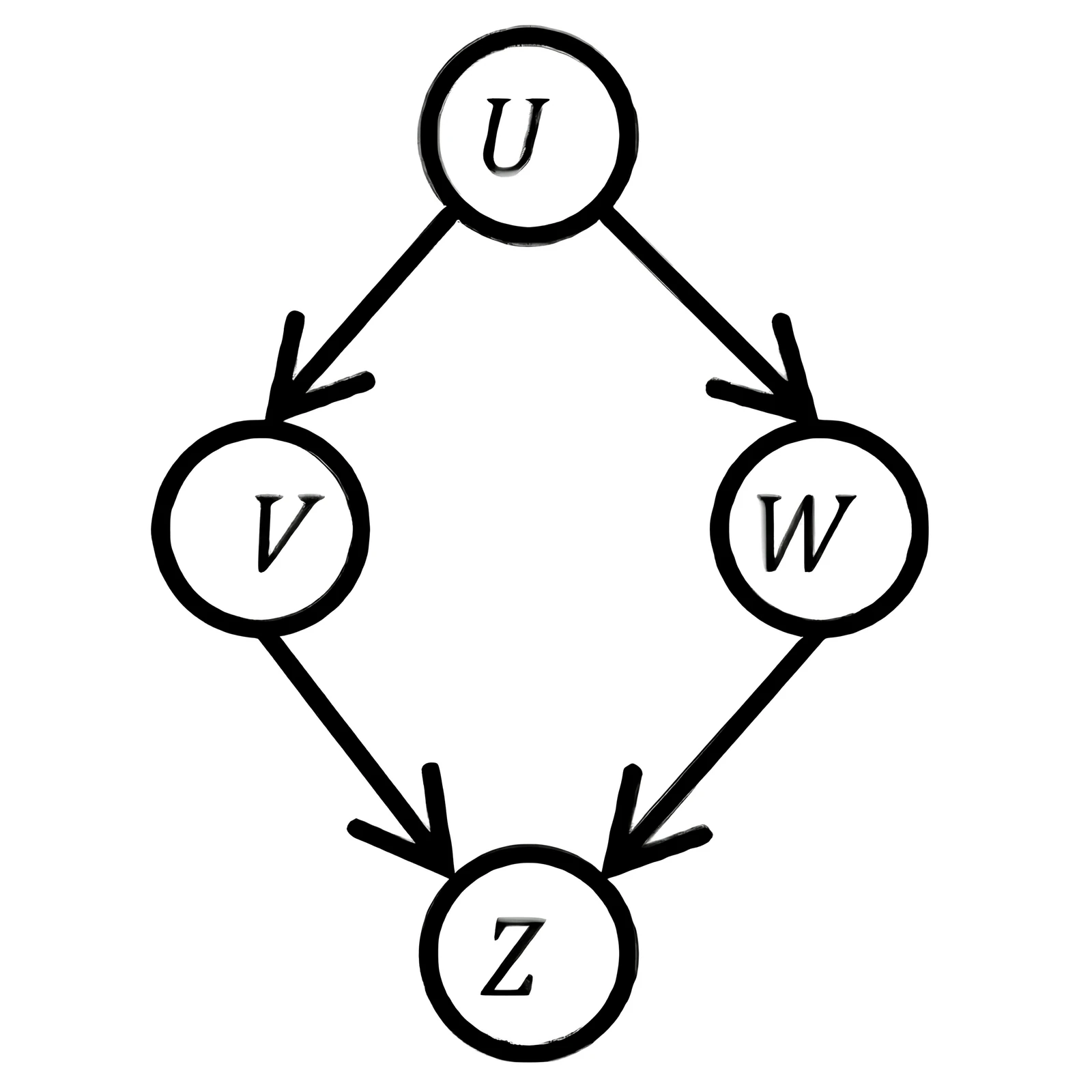
Given the following Bayesian Network consisting of four Bernoulli random variables and the associated conditional probability tables:
The value of
P(U=1,V=1,W=1,Z=1)
is ______ (rounded off to three decimal places).
Answer (official key): 0.125
Worked solution: in your report after you take this paper.
Q56 · Machine Learning · Numerical · 2 marks
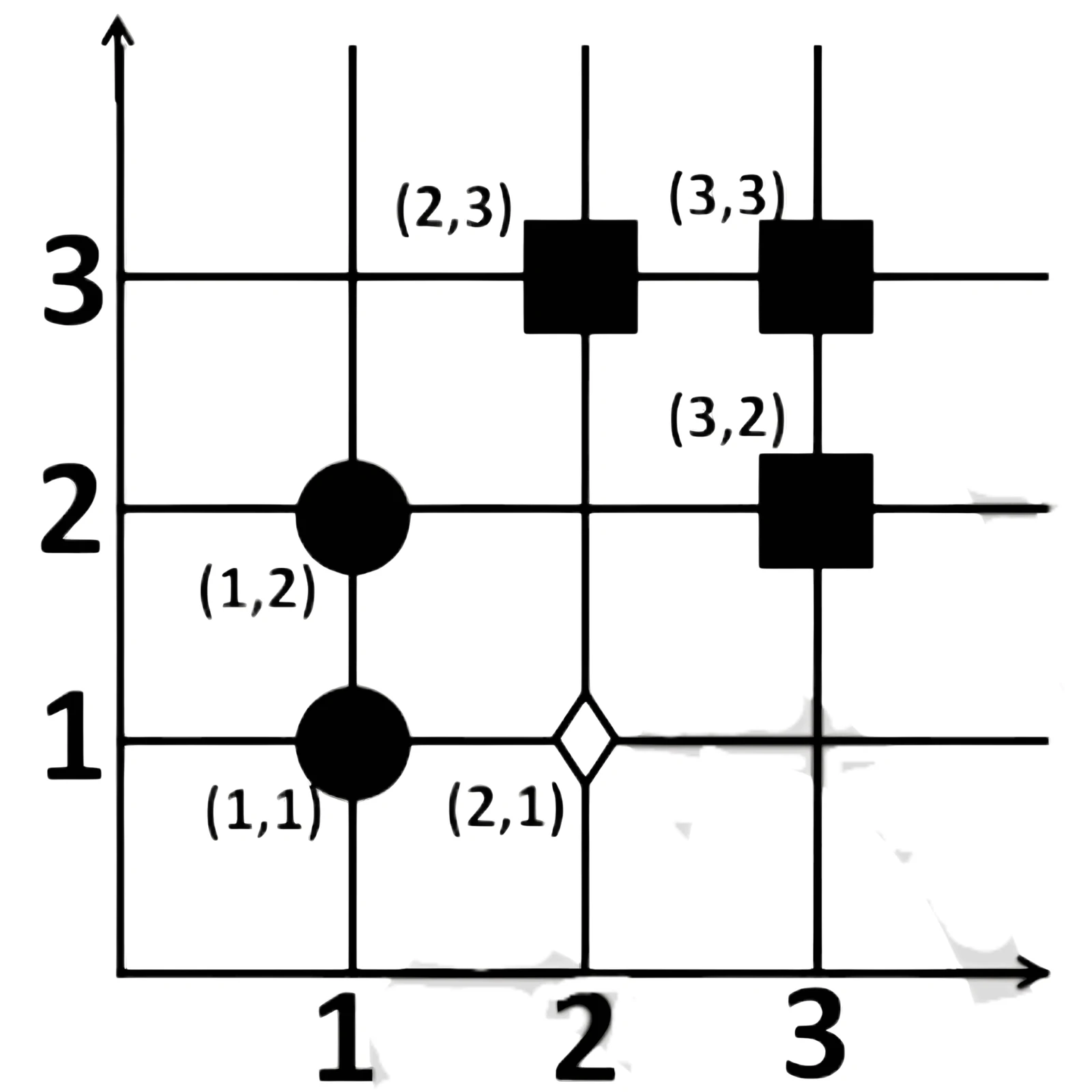
Given the two-dimensional dataset consisting of 5 data points from two classes (circles and squares), and assuming that the Euclidean distance is used to measure the distance between two points, the minimum odd value of k in the k-nearest neighbor algorithm for which the diamond-shaped data point is assigned the label square is ______.
Answer (official key): 5
Worked solution: in your report after you take this paper.
Q57 · Programming, Data Structures and Algorithms · MSQ · 2 marks
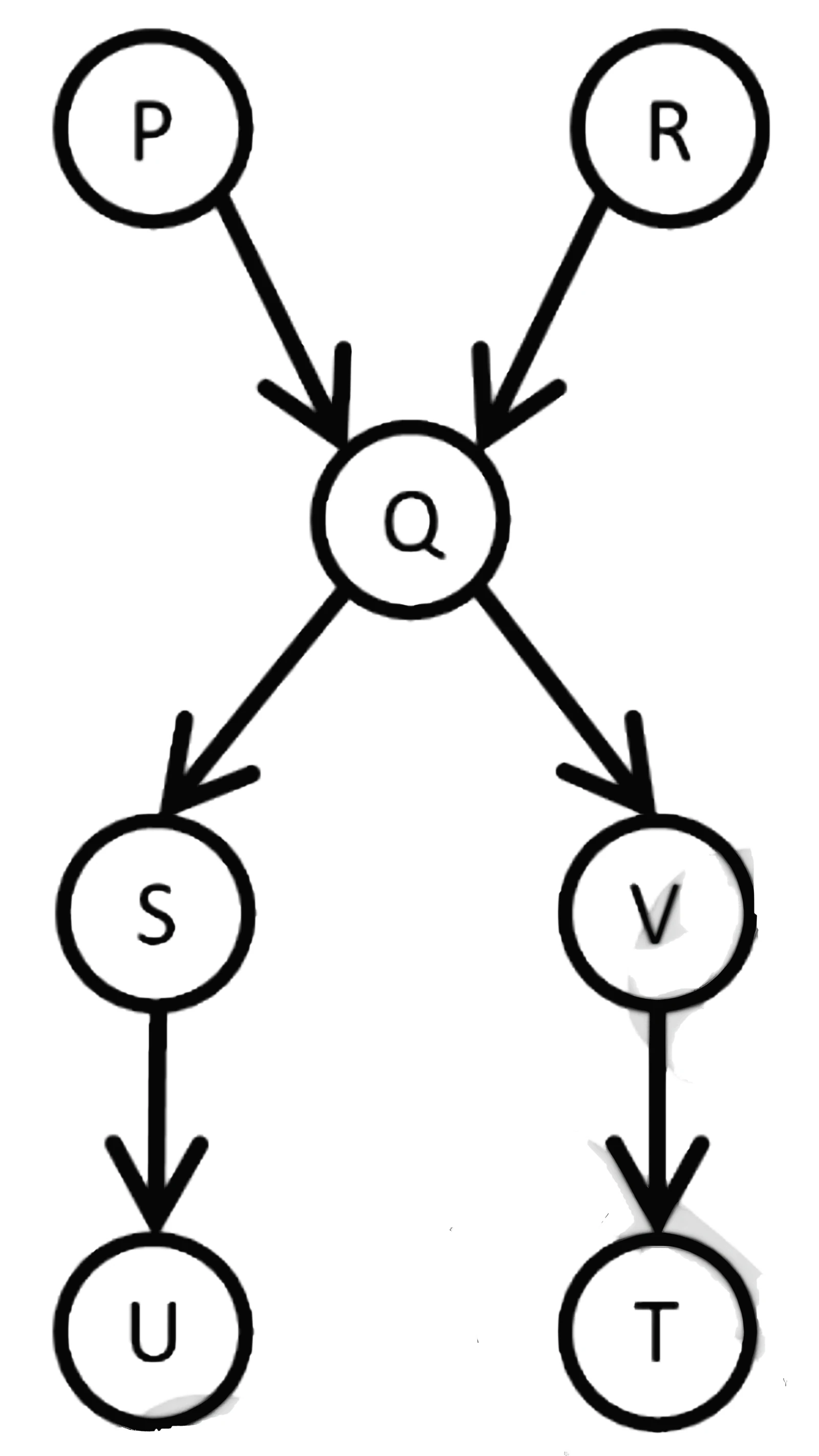
Consider the directed acyclic graph (DAG) below.
Which of the following is/are valid vertex orderings that can be obtained from a topological sort of the DAG?
(A)
P Q R S T U V
(B)
P R Q V S U T
(C)
P Q R S V U T
(D)
P R Q S V T U
Answer (official key): B, D
Worked solution: in your report after you take this paper.
Q58 · Probability and Statistics · Numerical · 2 marks
Two fair coins are tossed independently. X is a random variable that takes a value of 1 if both tosses are heads and 0 otherwise. Y is a random variable that takes a value of 1 if at least one of the tosses is heads and 0 otherwise.
The value of the covariance of X and Y is ______ (rounded off to three decimal places).
Answer (official key): 0.062 to 0.063
Worked solution: in your report after you take this paper.
Q59 · Probability and Statistics · Numerical · 2 marks
Let X be a random variable exponentially distributed with parameter λ>0. The probability density function of X is given by:
fX(x)={λe−λx,0,x≥0otherwise
If 5E(X)=Var(X), where E(X) and Var(X) indicate the expectation and variance of X, respectively, the value of λ is ______ (rounded off to one decimal place).
Answer (official key): 0.2
Worked solution: in your report after you take this paper.
Q60 · Probability and Statistics · Numerical · 2 marks
Consider two events T and S. Let Tˉ denote the complement of the event T. The probabilities associated with different events are given as follows:
P(Tˉ)=0.6,P(S∣T)=0.3,P(S∣Tˉ)=0.6.
Then,
P(T∣S)
is ______ (rounded off to two decimal places).
Answer (official key): 0.25
Worked solution: in your report after you take this paper.
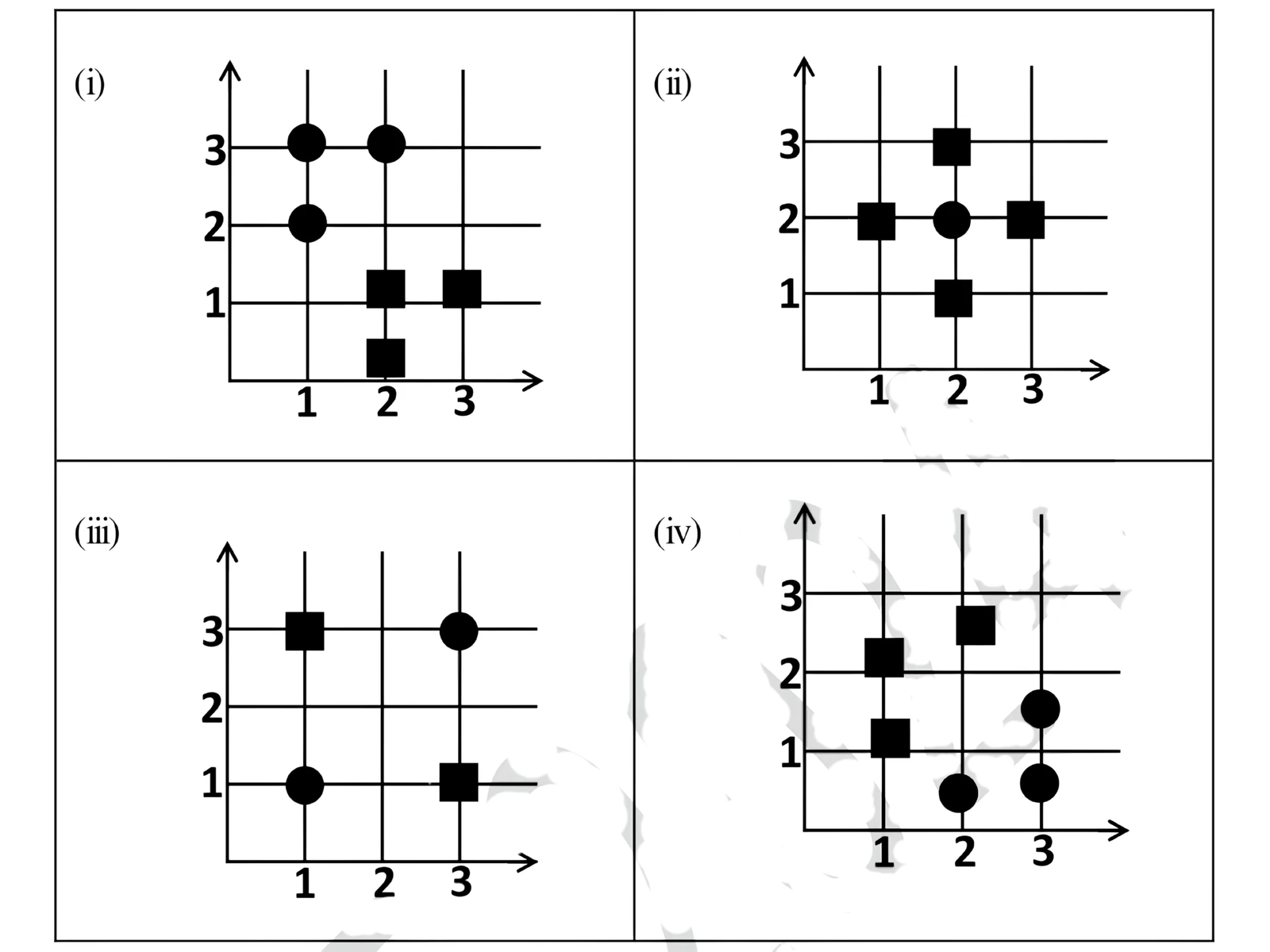
Q61 · Machine Learning · MSQ · 2 marks
Consider the following figures representing datasets consisting of two-dimensional features with two classes denoted by circles and squares.
Which of the following is/are TRUE?
(A)
(i) is linearly separable.
(B)
(ii) is linearly separable.
(C)
(iii) is linearly separable.
(D)
(iv) is linearly separable.
Answer (official key): A, D
Worked solution: in your report after you take this paper.
Q62 · Database Management and Warehousing · MSQ · 2 marks
An OTT company is maintaining a large disk-based relational database of different movies with the following schema:
Movie(ID, CustomerRating)
Genre(ID, Name)
Movie_Genre(MovieID, GenreID)
Consider the following SQL query on the relational database above:
SELECT *
FROM Movie, Genre, Movie_Genre
WHERE
  Movie.CustomerRating > 3.4 AND
  Genre.Name = 'Comedy' AND
  Movie_Genre.MovieID = Movie.ID AND
  Movie_Genre.GenreID = Genre.ID;
This SQL query can be sped up using which of the following indexing options?
(A)
B+ tree on all the attributes.
(B)
Hash index on Genre.Name and B+ tree on the remaining attributes.
(C)
Hash index on Movie.CustomerRating and B+ tree on the remaining attributes.
(D)
Hash index on all the attributes.
Answer (official key): A, B
Worked solution: in your report after you take this paper.
Q63 · Linear Algebra · Numerical · 2 marks
Let
u=12345,
and let σ1,σ2,σ3,σ4,σ5 be the singular values of the matrix
M=uu⊤.
The value of
i=1∑5σi
is ______.
Answer (official key): 55
Worked solution: in your report after you take this paper.
Q64 · Probability and Statistics · Numerical · 2 marks
Let X be a random variable uniformly distributed in the interval [1,3] and Y be a random variable uniformly distributed in the interval [2,4]. If X and Y are independent of each other, the probability
P(X≥Y)
is ______ (rounded off to three decimal places).
Answer (official key): 0.125
Worked solution: in your report after you take this paper.
Q65 · Probability and Statistics · Numerical · 2 marks
Consider a joint probability density function of two random variables X and Y
fX,Y(x,y)={2xy,0,0<x<2,0<y<xotherwise
Then,
E[Y∣X=1.5]
is ______.
Answer (official key): 1
Worked solution: in your report after you take this paper.